LAB: Rebellious methodologies

Workshop
Fri 30 Oct 2026

Collage as a Critical Research Method

3:e Våningen, Sockerbruket 9, 414 51 Göteborg

Participants
Mostafa HosseiniCecilia LagerströmMonica Sand

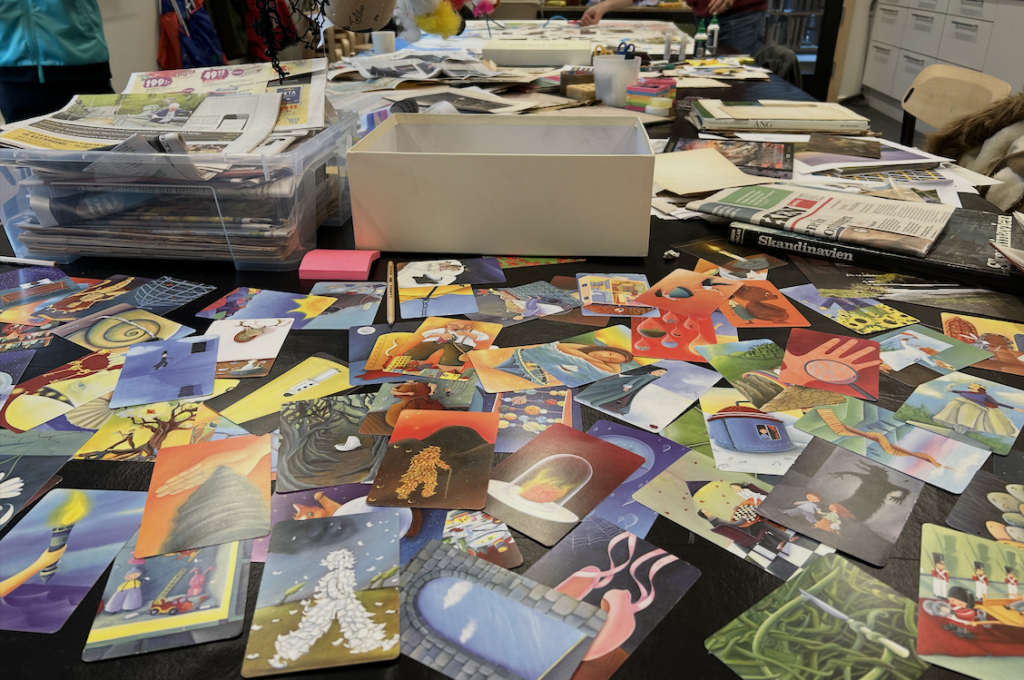
Collage image, Mostafa Hosseini 2026

17:00-19:00, 3:e Våningen, Sockerbruket 9, 414 51 Göteborg⁠

with Mostafa Hosseini, Cecilia Lagerström and Monia Sand

THE WORKSHOP WILL BE HELD IN SWEDISH

Kollage som en kritisk forskningsmetod

Kollaget har en stolt och rebellisk historia. När 1900-talets dadaister och surrealister började klippa sönder tidningar var det en protest mot elitism och de rådande maktstrukturerna. Det var ett sätt att nedmontera etablerade sanningar och skapa något helt nytt av fragmenten. Långt senare synliggör antikoloniala forskare sätt att arbeta tvärs över och i mötet mellan olika röster, tider och material, istället för genom en avgränsad metod eller ett enhetligt narrativ.

I samma anda välkomnar vi till en kreativ och prestigelös kollage-workshop i samband med utställningen Sockerspelen på 3:e våningen i Klippan. Utställningen presenterar forskning kring Göteborgs koloniala historia som tagit former av en mångdimensionell kartläggning och mångfacetterade stadsvandringar. Med papper, sax och lim utforskar vi utställningens teman på ett fritt och intuitivt sätt. Det är ett tillfälle att tänka med händerna och omarbeta befintliga bilder och ord till egna visuella berättelser.

Workshopen guidas av Mostafa Hosseini, doktorand i socialt arbete, som själv arbetar med kollage som metod i sin avhandling. Avhandlingen utforskar migration, mångfald och tillhörighet, med särskilt fokus på begreppet “postmigrantiskt samhälle”.

Alla är välkomna! Det är gratis att delta, men för att säkra en plats ber vi dig skicka ett anmälningsmejl till parse@konst.gu.se


Collage as a Critical Research Method

Collage has a proud and rebellious history. When the Dadaists and Surrealists of the twentieth century began cutting up newspapers, it was a protest against elitism and the prevailing power structures. It was a way of dismantling established truths and creating something entirely new from the fragments. Much later, anticolonial scholars bring to light ways of working across and in the encounter between different voices, times and materials, rather than through a delimited method or a unified narrative.

All welcome to a collage workshop in connection with the exhibition Sockerspelen at 3:e våningen in Klippan. The exhibition presents research on Gothenburg’s colonial history, which has taken the form of a multidimensional mapping and multifaceted city walks. With paper, scissors and glue, we explore the exhibition’s themes in a free and intuitive way. It is an opportunity to think with our hands and rework existing images and words into our own visual stories.

The workshop is led by Mostafa Hosseini, a doctoral student in social work, who himself uses collage as a method in his thesis. The thesis explores migration, diversity and belonging, with a particular focus on the concept of “postmigrant society.”

Everyone is welcome! Participation is free, but to secure a place, please send a registration email to parse@konst.gu.se

Contributors

Mostafa Hosseini

Mostafa Hosseini is a licensed psychologist with a degree from the University of Gothenburg. His thesis explores migration, diversity and belonging, with a particular focus on the concept of “postmigrant society.” This concept examines how societies change after migration and how new identities and senses of belonging are created and negotiated in the process. He is especially interested in themes such as home, belonging and conviviality.

In his work, he uses arts-based research (ABR) and other creative methods. ABR integrates artistic processes and expression into research, making it possible to capture and communicate complex human experiences in ways that traditional research methods may not. He has primarily used collage as a methodological approach.

He also teaches, among other things, courses on migration, research methodology and mental health.

More

Cecilia Lagerström

Cecilia Lagerström is a theatre director, researcher and Professor of Performance practices at the Academy of Music and Drama, University of Gothenburg. She has a background in physical theatre and performance studies (PhD, 2003) and has been directing performances in theatres and other venues since 1993. Her more recent productions include Suffering, Xenophobia, Nuckan – The Epilogue, and Playing John Hood, presented at Atalante, Folkteatern, and 3:e Våningen in Gothenburg.

Since 2005, Cecilia has played an active role in the development of artistic research in the field of theatre in Sweden. At the Academy, she teaches and supervises students at master’s and doctoral levels. Cecilia’s research interests include performance and physical training practices in relation to directing and dramaturgy, decolonial perspectives on place and the body, performative writing, and walking as an artistic practice. She has published extensively in international journals, and in 2019 her book The Art of Walking (Konsten att gå) was published by Gidlunds förlag.

Cecilia is currently conducting the artistic research project The Sugar Games (Sockerspelen), which offers new perspectives on Gothenburg’s colonial history through the lens of the sugar trade. By bringing to light a colonial past that has largely been forgotten, the project also seeks to activate alternative narratives, bringing neglected voices into play. In the research communication project Sugar Walks (Sockervandringar), which Cecilia carries out together with researcher and artist Monica Sand, the findings and perspectives developed through The Sugar Games are shared with a broader audience through a series of guided city walks. The project is carried out in close collaboration with the Gothenburg City Museum, as well as groups of artists, researchers and students.

More

Monica Sand

Monica Sand is an artist and researcher at the Academy of Music and Drama, HSM, at University of Gothenburg. With a specific engagement in the public art history and the urban transformation of Gothenburg, her art and research involve public performative rituals and walks in the city, seen as an archive of material and forgotten layers of stories.

More