Artists Kimberly Forero-Arnías and Heather Marks reflect on their moving-image practices – recortes (2023) and Fugitives in the Archive (2024) – and the archival logics their work confronts, fragments, and sometimes abandons. Working across home video, Super 8, WhatsApp messages, dance, fabulation, animation, and found footage, this co-authored piece explores how their films shift the register of the archive and reorient the act of looking – as well as sites of memory and history – towards the ecological, the embodied, the oral, and the unspeakable. They reflect on what it means to work with rupture, with materials whose resonance exceeds their place in the archive, and how to stay with the gaps left in the histories of marginalised people.
Emerging from the Encounters: Art, Power and Archives symposium and guided by its “Montage as Method” provocation, this piece takes the form of a layered dialogue: transcribed conversation, interwoven stills, and reflective side-notes from each artist that surface both divergent and resonant concerns. Among them: how to work with fragments without making the archive feel more whole than it is; how to resurrect without reinscribing colonial logics; and how to restore presence through observation, voice, and fabulation when the archive renders absence.
Rather than define the archive, the authors ask what slips from its grasp, and what it cannot hold. Through their dialogic method, they resist singular interpretation and build a shared, unresolved approach to engaging with archival remains, one that is attuned to both rupture and resonance.
About Fugitives in the Archive
“March 14, 1769. Ran away on Wednesday Night last, from his Master Patrick Burk, Esq; A Young Negro Man, called Jeremiah.”
Fugitives in the Archive (2024) is a short film that meditates on the young people of African and Asian descent who ran away from enslavement in Britain in the seventeenth to early nineteenth centuries. For many, the only trace left of them in archives are the advertisements announcing their escape, published by those who sought to recapture them.
The film picks up the trail of one specific runaway, a young man named Jeremiah Rowland, who sought his freedom in 1769. Through a bilingual (English and Efik) assemblage of movement, found footage and archival fragments, Fugitives in the Archive invites you into a dream-space to meditate on the lives of these undocumented freedom-seekers, past and present, and consider fugitivity as an ontology that asks, “What exist beyond the archive’s limits?”
Fugitives in the Archive was a Spike Island 2024 Digital Commission, funded by the West of England Combined Authority. Filmed in Bristol, Bath and Norfolk, the film draws on archive material from Bristol Archives, Bristol Central Library, the British Library, Norfolk Record Office and the British Council Film Archive.
Watch Fugitives in the Archive
About recortes
In one generation, the ecological knowledge my family acquired through living on a coffee farm in Colombia has been filtered out. Looking to the former generation to root myself, this film is composed of observations made by family members of a place that existed as a present tense for them over 35 years ago, as well as in my current place of residence, the unceded land of the Wampanoag and Massachusett peoples, Boston, MA. These observations take the form of WhatsApp messages, drawings, historical field journals and handwritten descriptive texts straddling multiple time periods and geographical locations.
recortes is a 16mm experimental film and an artist book. Both the film and the book contemplate the changes that occur when flora and fauna move from one environment to another. The project is in conversation with the scientific field notebook, a technology that helped structure a very specific way of engaging in the act of observation; one of categories and compartmentalisation that sustains dislocation and places pressure on the nature of “belonging”. recortes intertwines personal, family and historical observations, and explores observation as a collaborative process that intermingles the past and future into present tense rhizomatic experience.
Watch recortes
The scenes from the British Council’s film archive were shot in a very small aspect ratio compared to the original movement sequences shot on location in Bristol. I drew on this as a visual cue in Fugitives in the Archive, moving back and forth between these two aspects—from expansion to constriction, from one temporality to another.
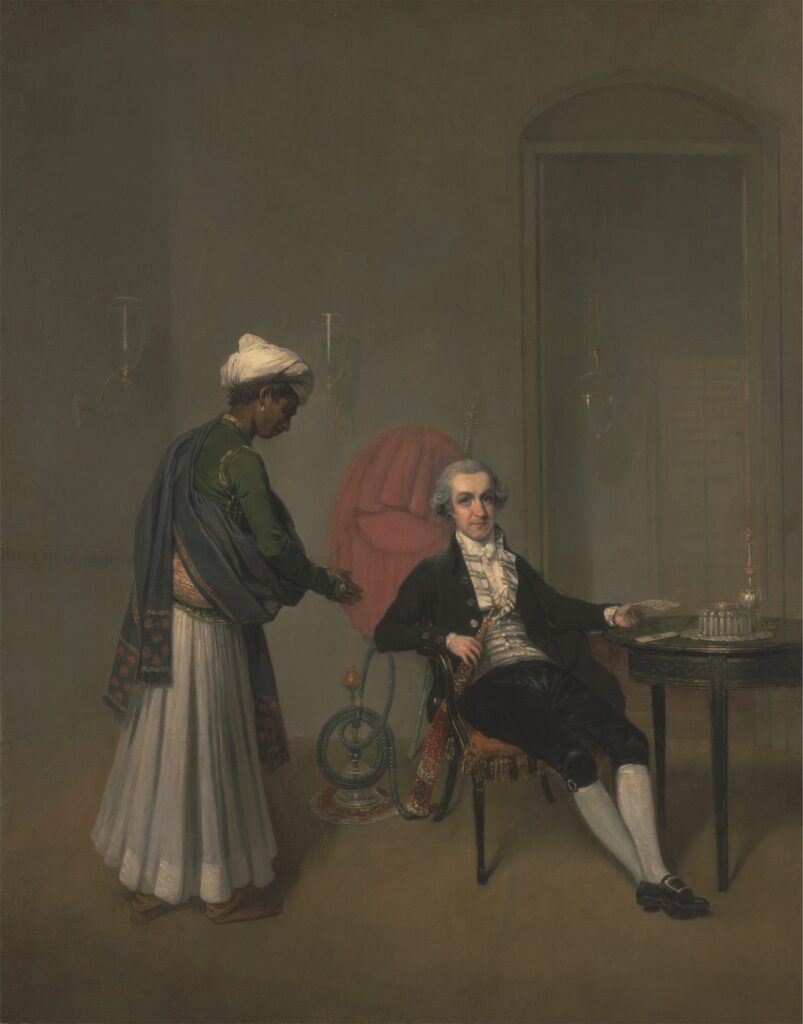
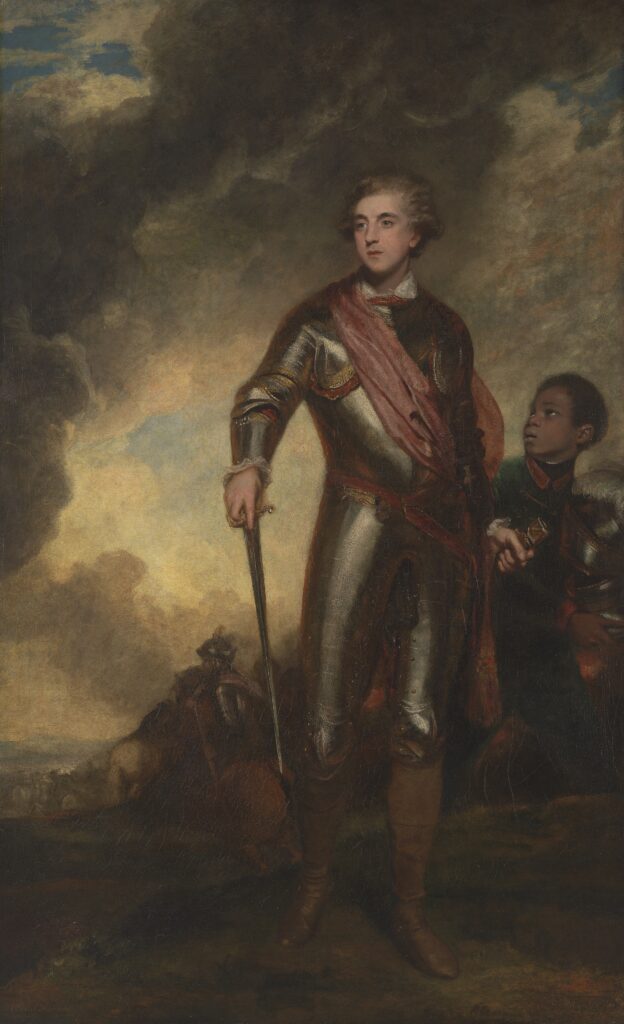
Left: Arthur William Devis (1762–1822, British), Portrait of an Unknown Man with an Attendant, ca. 1785, oil on canvas; Yale Center for British Art, Paul Mellon Collection, B1981.25.333. Right: Sir Joshua Reynolds (1723–1792, British), Charles Stanhope, third Earl of Harrington and Marcus Richard Fitzroy Thomas, 1782, oil on canvas; Yale Center for British Art, Paul Mellon Collection, B1977.14.69.
Also, there are scenes from the British Council’s film archive; these are shot in a very small aspect ratio. The film moves between original and archive footage, from wide aspect to small, from expansion to constriction, and while this was just the size of the film in those days, this was a good visual cue for me as a filmmaker to imply to the viewer that there are different temporalities within this piece.
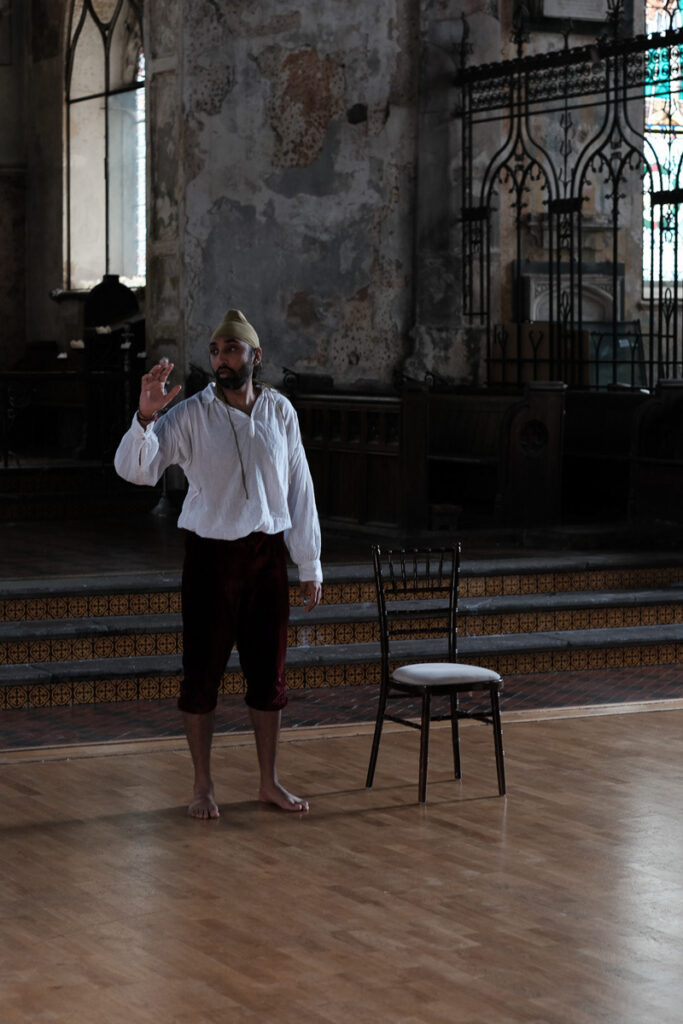
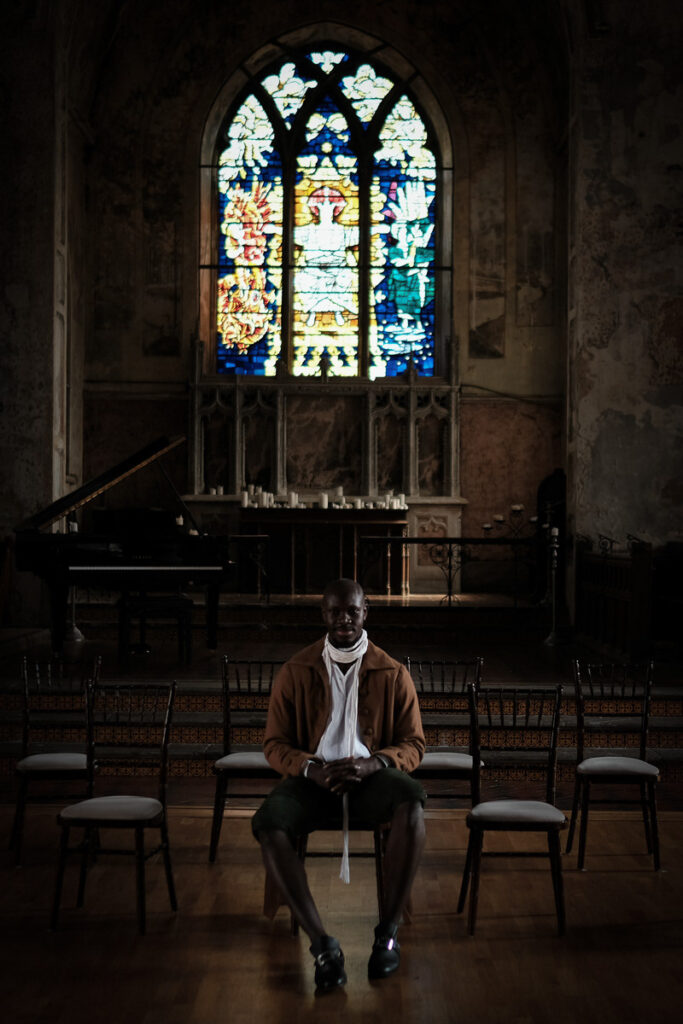
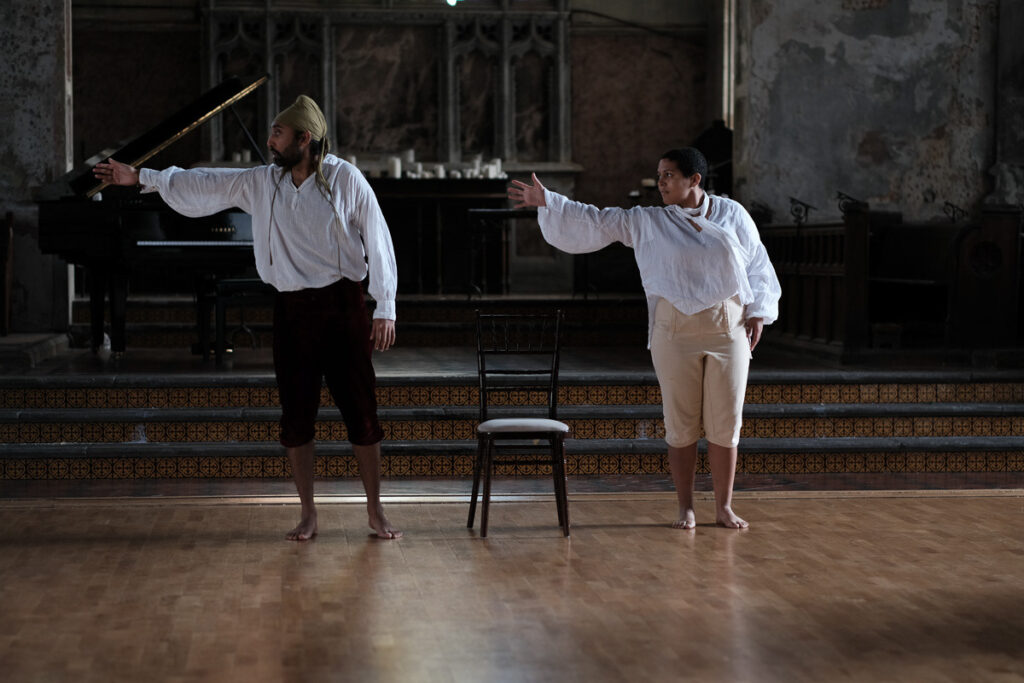
Production photos of Fugitives in the Archive being shot on location at The Mount Without, featuring Deepraj Singh, Omar Ceesay and Heather Marks; photo: Guy Undrill.
During the research process, I was interested in the way Black and Global Majority people often appeared in sixteenth-to-nineteenth-century portraiture: to the side, a marginal but essential figure symbolising a white sitter’s status, their attention directed to this person for whom the portrait was made, while the white sitter was often named, looking out towards the viewer, and with a long provenance. I wanted to take that image of the exotic attendant, fixed in devotion, and destabilise it. In the film’s movement sequence the white sitter is absent and the Black and Asian sitters come to life: they move, they recognise each other, there is an interiority to their time here. It was important for me to try and communicate this embodiment; so often what is encountered in the archive can be read flatly, whether it is a portrait that includes an “unidentified attendant” or an advertisement for a runaway in a newspaper that betrays none of the humanity of that person. That is the decolonial vein of my work: sensing the more-than within an archival fragment and creating an opportunity for it to surface and be felt.
What is the frequency of these images?... To look at these images is to see genre and form. To look at them is to look through their sitters and see function and format, to “oversee” them in ways in which black people have been erased and overseen for centuries. To listen to them is to be attuned to their unsayable truths, to perceive their quiet frequencies of possibility—the possibility to inhabit a future as unbounded black subjects.
Campt, Tina. Listening to Images. Durham, NC: Duke University Press. 2017. p. 45.
“Look for it here where they say the state does not work. Look for it here where they say there is something wrong with that street.”
Brand, Dionne. Salvage: Readings from the Wreck. New York: Farrar, Straus and Giroux. 2024. pp. 72, 125.
“the Black is that which is written upon; it remains the written-upon; it is the cipher for the legibility of white discourse, the rehearsal for its grander feelings, its imperialist view.
The scrim of propriety, grace and valour marks the great elision of colonial violence—the ongoing murders, massacres, large-scale abductions and genocides.”
Brand, Dionne. Salvage: Readings from the Wreck. New York: Farrar, Straus and Giroux. 2024. pp. 72, 125.
Watch excerpt from Fugitives in the Archive
Archival footage. Dance on camera. Period reenactments. Staged direct address to the camera. News clips. In this piece the cinematic language doesn’t function to create a type of continuity that keeps us locked in one visually cohesive world. I think there is a strategy that you are using that feels familiar to me; the building of a visual language and then a shift, a new lens to peer through. Could you share how you came to this format? Is this a new formal strategy for you or a continuation of past explorations? And does this reflect your approach to research within the archive or was this a strategy that helped you loosen a more linear and defined research process?
The intention was always to be non-linear. Not just from a creative point of view but also a practical one: I had a £2,000 budget—I couldn’t create a piece of verisimilitude like Barry Jenkins in The Underground Railroad, so how could I try to tell this story, this imagining of a young man’s life on £2k? So, of course I thought of archive footage, of repurposing what exists already. But the slipperiness of the history I’m looking at also compelled me to go into the abstract, the nonlinear, the dream-space.
The film moves between voices—those of Jeremiah, an archivist, an Efik woman and a journalist—as it follows Jeremiah through the archive, and other freedom seekers then and now, filling in the gaps of his story from the fragments that history has left behind. Their voices exist in, and speak to, different temporalities in which slavery, the leap for freedom and the consequences of it, are happening.
The main temporal line was always going to follow a runaway from the moment they eloped. There was an initial fear during the research process; what if I did not find what I was looking for in the archive? What if there wasn’t a single runaway I could find historical traces of post elopement? It led to many questions: how do I speak to these records? How do I look for life in what has been left behind? When do I begin to imagine beyond those remains? How can I trust my imaginings? How do I feel for the life that exists between these fragments? How can I—a twenty-first-century woman—understand this leap and its consequences?
In the process of grappling with these questions, I realised this questioning was part of the structure. There is a moment in the third act when the archivist speaks to Jeremiah’s life in Norfolk, and then the film rewinds and a new way-making is posited, this time in Jeremiah’s voice; this is the instability one must reckon with in this work. Questions are posed constantly by all the voices, ultimately whether and how this—the archive, the records that remain, my own imagining—can be trusted. And so, the lack of a cohesive visual world, the constant shapeshifting, all speak to this instability.
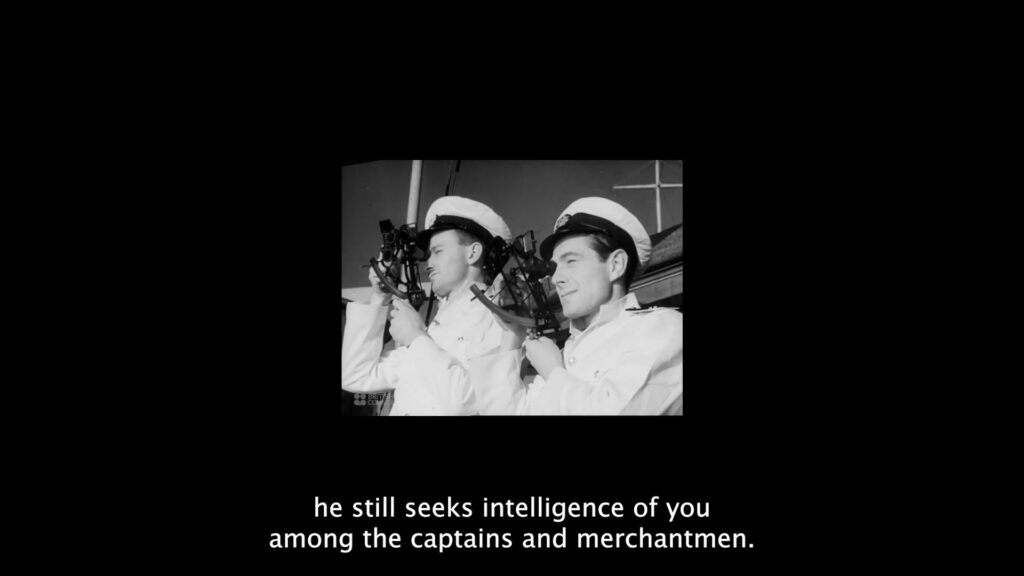
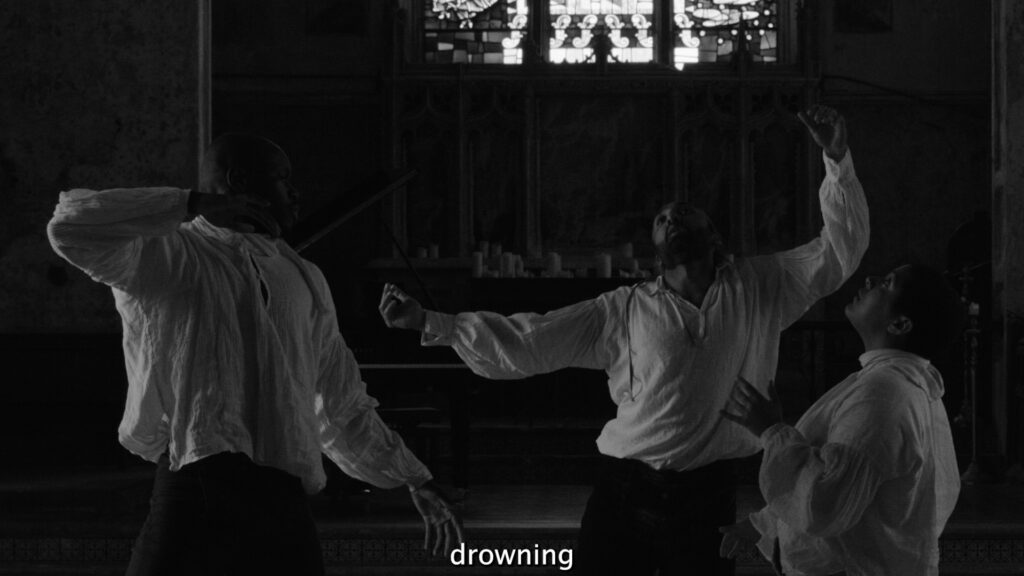
Top image: Still from Fugitives in the Archive showing archive footage of A.1 Lloyd’s, Strand Films, 1942; British Council Film Archive. CC BY 4.0
Bottom image: Still from Fugitives in the Archive. Jeremiah and the nameless dance in a deconsecrated church
In this collage of movement, archive footage, news stories, original footage and style of address, I am trying to close the distance between then and now, so that this history does not feel far away. But I am also trying to create a textured world that resists singular interpretation, a fractured form that mirrors the question one must ask of the archive when looking at lives disrupted by coloniality, because how can I present a seamless continuity when the source material is ruptured? I am inviting you to question what was left, to turn the artefact over and over in your hand and ask, “what is missing?” In doing so, the work avoids the trap of making the archive feel more whole or knowable than it is.
The title of your film seems to refer both to Jeremiah and the way his story, and the stories of many others, escape any dignity or humanity within the archive. Could you unpack how fugitivity functions as both subject and archival method in your film?
So many of the people who ran away from enslavement in Britain from the seventeenth to the early nineteenth centuries were young adults. For many, the only reason we know they were here is because a slaveowner published an advertisement in a newspaper seeking their capture. These advertisements are not written in the voice of the person running away, but in the voice of the slaveowner who is bound within their own logics of property—they are not trying to convey the humanity of the person they’ve put a bounty on. They have atomised this person into body parts and markings to distinguish them, as if they were an animal. There is no life, and here I found a resonance here with your film recortes—in the stark contrast between the dry, parched leaves of the archived plant cuttings and the very living nature of these plants in the recollections of your family.
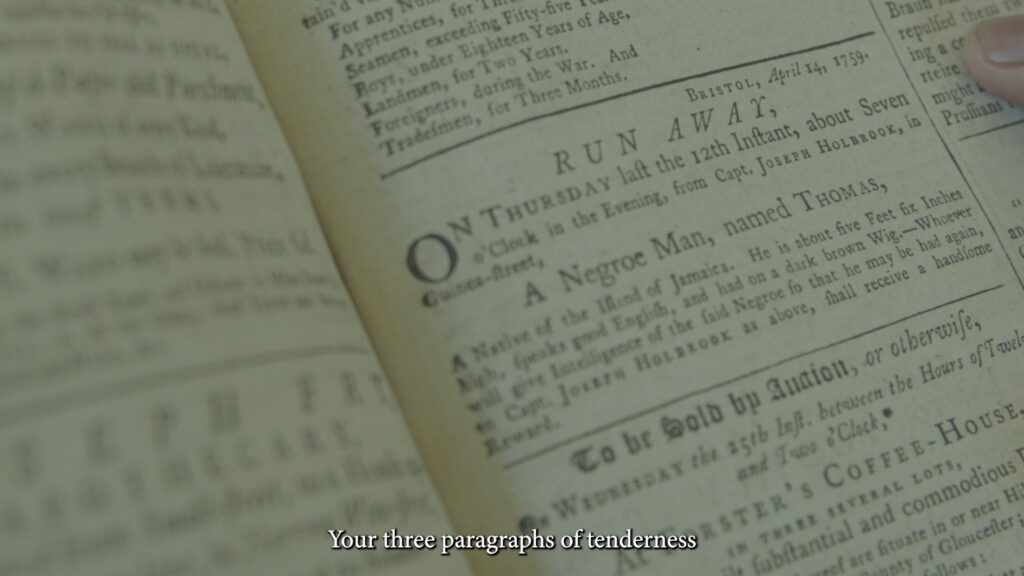
So how then to approach a resurrection, a rehumanising, of individuals who have not entered the archive willingly, whose appearance in it is born of a desire to capture? Fugitivity, in a very literal sense, is the act of running away and what that entails; as a subject, I thought about the options available to this person—changing their name, going by an alias, the itinerant nature of their movements. I read the advertisements for clues as to where they might have gone next—slaveowners write of the person being seen on the road to Bath, to London, and warn ship captains against enlisting the runaway as part of their crew. It was a challenge to follow these possibilities some 250 years later and that speaks to the nature of these runaways’ fugitivity—they did not want to be found.
There is also fugitivity as a logic—that which resists a given order. I thought about fugitivity as a state of being, as a form of way-making that upsets the prescribed manner of doing things, as something that is contagious, that makes you complicit in your encounter with it. There is a line in the film—“consecrating flight with lovers and strangers / in acts of blissful ignorance, disobedience and grace”—that speaks to how you do not make new worlds on your own, how fugitivity does not become freedom in isolation but in kinship with other people. And so, when I think of the fugitive as someone who resists state order—as applied in the history of slavery, as subjugation written into law—the logic of the fugitive is not simply that of someone in flight but of someone who is engaged in a tactical act of way-making, in a way of living that disrupts the will of the state.
This logic does not only belong to the runaway of the past but also to the asylum seeker, the DV survivor, the person trafficked into modern-day slavery who makes an escape in the early hours of the morning. It is what made imagining Jeremiah’s flight and life after elopement easier to imagine because it was in my present now, wielded by others. As Saidiya Hartman writes of the black women in nineteenth-century Philadelphia living in the ghetto, they are “someone who refuses to be wielded by another, to be wielded on a whim, to be severed from their own will.”
And so, to go back to the point about these people not entering the archive willingly, the way of the fugitive, then, is not going to be found in the realm of the archive but outside of it; as frustrating as that is for someone like me who wants to know the facts of Jeremiah’s life, it behoves me even more to draw on critical fabulation to sketch the truth of this rupture.
Fugitivity, then, emerges as a method: multiple temporalities (the past, the present and the atemporal), nonlinearity (history does not march on one consequential event after another but is layered atop itself, these events bleeding into each other), and a refusal of total legibility (untranslation as a necessary absence of understanding, i.e. not all of this is for you).
Hartman, Saidiya. Scenes of Subjection: Terror, Slavery and Scenes of Self-Making in Nineteenth-Century America. New York: Oxford University Press. 1997.
How did you negotiate responding to this history without reproducing the violence embedded in the archive?
This is something I’m always wrestling with—is what I am doing of service? Or am I committing the same violence of coloniality of speaking for, speaking over, ascribing this more value than that?
These items from the archive—advertisements, portraits, ledgers—are in one sense poisoned chalices. They were made by a colonial impetus to organise, reclaim or signal belonging to and participation in an imperialist aesthetic and value system. What good can there be of salvaging them? But then on the other hand, sometimes we would have no idea Black and Global Majority people were here without them. Were it not for the advertisements written and placed in a newspaper, Jeremiah, Marina, Hampton and many others would not be known in the narrative of British history.
Regarding Jeremiah and Fugitives in the Archive, I start the film with a recitation of the many slave laws that governed the Caribbean and America, an illustration of plantocracy violence and the advertisement for Jeremiah itself. This sets the context, the starting point for Jeremiah’s escape and this notion of fugitivity, and when I am in screenings of the film, people have audible, visible reactions to that context—gasps, sounds of horror, squirms of discomfort—but the film does not return to that place. It is engaged primarily in life after that moment, so that by the end of the film, we are in such a different place—one of optimism. Is it necessary to have this context at the beginning? Some may disagree. Ultimately, I chose to have this at the start so that we might fully recognise the arrow’s flight that is Jeremiah’s life after the moment he enters the archive.
I suppose that is always going to be part of the tension of this work—encountering fragments that nod to a larger story, fragments that are sharp and may cut as we search for other pieces of that story, sometimes succeeding, sometimes failing and sometimes stitching something new in place of what is missing, hoping it is an adequate counter to what was first discovered. Sometimes this counter-imaginary feels strong, at other times fragile, but I suppose the negotiation is in how you attempt to render that counter-imaginary—what kind of agency is being offered, what voice, what interiority and expansion, to complicate what has been given, willingly or not?
A large portion of the narration uses a poetic and lyrical language that stands in stark contrast to the introductory voice of the archive. Earlier, you described using voice as a way to position us differently. Could you share how you made decisions around the voice? For example, when we hear it versus when we read it or Efik versus English.
Efik is one of the many languages of modern-day Nigeria. It is spoken by the Efik people who reside in Calabar in southern Nigeria, which used to be an old trading port during the Transatlantic Traffic in Enslaved Africans, and it is also one of the languages my mother speaks. I wanted non-English voices in the work because it was important to have Jeremiah’s world, his afterlife, be woven without the voice of his enslaver. I wanted this Jeremiah to exist in his own English, and that of the inheritance he may have had. Efik is the mother tongue, but also the matrilineal space, the space of dreaming, of inheritance and memory both available and not.
That introductory voice at the beginning is not poetic or lyrical because it is the advertisement, the voice of the enslaver read aloud, bound by the metrics of ownership, possession, legality. It had to be read to set the context and offer the departure point for Jeremiah’s story.
The poetic, lyrical language of the rest of the film speaks of my debt to Toni Morrison, to James Baldwin, to Saidiya Hartman, who enter that space of fabulation with such evocative imaginings to resurrect people who have been flattened by history’s record of them, to chart that interior geography as Morrison describes it in Playing in the Dark.
There are also other languages in the film that fall into this refusal of total legibility; BSL is woven into the choreography, into sequences where the past, present and atemporal blend into one another. There’s something there about the physicality of these moments, the speaking without words, that I was drawn to from the beginning. There’s a line in the third act—“knowing your children’s children, and their children’s children will not look like you, talk like you, remember you / but hoping they bear the fruit of your breaking.” I was thinking about ancestors, how you might see traces of them in a descendent—it might be the way they hold their face, a gesture they make, or the way they react to something; these two people may have never met in the same timeline but there they are, past and present together, an echo of that fugitive way-making. The BSL and the choreography were a way for me to reach for this, through a language of embodiment.
Both of our films operate through fragments—field notes, voice notes, fugitive ads, glimpses of movement—and yet they feel full, emotionally resonant. What drew you to working with fragments, and how do you think about their potential—not just as evidence of absence, but as sites of imagination, intimacy or resistance?
The title of the project, recortes, translates as “cut up pieces” or “trimmings” in English. This was how my family referred to a plot of land on their farm that belonged to my grandmother and was acquired later in her life. Of course, all of my grandparents’ land consisted of recortes. My grandfather was a day labourer who worked to purchase and piece together bits of land to cultivate. Fragments in this project take on a few possible directions.
When reflecting on the act of observation, surfacing fragmented moments across time resonated. There is something rhizomatic about the observational experience, a network of influences rather than a singular trajectory. Working with fragments of material allowed me to move through time; between the historical, archival and personal fluidly, pulling at contradictions and yet drawing connections.
Collage also became an effective method for layering complex, fragmented relationships into new juxtapositions. A lot of my work deals, directly or indirectly, with belonging and my personal experience growing up straddling two cultures. What does it mean to eat bocadillos, to have a palate that finds comfort in its combination with queso blanco but grow up in a place whose climate can’t support the cultivation of guava, whose peers have likely never heard of or tried the imported fruit and whose shape and smell I could not identify in its original form. In the film and in the artist book, internal juxtapositions of my identity are engaged through collage.
I tend to work by creating lots of material and then finding a shape for it all in the editing process. I am interested in structuring moving images in ways that make you rethink or feel how conventions play out in your body. Those moments when watching a film and your body is frustrated, annoyed or restless, searching for a concrete narrative or more conventional timing of shots. For me, those moments are informative. They tell me about expectations I’ve developed internally. They are something to play with. In this project I used an associative editing style while also trying to create moments of perceptual friction. Working with fragments was a way of acknowledging the conflicting and complex historical and societal influences within my own body; aerating the entangled colonial and familial strategies of world-building within me with the hopes of creating that same space for others. Perhaps this is why there is emotional resonance. Working with archival material is explored as one of many knowledge-keeping practices that help reduce its power without dismissing the ways Western, hegemonic epistemologies have borne material impact.
In recortes, you interweave personal, familial, and scientific modes of observation, often placing institutional ways of knowing—like the field journal or archive—in tension with the remembered, the inherited and the oral. What do you think the role of the archive is when it comes to knowledge that was never meant to be categorised or compartmentalised? And how do you navigate this tension in your practice—between salvage and refusal, between inheritance and loss? And how do you decide what to preserve and what to let remain ephemeral?
As I began exploring digital archives to learn more about how others observed the landscape, finding information broken down into discrete packages felt like a given. I can search for a flower by genus and species in the herbarium, find a specimen pressed by itself on a white sheet of paper framed by colour balance cards and cataloguing information and I can click on metadata links that connect this specimen to others by classification, collector and more. Information is broken down in pieces in order to, supposedly, facilitate more robust connections and potential discovery by users.
Excerpt from recortes
Journal of a residence and travels in Colombia, during the years 1823 and 1824. London: S. and R. Bentley. 1825; printed for Henry Colburn, https://doi.org/10.5962/bhl.title.86725
The introductory sequence of the film has a cropped image from the journal of Charles Stuart Cochrane, a Scottish explorer, who, like many before and after him, considered the draining of la Laguna de Guatavita in search of gold objects from native Muisca ceremonies to be a good idea. Layered underneath this is the sound of a straw sucking the last bits of liquid from a container.
As someone who has been filming my family for over 18 years, I do not see my goal as an archival one. I am not filming my family to create a document for future generations. Many times, I’ve had to choose between experiencing events directly or through the lens of my camera. Those decisions of when and what to record are tricky and are frequently made intuitively. Perhaps part of why I can be more relaxed and improvisational with archival material is because my films are closer in genre to a diary or a poem. When you write in a diary, you know there are gaps and what is captured is a mix of events, feelings, reflections, hypotheses, all tangled together. It’s a very internal process and references to past events or contextual information is not always elaborated on. What is selected and described, like in the excerpt above from Cochrane’s journal, of course speaks volumes to how you attend to relationships. And, similar to a poem, there is a playing with structure, rhythm and allusions that may require multiple reads or puzzle work.
In response to your question on loss: I am more interested in the work of embodying oral storytelling rather than recording them, unless a particular story is part of a filmic “entry” that I am trying to reflect on. And recortes is an entry on loss. Yes, loss of a particular embodied ecological relationship with nature, but it is also what has emerged from the loss through the new form it has taken within me and through the film. The film is my own form of observation, of knowledge-making and keeping; it just has a different shape than an archive.
Both recortes and Fugitives in the Archive contend with the limits of the archive—particularly when it comes to land, memory and what the archive cannot hold. In your film, the land seems to operate as both a site of dislocation and of potential remembering. How do you think with the land as a kind of archive—one that may not speak clearly, but still holds traces, rhythms and presences?
In this project I was interested in the ways my perception is influenced by how others interpret and understand their relationship to la tierra (the earth). This meant engaging with interpretations from a variety of angles; my family, guides, nature documentaries, archives, bioacoustics and migratory databases… What are the traces and rhythms called forwards by these different approaches to translating nature? What do they notice, observe and describe? How has it influenced how I see?
Like a lot of folks, during Covid I was outside more and tried to find ways to connect with nature. I started a vegetable garden and began to try and learn more about the plants in my backyard. My first stop was an app and a few books to help with plant identification. I also took an online course on observational nature drawing to help build my close-looking skills. These avenues took me on a journey through ways of learning about these plants that felt very compartmentalised. It was hard to learn about the relationships between species as an ecosystem; dissection felt like a prized method to building knowledge. That’s how I moved toward archival sources and began reading naturalist field journals and looking at herbaria.
I also started thinking about my family growing up on a coffee farm and their distinct relationship to plants that I knew nothing about. I became interested in learning more about their experiences with the land and devised ways to build collective conversation around their memories via WhatsApp messages and field notes based on their memories of plants. Their knowledge of the land came from their daily interactions. The land was not an object but a subject, a family member to be respected. A great example of this is a memory shared by my Tio Jairo:
El chiraco era un árbol gigante que al pasar por delante había que saludar diciendo, “Buenos días compadre chiraco, hasta luego compadre chiraco”. Si no lo hacías te salía unas coloraciones en la piel que rascaban todo el día.
The chiraco was a giant tree that when passing by we had to greet saying, “Good morning friend, see you later my friend chiraco.” If you did not do it, you got a rash on the skin that itched all day.
When filming I didn’t want to pretend I could replicate this relationship, but I did want to be surrounded by those who have this connection. I travelled to Colombia and walked with my mother and various guides through different landscapes to learn through storytelling, sight, smell and touch. Like you mentioned in your earlier question, the juxtaposition of these distinct ways of holding information about the land became an important part of the film and the book.
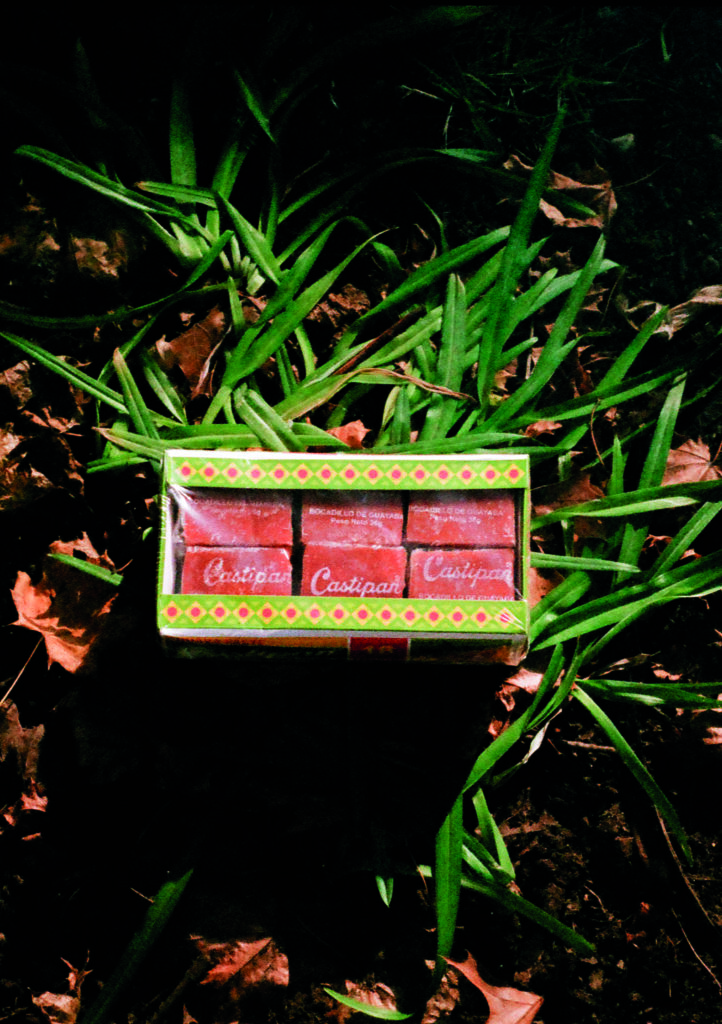
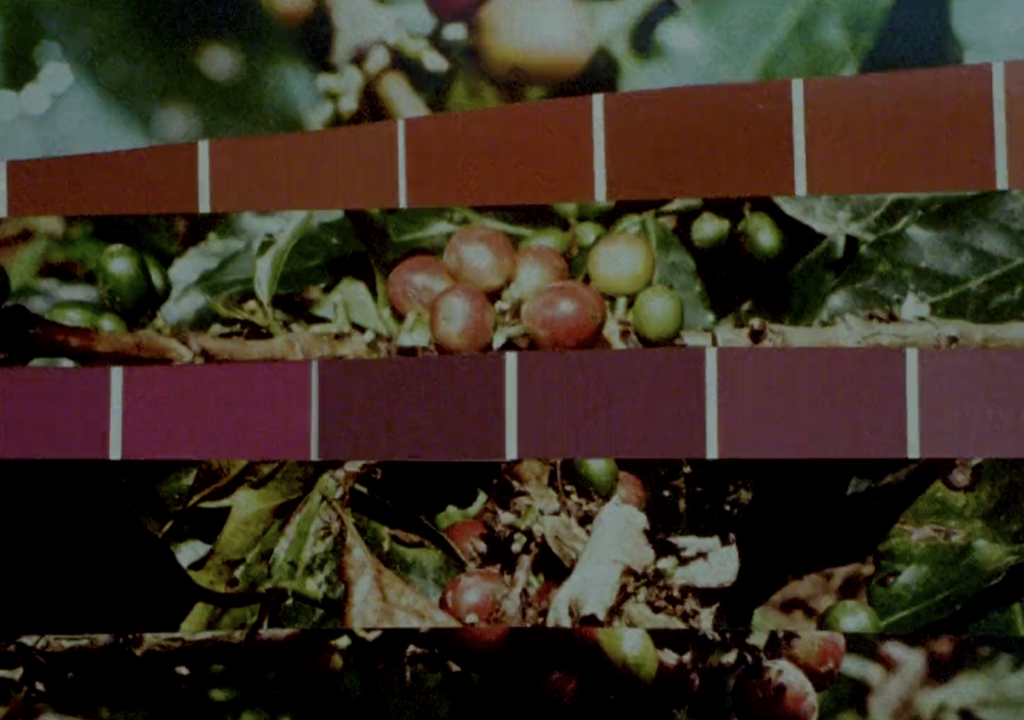
Left: In the artist book, Colombian exports kept in their packaging are placed in the New England landscape and photographed. Right: In the film, photographs of coffee plants are ripped up and reassembled with paint sample strips from the hardware store.
Mass manufacturing establishes distinct and often fragmented relationships with the land, which was an undercurrent throughout the project.
Institutional archives have historically supported the narratives and virtues of those in power—read white Anglo-Saxon, heterosexual males. Black, Indigenous, queer and other racialised and minoritised communities collect, organise and make accessible material by and for their communities as forms of world-building in the face of erasure. Laura E. Helton writes of Arturo Schomberg’s collection, “Scattered, fragmentary, fugitive, and buried: the things of a Black archive could prove elusive—dispersed in diaspora, suppressed by prohibitions on Black literacy, or harbored in secrecy. Schomburg doggedly pursued these elusive objects to create something new.” For many communities, working with fragments in the archive is not a choice. In this project, journals of those surveying Colombian land for extraction from the sixteenth to nineteenth centuries were easily discoverable. I became interested in how traces from these colonial ways of seeing still thrive; a lineage layered within scientific and botanical classification, illustrations, and field guides. What sediment has settled into my own observational tendencies?Helton, Laura E. Scattered and Fugitive Things: How Black Collectors Created Archives and Remade History. New York: Columbia University Press. 2024. p. 7.
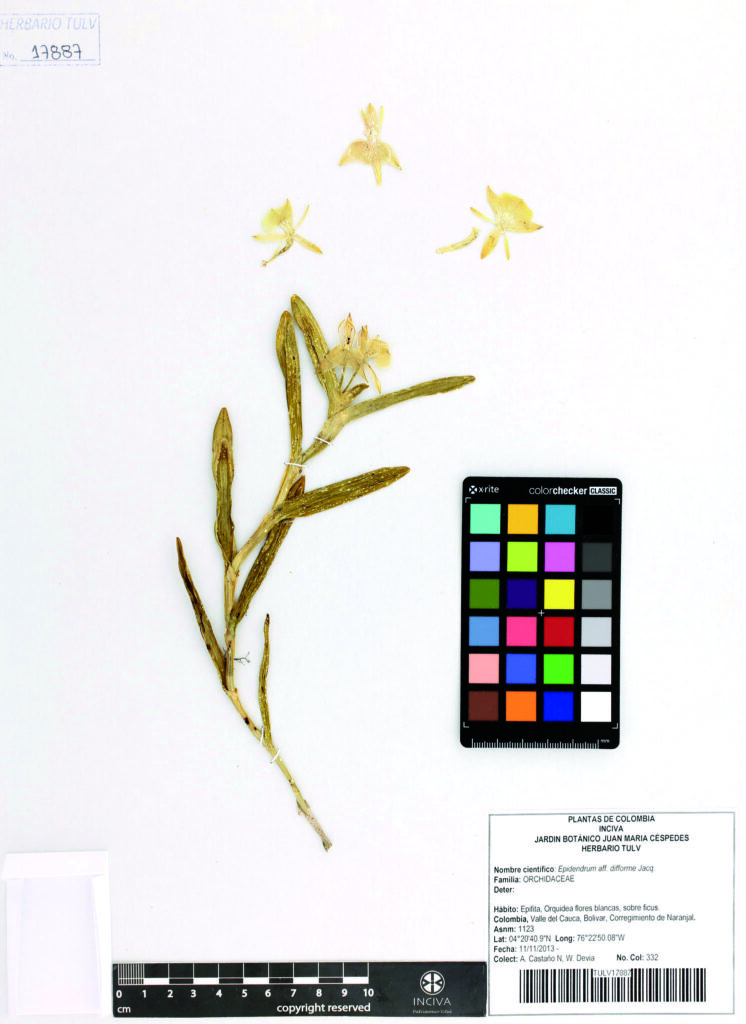
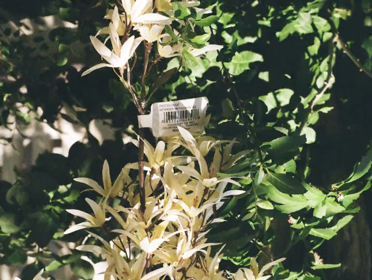
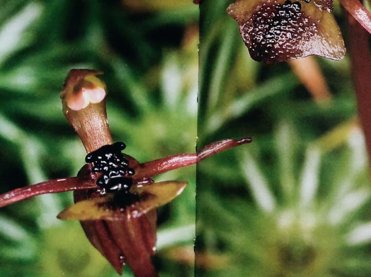
Top left: TULV17887 Epidendrum aff. difforme Jacq., by Herbario TULV INCIVA, used under CC BY-NC 2.0 with no modifications; available at Flickr (accessed 2026-11-).
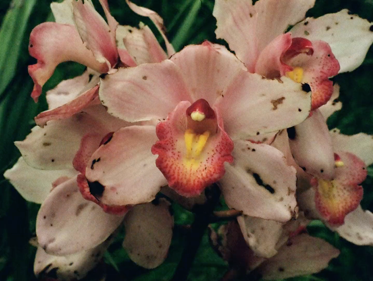
Top right: Still from the film of an orchid.
Bottom left: Still from the film of an artificial orchid.
Bottom right: Still from the film of an orchid from a guidebook on orchids.
My grandmother’s favourite flowers were orchids. They are also among Colombia’s top exports. During a scene towards the end of the film, images of orchids flash by in rapid succession. Mixed in with photographs I took in Colombia on a guided tour in a nature reserve are images of artificial orchids scattered in my backyard and images from a botanical guidebook. Speed and sound push a narrative of the environment along. As the scene unfolds, small details linger as latent impressions that sow doubt about the stability of the images and narrative construed. Were all the images from a book? Were some of the orchids fake? I’m reminded of a line by Gloria Anzaldúa: “Pero es difícil differentiating between lo heredado, lo adquirido, lo impuesto” (But it is difficult to differentiate between what is inherited, what is acquired and what is imposed).
Anzaldúa, Gloria. Borderlands/La Frontera: The New Mestiza. San Francisco: Aunt Lute Books. 1987. p. 104.
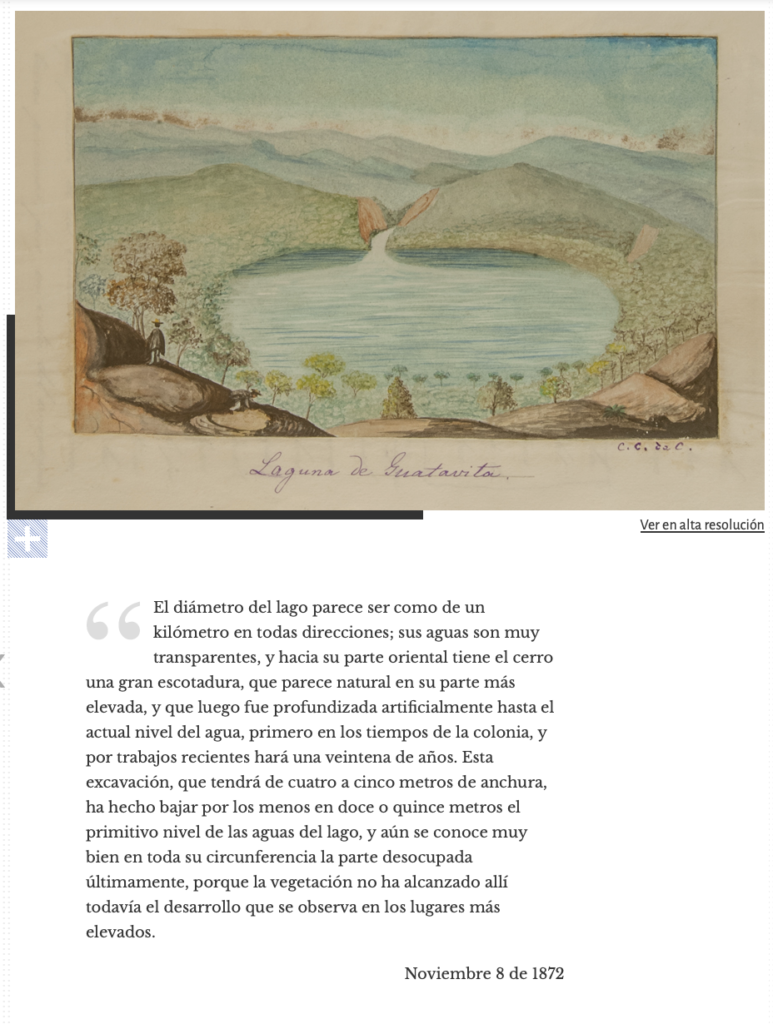
Gutiérrez de Alba, José María. Laguna de Guatavita, 8 November 1872, Impresiones de un viaje a América (1870–1884); Available at http://www.banrep.gov.co/impresiones-de-un-viaje/ (accessed 2025-09-06)
English translation from de Alba’s entry in his journal:
“The lake appears to be about a kilometre in diameter in all directions; its waters are very clear, and to its eastern side, the hill has a large indentation, which appears natural at its highest point, and which was later artificially deepened to the present water level, first in colonial times, and then through more recent work some twenty years ago. This excavation, which is four to five metres wide, has lowered the lake's original water level by at least twelve or fifteen metres, and the recently unoccupied part of its entire circumference is still very well known, because the vegetation there has not yet reached the development seen in the higher places. November 8 of 1872.”
During a visit to la Laguna de Guatavita at age ten, the crevices and water level markers left from many failed attempts to drain the lake brought my attention to the way the surface of the mountain could hold memory.
In Objectivity, the authors unpack the history of objectivity and epistemic virtue by looking at how scientific atlases trained the “disciplinary eye”. “Observation is an enduring and essential scientific practice and is intimately bound up with the self of the observer. Observation trains and strains the senses, molds the body to unnatural postures, taxes patience, focuses the attention on a few chosen objects at the expense of all others, patterns aesthetic and emotional response to these objects and dictates diurnal (and nocturnal) rhythms that fly in the teeth of social convention.” It was precisely this dance that sparked my curiosity around historical and botanical archives.
Daston, Lorraine and Galison, Peter Louis. Objectivity. New York: Zone Books. 2007. p. 234.
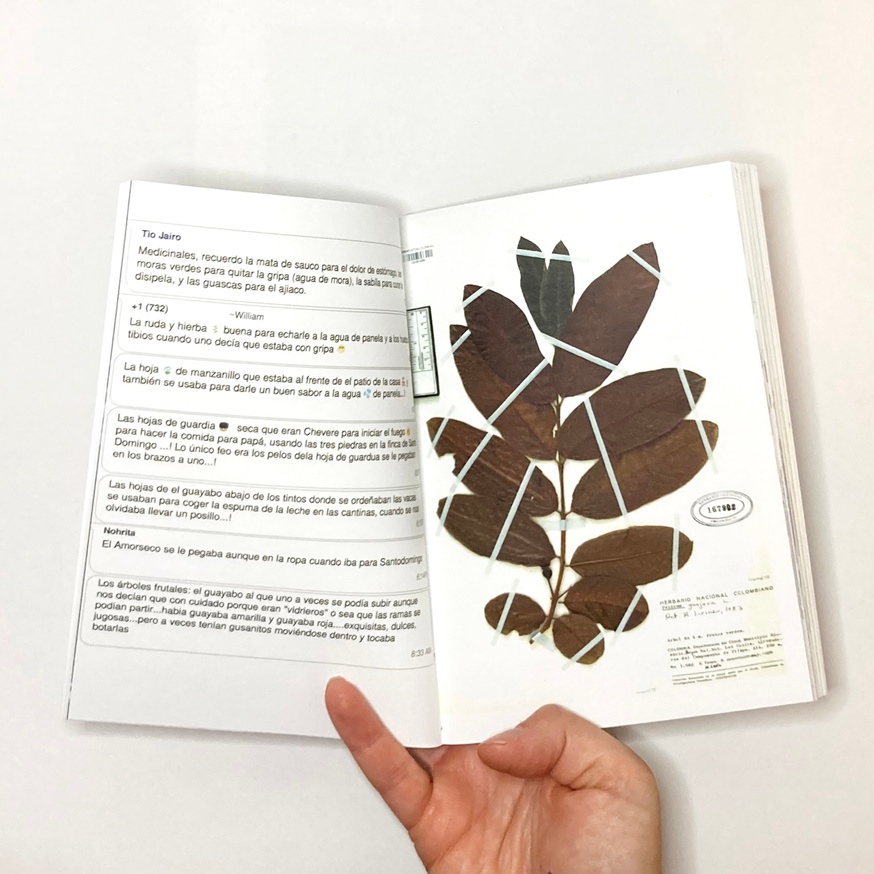
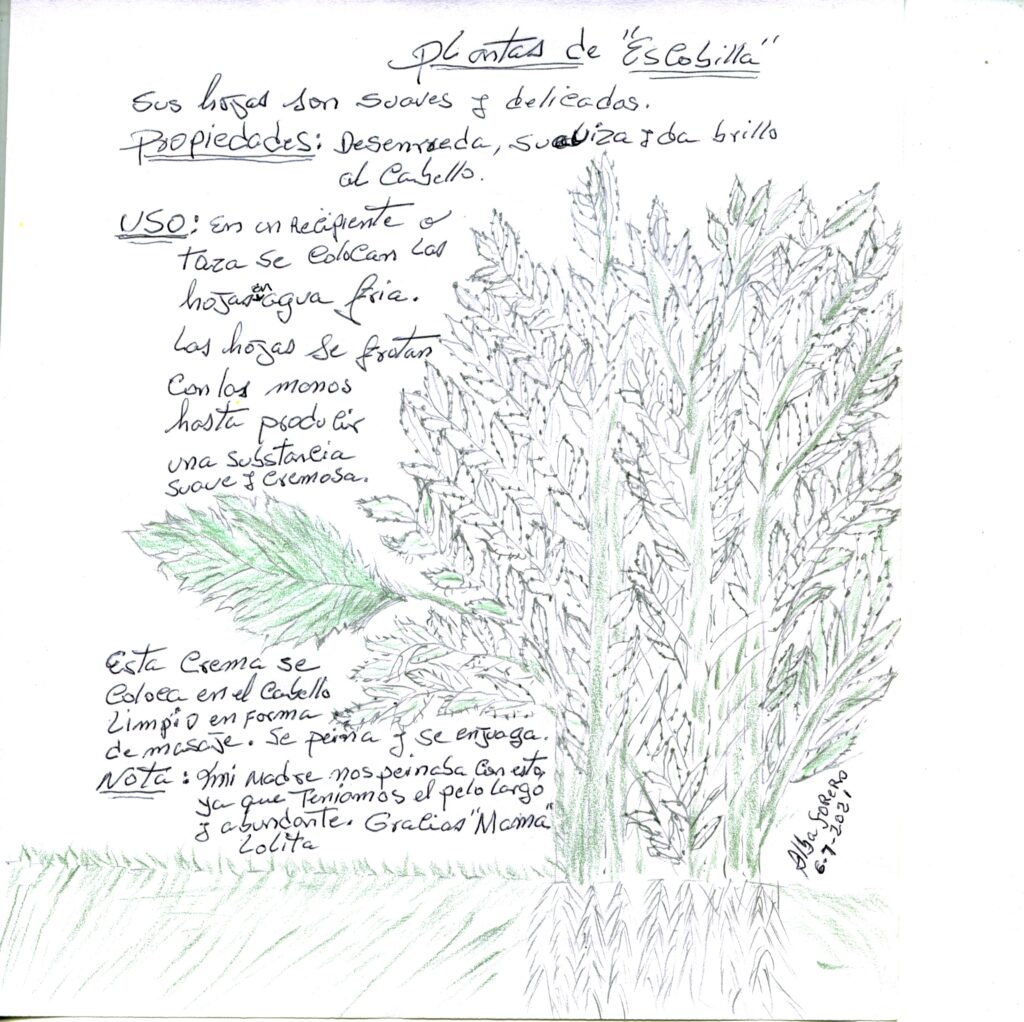
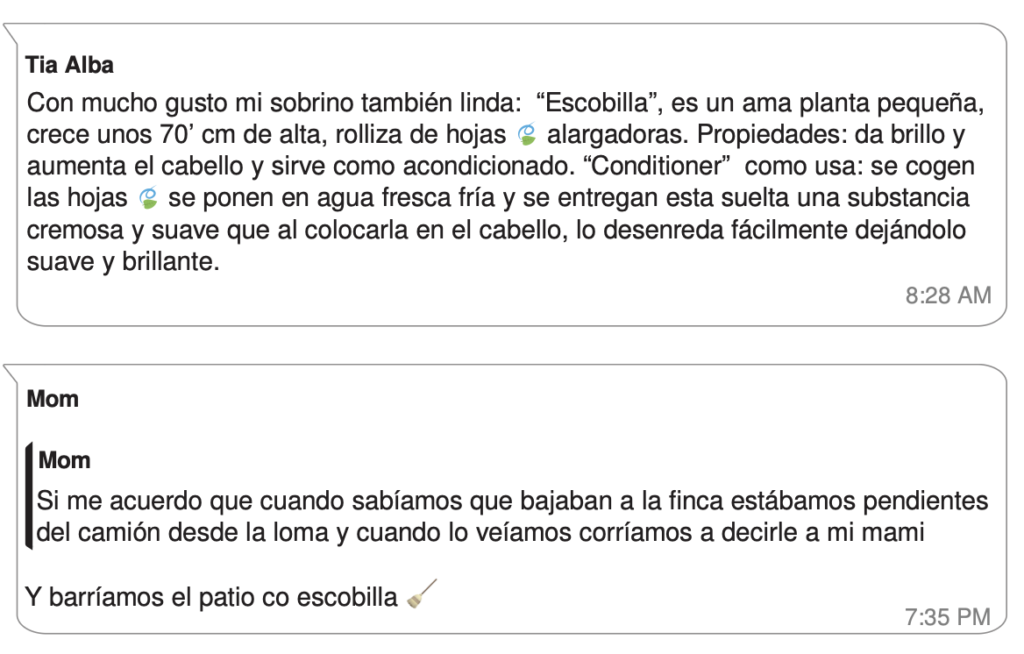
All images from recortes artist book.
Top left: WhatsApp messages I collected from my family about their memories of plants on the farm, juxtaposed with the plant specimen Psidium guajava from the Herbaria Nacional Colombiano.
Top right: Memory field note on escobilla from my Tia.
Bottom: Close-up of WhatsApp messages between my mum and Tia on the uses of escobilla.