In this deeply personal article, Lindiwe Dovey explores ways of decolonising teaching and pedagogy through reflecting in particular on her own lived experiences and positioning as both student and teacher. Through embedding in her writing photographs and film clips that encapsulate important moments in her life, she tries to foreground her own, embodied journey as a white-classified South African who has been immersed for twenty years in the study and curation of African film. This foregrounding is a vital gesture as a response to decolonial theory that calls for acknowledgement of subjectivity in any research process, and as a way of submitting the writing ‘self’ to scrutiny rather than neutralising and rendering its gaze at ‘others’ invisible. Rather than simply writing about African filmmaking as ‘object’, here Dovey interrogates what attracted her to this field and her own close relationship with it as ‘subject’. At the heart of the article she describes a painful teaching experience that compelled her to try to decolonise her curriculum and pedagogical style through changing her syllabus, collaborating with others (including her “students”), and engaging with the work of decolonial thinkers (for example, bell hooks and Jill Carter) and filmmakers (for example, Philippa Ndisi-Herrmann).
As the Left should by now have learned, you cannot mobilize a movement that is only and always against; you must have a positive alternative, a vision of a better future that can motivate people to sacrifice their time and energy toward its realization.
—Obioma Nnaemeka1
Activism is inherently a creative endeavor. It takes a radical imagination to be an activist, to envision a world that is not there.
— Ava DuVernay2
To educate as the practice of freedom is a way of teaching that anyone can learn. That learning process comes easiest to those of us who teach who also believe that there is an aspect of our vocation that is sacred; who believe that our work is not merely to share information but to share in the intellectual and spiritual growth of our students.
—bell hooks3
A Portrait of the Author’s Education as a Young Girl
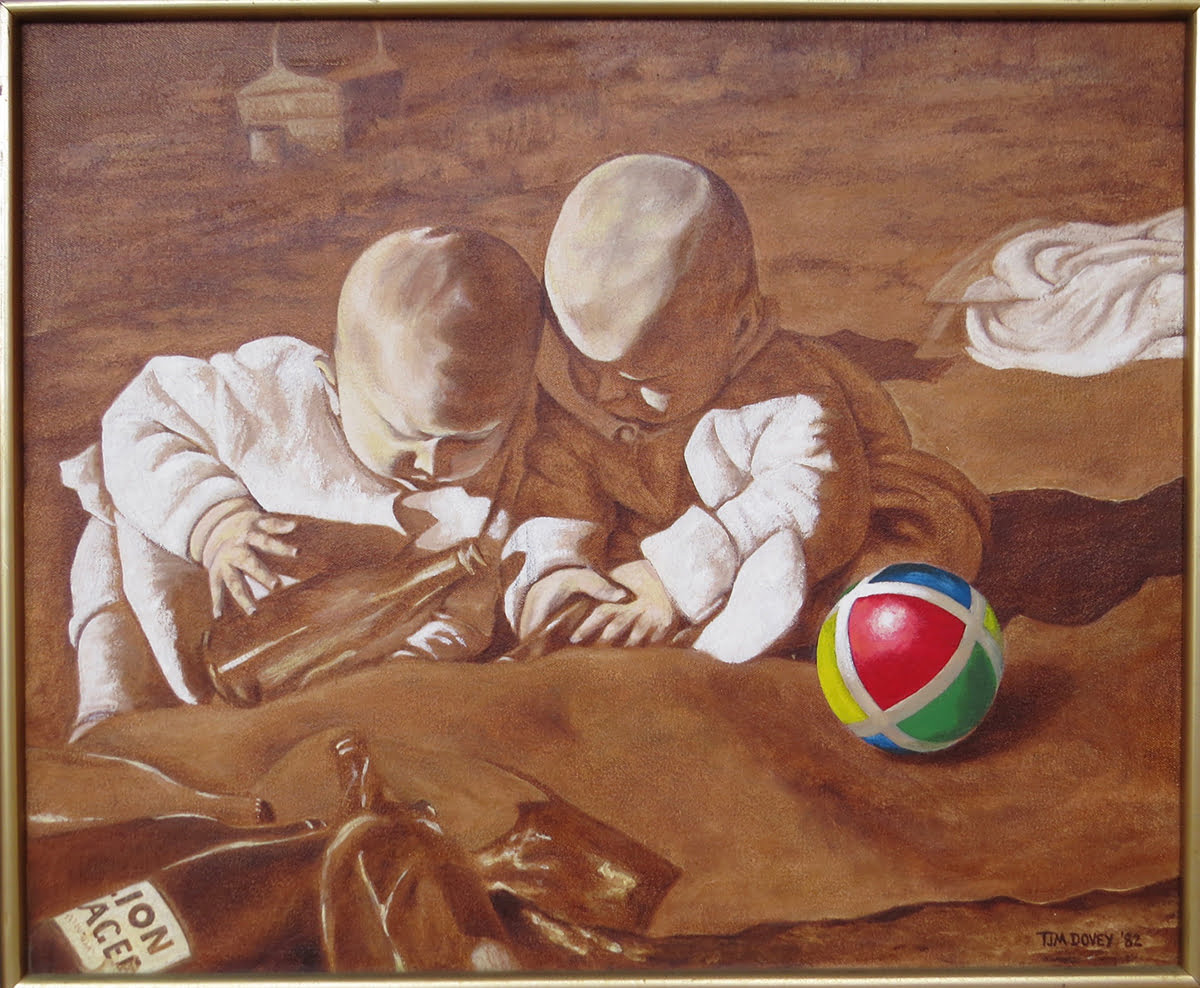
My mother paints, draws, does print-making and sculpture. I grew up surrounded by images that she had made adorning the walls of our homes. The homes changed constantly, but those images stayed the same, giving me an illusion of continuity. In her early paintings, she often worked from old family photographs. She liked to subvert each photograph in some small distinct way—adding a brightly coloured ball to an otherwise sepia painting of my father as a baby, for example, playing with beer bottles on a beach.
I was surrounded by still images as a child, but not by moving images. My parents did not want my sister and me to have a television in the house as they feared it would overshadow our creativity and imagination. I have only the vaguest memories of seeing films as a child—once, when a neighbour lent us their television when I was ill, a few times at friends’ houses, or on a very occasional trip to the cinema. The moving images I do remember were ones of ourselves as a family. In 1988 my father, an educational psychologist who had been inspired by Michael Apted’s documentary series 7 Up, decided that we too should document our lives, not through random amateur shots of my sister and me playing, but through serious, sit-down filmed interviews. The first time we did these interviews was in a wintry Melbourne in Australia in 1988, when I was nine and my sister Ceridwen was seven. We were about to return to the country of our birth—South Africa—because my father wanted to continue his anti-apartheid work there, which is what had also led to our first exit from the country, in 1982, when he received a death threat from the white supremacist government.
Film Clip 1: Lindiwe and Ceridwen Dovey being interviewed by their father, Melbourne, 1988
What was perhaps particularly radical about our family film-making, though, was not that my father interviewed my sister and me about our lives, but that afterwards he gave the camera to us, telling us to interview him and my mother. My parents spoke candidly about their fears of returning to South Africa, a racist police state ruled under a state of emergency at that time.
Film Clip 2: Ken and Teresa Dovey being interviewed by Lindiwe and Ceridwen Dovey, Melbourne, 1988
While I was haunted by my parents’ words, I felt pride and empowerment in having been given the camera. You can hear the naïve pleasure in my young voice as I tried to assume the authority of an interviewer. Shy and self-conscious when I was the subject of the camera’s eye, when I was allowed to slip behind it I felt comfortably invisible and important. As a child who had already moved between five cities across two continents, I also revelled in the security of the camera’s exacting eye—I understood that these images were being captured from the flow of time and being preserved for posterity.
I am certain that it was these experiences—of being interviewed by, and interviewing my family on film—that made me passionate about the possibilities of the medium of film. When I came to the end of high school I knew I wanted to apply for a film-making programme at university. The Visual and Environmental Studies programme at Harvard University appealed to me, because of its intimacy and eclecticism: this was not a film-making programme geared towards making commercial films. I was fortunate to get a need-based scholarship, which enabled me to study there. When I showed up, I had no formal training in film-making or photography; it was thrilling to be taught by film-makers who were practitioners, but also deep thinkers—Alfred Guzzetti, Robb Moss, Françoise Romand—and I was also fortunate to be taught and mentored by the visual artist Paul Stopforth. As a teacher myself now, I often think nostalgically about the deep pleasure of those early years of being taught by people much older than myself and with so much life experience. Being taught for me involves the pleasure of giving oneself over to someone else’s passions and vision, thoughts and experiences about the world, and trying to integrate those with one’s own.
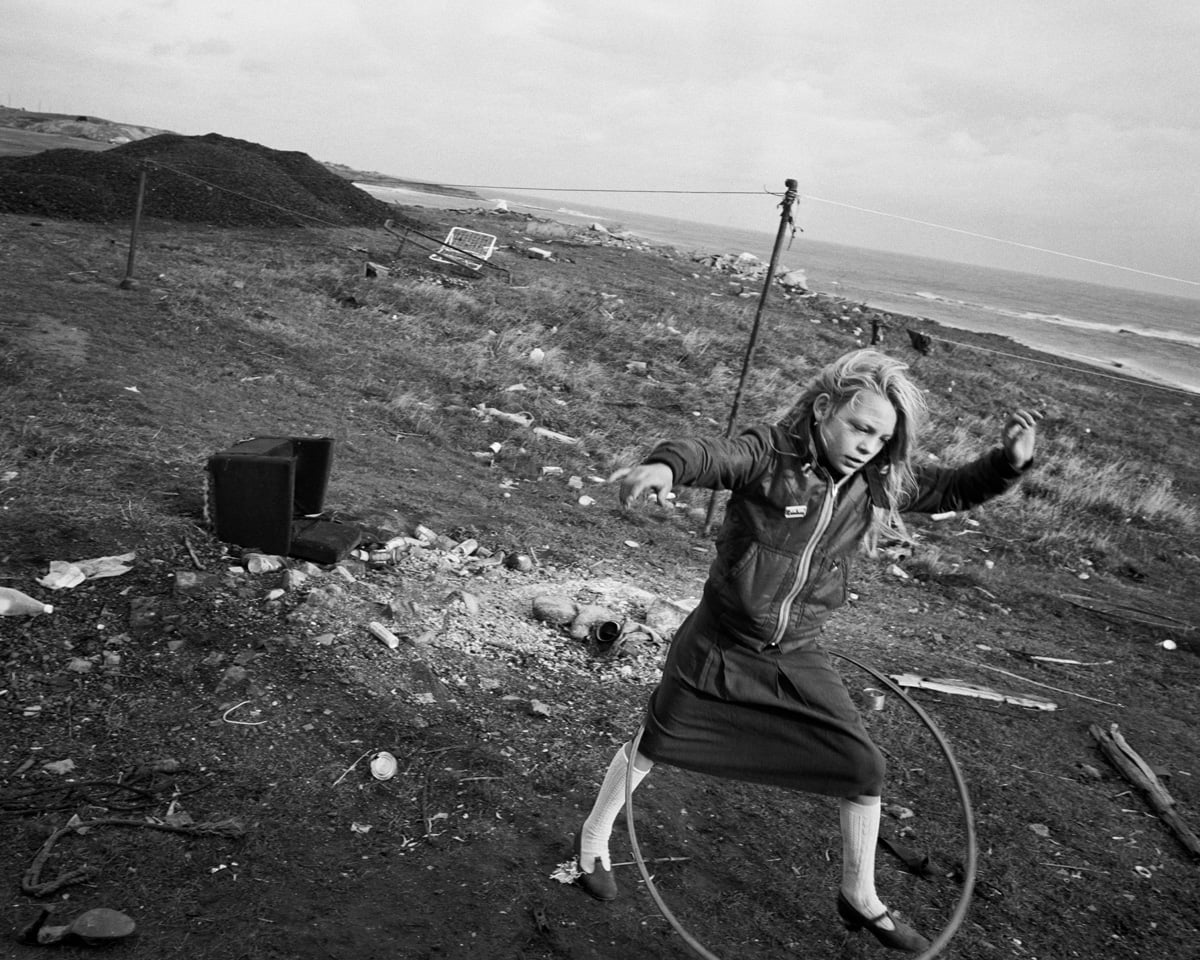
In the Visual and Environmental Studies programme at Harvard—at least when I was there twenty years ago—every student was required to do a photography course before we could move on to film-making courses. Those of us who wanted to be film-makers enjoyed grumbling about this, but we quickly became immersed in the pleasure—and pain—of learning how to make a technically competent, powerful, still image. Our teachers taught us the technical skills of F-stops and using fixer, and I soon found out why learning these technical skills was important. I’d come across the work of the photographer Julia Margaret Cameron, and had been trying to mimic her ethereal style in my own photographs. I’ll never forget the visit my class had from the head photography teacher, Chris Killip, who sat each of us down individually and silently went through our prints, sorting them into two piles. One of my piles was very large, the other very small. Chris looked up sternly with his hand on the large pile and said “You don’t know how to take a photograph.” And so began my journey of trying to learn how to take a technically excellent photograph, and I learned through this that failure—and the painful experiences of being taught—can also lead to thrilling insights.
Despite the importance of this technical training, what remains with me as one of the most inspirational hours of my four years as an undergraduate was a slide show, set to songs by Kitty Lester and others, in which Chris Killip shared his photographs from his native Isle of Man with us. I sat in the dark cinema in wonder. Being invited into Chris’s world, into his passion for photography, his intimate vision of his people in the Isle of Man, was so powerful for me. I felt as though my mind, my heart, my body were all being addressed, being taught something vital, although I couldn’t articulate exactly what it was. Looking back now, I realise that what I was being taught went far beyond anything specific. I was being taught what it means to live and work passionately, to throw your whole being into something you love and to pursue it as your living so that you don’t have a choice to make a living otherwise. Even as the definition of Chris Killip’s photographs faded in my mind, they lodged themselves somewhere in my being.
I had a lot of catching up to do at university. I had hardly watched a film when I arrived, and so I took as many film courses as I could and regularly attended film screenings at the Harvard Film Archive. But when it came to making my own final Honors film—an adaptation of the South African novel Story of an African Farm by Olive Schreiner—I floundered. I was a white-classified girl who had grown up during apartheid in South Africa, but I had no cinematic reference points for how to envision that experience on film. I had been seduced by the films of Michelangelo Antonioni and Jean-Luc Godard and my film ended up, in parts, being a kind of pretentious homage to European avant-garde cinema.
What rescued me during that experience was the teaching of my thesis supervisor, the late Indian filmmaker Mani Kaul, who had himself been a student of Ritwik Ghatak. When I spoke to Mani about my difficulty in knowing how to summon my native South Africa on film, and my own complex positionality within that context, he sang a classical Hindi song to me, then said: “Focus on the smallest things: a leaf, a rock, a grain of sand.”
Film Clip 3: Mark Cousins interviewing Mani Kaul, from The Story of Film, 2011, produced by John Archer, Hopscotch Film
Mani gave me the permission to foreground my own lived experience in the film, my own struggle with negotiating my passage into adulthood, into womanhood, inside my own skin. Much later I would read these words from Minto Felix and Judy Friedberg and recognise what Mani had taught me: “decolonising begins with individuals deconstructing themselves and looking inward to the roots of their own identity.”4
At the end of my time at Harvard, I wasn’t sure what to do with my life. Reality was kicking in: I still wanted to be an independent film-maker, but I was well aware that I would not be able to earn a living doing so. My parents suggested that I pursue a PhD to give me something secure to fall back on if my dreams of becoming a film-maker didn’t materialise—those were the days when academia still promised some measure of security! So I applied for and was fortunate to be awarded a scholarship to undertake a doctorate at the University of Cambridge. It had been a childhood dream of mine to study at Oxford or Cambridge, fuelled by images I had seen of beautiful, ochre medieval colleges in a brochure somewhere. But when I arrived in Cambridge at the age of twenty-two, I felt paralysed and out of place. Surrounded by perfectly manicured green lawns, private gardens, and avenues of lime trees, I could find no inspiration for what I wanted to research. The feeling of paralysis was compounded by the fact that I arrived in Cambridge after four years in the United States, on 1 September 2001. Ten days after, the world would change irrevocably and it was difficult to fathom and reckon with the value and privilege of sitting in such a quaint, cloistered place “enlightening” one’s own mind.
I ate too much, and sent my parents emails about how depressed I was feeling. I scratched around in libraries for clues as to what I should do, how to make my life useful. One day I came back to my room with a VHS tape of a film made by a Malian filmmaker, Souleymane Cissé, Yeelen (The Light), made in 1987. I put it in the VHS player and pressed play. I was immediately confronted by delicate white symbols etched against a black background, accompanied by a language I didn’t understand—Bambara. The English subtitles told me:
Heat makes fire and the two worlds (earth and sky) exist through light. For the Bambara, the Komo is divine knowledge. It is taught by “signs”. It covers all forms of knowledge and life. The Kore is the 7th and final Bambara initiation society. Its symbol is the holy vulture, bird of space and knowledge. Its emblem is a wooden horse, symbol of the human spirit. Its scepter, a carved board called the Kore wing. Kolonkalanni, a magic pylon, is used to find lost things, and to expose and punish thieves, traitors, and perjurers. The Kore wing and the magic pylon have been used in Mali for centuries.
I watched the film, transfixed, until I reached its blistering end in which a father and son eliminate one another through blinding light—the son aware that his father’s power has become corrupted and is dangerous for the community, and the father in jealous retribution against his son’s prophetic, positive power.
Film Clip 4: Scene from Yeelen, 1987, director Souleymane Cissé
I felt blinded myself, but like the blind, wise character of Djigui in Yeelen, I felt that in blindness I had been granted a lightning bolt of clarity. I felt that something imperceptible but vital had shifted over the past two hours, setting me on a new path. I felt struck by what felt familiar in the film, shocked by how much I didn’t understand, humbled by my limited knowledge about the world in the face of a deep, complex culture from a part of Africa that I had barely heard about, let alone visited. But I gave myself over to the images, the sounds, the feeling of not knowing. Much later I read that Souleymane Cissé says that “You cannot pluck away at a film like a chicken.”5
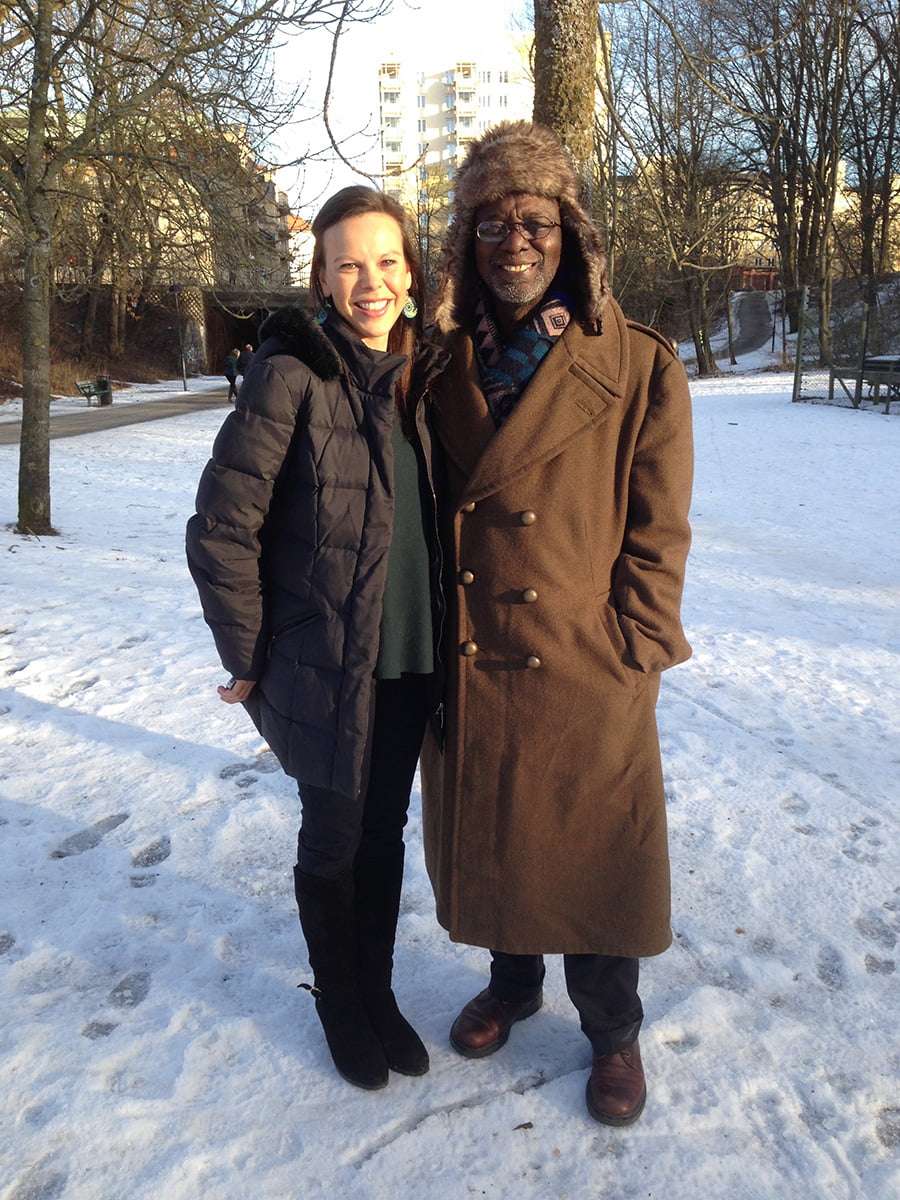
On an icy day, fourteen years after this cinematic encounter, I met Cissé in person in a snowy Sweden, at the CinemAfrica film festival in Stockholm, where I had the honour of being in conversation with him at the Swedish Film Institute after a screening of Yeelen, a film that will for always be imprinted on my retina.6
The French film critic Jean-Louis Schefer speaks about “the films that have watched our childhood.”7 Yeelen is a film that watched and tutored my young adulthood, whose images are so intricately woven into my own life story now that I cherish them as I do my memories. When I watched Yeelen, it brought home to me how the schools I had attended growing up in apartheid South Africa had taught me nothing about the rest of the African continent into which I am proud to have been born. Why had it taken twenty-two years for me to find out that there were beautiful, profound films made by Africans from different parts of the continent? The subject matter of Yeelen no doubt stimulated this thinking, too, focusing—as it does—on how the old can become possessive over knowledge, shoring up and imposing their own ideas on those they are supposed to be enabling and collaborating with, not making way for the young to bring forth their own conceptions of the world. Thanks to the inspiration of Yeelen, I have devoted much of the past twenty years to watching, teaching, curating and writing about films made by Africans from diverse parts of the continent and beyond. I feel fortunate that a permanent job focused on African filmmaking at SOAS University of London has made this possible in a way that no other university position would have, where I probably would have been required to teach large survey courses on topics I might not have been particularly passionate about or interested in.
Yeelen is a film that has been classified as a “return to the source” by African film critics such as Manthia Diawara.8 This is because, unlike films set in the contemporary era, Yeelen draws on centuries of history, knowledge and legends of the Bambara people of Mali. The film nevertheless uses this past to offer a caustic critique of contemporary society and abuses of power, in Mali and everywhere.9 African film critics often refer to African film-making in relation to the sankofa bird from Akan mythology in Ghana, which flies into the future while looking backwards, into its past. The message is clear: how can we understand our turbulent present and future if we don’t understand our past? And this also means that for those of us who are teachers, we need to return to our own personal sources and their contexts and make these explicit in our teaching in order to understand not only our own subjectivity in the creation of knowledge, but how we are all subjects in and of history, complicit with and entangled in the overlapping, often violent, imperial histories that have shaped us and our relations with one another. This return to personal sources is of course not a new suggestion; it has long been a central value of womanist theorising, practising and activism.10
For many years I didn’t reflect on why it was that I was attracted so intensely to African film-making as my field of scholarship, teaching and curatorial practice—I say “African film-making” since the idea that there could be one, singular “African cinema” is a myth given the continent’s diversity, and the richness and variety of its screen-media output. One’s years as an “early career” academic are so weighted with pressure, with the need to impress others and prove oneself that it’s difficult to be humble about one’s positionality, about what one doesn’t know. In considering pedagogy, I think it is vital that we take experience within academia into account; young scholars are often so overburdened with having to design and develop materials for new modules from scratch that it is perhaps more difficult for them to have the confidence to teach in a way that “flips” the classroom and decentres knowledge. When I arrived at SOAS as a Lecturer in African Film in September 2007, I spent many weeks preparing each class and— because I was inexperienced—trying to educate myself enough to convince the students, who were not much younger than me, that I had something to offer them. As much as I enjoyed the teaching process, I found it incredibly stressful and nerve-wracking since I hadn’t yet accumulated enough knowledge and life experience in my field to feel comfortable giving up control in the classroom.
We all approach the material we study and teach with differing levels of proximity and distance, in close-up and in long shot. Some things may feel painfully close for us; others may feel frustratingly far away, elusive. To illustrate just how distant I was from my subject when I began my research on African film-making, let me tell you a little story. At the beginning of my PhD, I received a small research grant to attend the historically most important African film festival in the world—FESPACO in Ouagadougou, Burkina Faso. When I went to the travel agent to book my flights to Ouagadougou, no one had any clue where it was, to the extent that we had to pull out a map so that I could show them. The travel agent said there were no direct flights from London to Ouagadougou and so booked me instead on a flight from London to Dakar, in Senegal, saying I could then find a connecting flight from Dakar to Ouagadougou. I was very excited on the day of my flight from England to Senegal—after all, this was going to be my first trip to any African country beyond South Africa. But on the flight things turned a little strange. When I switched on the flight map, I saw that the plane was headed not towards West Africa but the Bay of Bengal. Then I saw the little red dot of our destination and the penny dropped: I was on a flight to Dhaka in Bangladesh, not Dakar in Senegal. I did eventually make it to FESPACO in Ouagadougou, but only after a long journey in which I was humbled into recognising once again how very little I knew about the African continent, let alone the world.
So, when people ask me why I chose to focus on African film-making, my answer is threefold: first because, thanks to watching Yeelen, I started to develop a passion for the beauty and power of African film-making, which is so unknown and unrecognised in many parts of the world, even within university spaces. Second, because by teaching films made by Africans I get to be a constant student of African film-making. And third, because it connects me to something deep within me that I carry from my childhood.
I was born in Pietermaritzburg, South Africa, in 1979. The white supremacist government’s oppressive system of apartheid, institutionalised in 1948, was fully entrenched by then, classifying people into four races: white, Indian, “coloured” (their word for people of mixed heritage) and black. “Non-white” groups were denied the most basic human rights. Three years before I was born, schoolchildren in Soweto had risen up to demand educational justice for themselves and many had been brutally shot down, including thirteen-year-old Hector Pieterson. The turmoil in the country, and my father’s work, led to my family moving seven times between South Africa and Australia as I grew up. Despite my father’s work, I have been aware from a young age that, as white-classified people, we have also been beneficiaries of a violent, racist system—a system that is not confined to South Africa, but that is global. In a poem that I wrote when I was eight years old, I lamented: “How can I love the world when I have guilt all over my toes?” And so, perhaps, teaching African film-making also gives me a way of processing my personal experiences and privileges. I am obsessed with certain images, certain events, as though they were primal scenes.
But it’s only more recently, after having been immersed in this subject for twenty years, that I’ve been able to stand back and reflect on my relationship with it. And it has especially been through teaching, being confronted by, working with, and learning from class members on a particular module I designed and have taught for many years at SOAS University of London—“The Story of African Film: Narrative Screen Media in Africa”—that I began to embark on a journey of explicitly attempting to decolonise my pedagogy.11
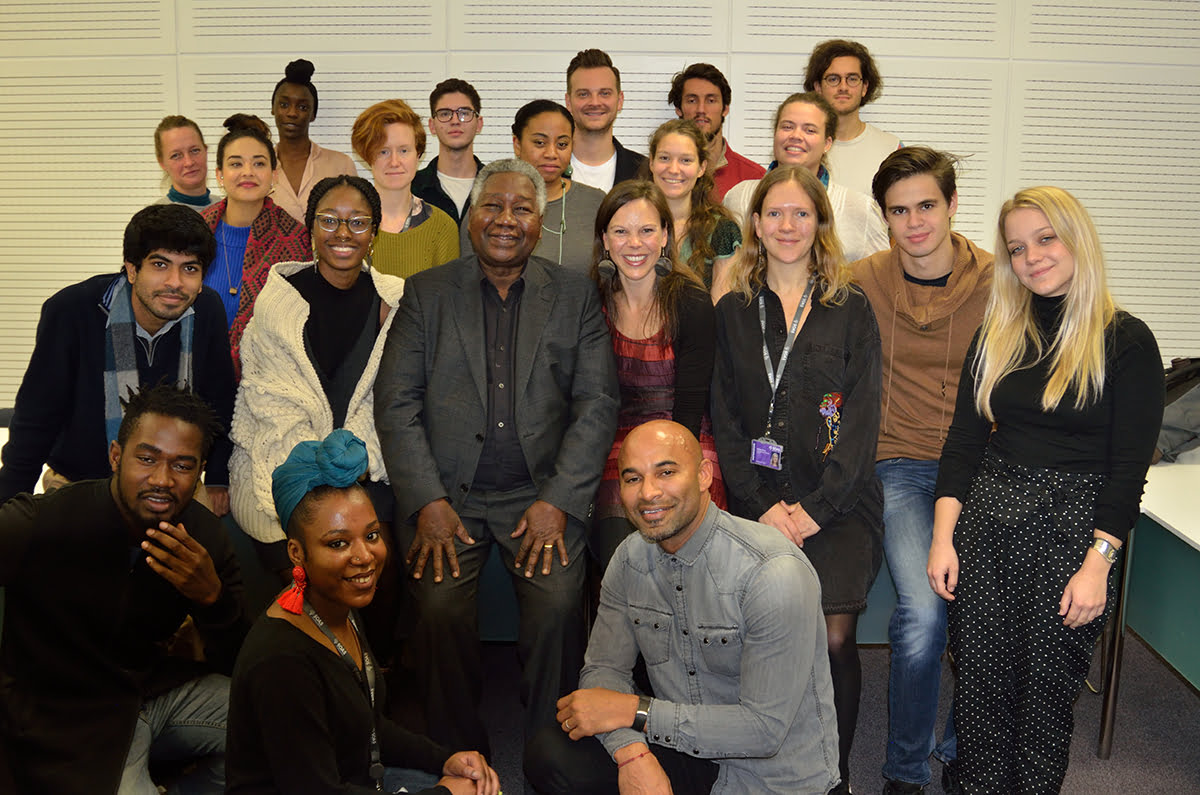
Close-Up on a Module: “The Story of African Film: Narrative Screen Media in Africa”
Teaching and Learning as Painful, Transgressive, Transformative
… there can be, and usually is, some degree of pain involved in giving up old ways of thinking and knowing and learning new approaches.
—bell hooks12
In December 2015, I wanted to give up teaching permanently. After many happy years of teaching a Master’s module focused on African film-making, I had had a deeply unhappy experience teaching it that term. At that time, my ten-week syllabus included two weeks at the beginning of the module focused on, first, colonial film-making in Africa—the film example of this was De Voortrekkers (1916), directed by Harold Shaw—and, second, ethnographic filmmaking in Africa—the film example of this was Les Maîtres Fous (1955), directed by Jean Rouch. The intention of including these kinds of film-making was to emphasise the horrors of colonialism and imperialism and to show class members the kinds of racist cinematic discourses African film-makers had to work against when they were finally able to make their own films in the 1960s, having been prevented from doing so previously through various colonial laws, including the 1934 Laval Decree instituted by the French government.
However, one of my class members was very angry that I had included such films and told me that by doing so I was re-empowering these discourses. I was terribly upset at the time; I told everyone that they had the right not to watch or engage with these early films made in Africa if they did not want to. But it was too late with the person who had confronted me; she had already disengaged from the module. She would come to class but would often lie with her head on her hands, looking at me sideways. I have never had such a negative, painful and uncomfortable teaching experience and I struggled to get through the ten weeks.
In the final class of the module I asked everyone not only to complete the official evaluation form but also to tell me how they felt I could improve the module. While class members who identified as white said that they appreciated that De Voortrekkers and Les Maîtres Fous had forced them to think about their own complicity in colonialism, the class members who identified as being of colour suggested that I either cut altogether or abridge this material in future.13 They said that they already knew those discourses from personal experience and that they did not need or want to be reminded of them. I felt gratitude on receiving this critique; far from being insulting, the giving of constructive criticism is—in my view—always an act of generosity. I put the emphasis here on constructive, since I do feel that a fundamental rule of any classroom should be the respectful treatment of everyone, all class members—including the “teacher”—even when we do not agree with one another.
What became especially apparent to me through this experience was how we can all become complicit in coding classrooms—and universities as a whole—so that they address and include certain people, and exclude others. Because previously my classrooms had not been very diverse in racial terms, I had not been forced to think about how class members who identified as being of colour would react to films such as De Voortrekkers and Les Maîtres Fous. It was only when my classroom started to become more “intercultural” that these issues became apparent. The shift in my classes was not just demographic, though; it was also ideological and no doubt inspired by the #RhodesMustFall movement led by South African students at the University of Cape Town in May 2015, which then started spreading into international struggles. I had not been in tune with what was going on at the time in South Africa, which was partly due to the fact that I was on maternity leave, mothering a baby.14
After my painful teaching experience in 2015, I set about transforming the syllabus for “The Story of African Film”. In this process, I reflected on the principles that had also guided me when I first started setting up African film festivals in the UK as a PhD student. The driving motivation there had been to respond to the overwhelmingly negative representations I constantly saw of Africa in the British media by curating positive, inspirational, and beautiful African films by Africans. It was this principle that I applied when rewriting the syllabus. After all, surely the development of any syllabus and curriculum has to be done in context, with a sense of how that material relates to the dominant narratives circulated in a particular society, both in popular culture and in academia. With so much attention and space given to the traumatic experiences of Africans during transatlantic slavery, imperialism and colonialism—particularly as authored by non-Africans—I felt it was important to create a syllabus that attempted to recognise, value and pay attention to the creativity and agency of African film-makers despite these violent histories.
I cut out the two weeks on colonial and ethnographic film-making in Africa and decided we would start the module with the “father of African cinema”, Ousmane Sembene, and the first films made in Africa by a sub-Saharan African—Borom Sarret (1963) and Black Girl (1966), as well as the brilliant documentary that has been made about this important filmmaker, Sembene! (2015), directed by Samba Gadjigo and Jason Silverman.15 In fact, far from obscuring slavery, imperialism and colonialism, Black Girl directly confronts such painful historical events, but it does so at the same time that it valorises the perspective and subjectivity of a young Senegalese woman (Diouana)—the first time in cinema history that such a perspective had been foregrounded in such a way.16
Film Clip 5: Scene from Black Girl, 1966, director Ousmane Sembene
While some people who identify as being of colour have expressed how painful it is to watch this film—which is based on a true story about a young Senegalese woman who committed suicide because of the terrible treatment she suffered from her French bosses—they have also expressed a feeling of empowerment and inspiration after watching the film. On the other hand, after watching Black Girl, people who identify as white have to acknowledge that Africa is not some far-away continent over there, but intimately connected with Europe.
Class members’ responses to Black Girl are a world away from the complaint I often hear at Decolonising SOAS working group meetings where students speak about their dismay at having to read another racist, colonial text simply because it is canonical to the field—Bronisław Malinowski in Anthropology, for example.17 What I hear these students say is that they need curricula and pedagogy to provide hope and healing and role models to those from historically disadvantaged backgrounds, and not endless reminders—authored by white-identifying people —of how their ancestors have been persecuted. I interpret these voices as saying that they need a shift in discourse away from victimhood to agency, from their experiences being silenced to being heard, from teaching as solely an intellectual practice to teaching—as bell hooks says—as a form of therapy and healing—and it should be therapy for teachers as much as for students. As important as it is that everyone understands the horrors of slavery, imperialism, racism, sexism, and other systems of oppression, we also have to make our pedagogy an activist practice that does not simply critique, but that is capable of transforming society by imagining and inspiring new, more positive, more respectful futures.
To try to apply what I have heard and learnt in these meetings, in addition to cutting out colonial and ethnographic films made in Africa, I have changed some of the readings in the module “The Story of African Film”. In particular, I have looked beyond my own disciplinary boundaries, engaging in what Jyoti Mistry calls “undisciplining” knowledge and knowledge production.18 I found that allowing myself to read beyond Film Studies and even African Film Studies was nothing short of liberating. In particular, in this process I re-encountered an article I had read years earlier that has subsequently become the framing article for “The Story of African Film”: Nigerian scholar Obioma Nnaemeka’s “Nego-feminism: Theorizing, Practicing, and Pruning Africa’s Way” (2003), which has nothing to do with film. And yet, over the past few years, this article has been an inspiration to class members of all backgrounds, in ways that are too lengthy to explain here. Given that the disciplines emerged out of colonial institutions during colonial times—for example, History was “invented” at the Sorbonne in 1812—eroding these boundaries is crucial to the decolonisation process. Indeed, many insights I gained at a recent conference at SOAS—“Applying a Decolonial Lens to Research Structures, Norms and Practices in Higher Education Institutions” (18 September 2019)—organised by Romina Istratii and Alex Lewis, emerged out of cross-disciplinary conversations across medical studies, the social sciences, and the humanities, since in this way we were able to share with and reflect back to one another with fresh eyes some of the issues within our respective fields.19
Changing my syllabus so that it gives immediate priority to scholarly and cinematic African voices and visual expression created a sense of optimism and shifted the discourse and framing away from one of victimhood to one of agency. Class members have also responded very positively to the space I try to give in classroom discussions to African perspectives and experiences, and some of those who identify as being of colour have said this makes them consider academic careers, rather than feeling alienated and as though academic institutions are not a space for them. Class members also often say that they find the African films we watch and study inspiring in terms of their own learning and creative practice. Every year it gives me great delight to see class members’ faces when they watch Djibril Diop Mambety’s Touki Bouki (1973) or Wanuri Kahiu’s Pumzi (2009) for the first time.
Since 2016, class members have also had a tremendous impact on the module, contributing to its transformation. Along with Ifeanyi Awachie and India Banks (class members of 2016), I started to reckon fully with the renewed decolonisation movements and to read scholarship—including, for example, Paolo Freire, Sara Ahmed, bell hooks, Jill Carter—that helped me to understand decolonisation more deeply. India offered their own home as a place where we could watch some of the class films together as a community rather than in isolation, and her home became a place in which much discussion and learning occurred over the sharing of food—like hooks’s famous “yellow kitchen”.20 This experience reminded me how reciprocal and collaborative teaching needs to be in order for it to be successful. As Freire has famously said, “teachers” and “students” are both teaching and learning simultaneously.21 And, as hooks acknowledges, “Many professors remain unwilling to be involved with any pedagogical practices that emphasize mutual participation between teacher and student because more time and effort are required to do this work.”22
Even after the 2016 class of “The Story of African Film” ended, Ifeanyi, India and I continued to work together, thinking about how we could contribute to decolonising pedagogy at SOAS more broadly. When it was announced that the theme of the fourth SOAS Learning and Teaching conference in June 2017 was collaborations and partnerships between staff and students, we submitted an abstract and began further collaborative research that led to our presentation at the conference, titled “Incorporating Positionality and Lived Experience into SOAS Classrooms: A Decolonial Approach”. We also independently organised a positionality workshop with Camille Barton, Founding Director of the Collective Liberation Project, to experiment with how such a workshop could become a part of SOAS’s—or any university’s—pedagogical policy.23 Our key focus was on the importance of teachers needing to create “safe spaces” and agreements in classrooms that allowed for the meaningful incorporation of intersectional positionalities and lived experiences into the learning process.
It should be said, however, that, making space for such personal sharing does not mean detracting from engagement with scholarly literature—as Carli Coetzee has so resonantly put it, those people we read and cite in our academic work are our “intellectual ancestors”.24 Achieving a balance between personal experience and listening to and putting ourselves in conversation with the work of thinkers who have gone before us is vital to understanding connections between past and present, and appreciating how long many people have fought for decolonisation—whether through political battles and wars, such as the Haitian revolution of 1791-1804, or through activist work within educational spaces, such as Ngũgĩ wa Thiong’o’s Decolonising the Mind (1986). As hooks says, what we are seeking are class members who are “willing to acknowledge a connection between ideas learned in university settings and those learned in life practices”, and to provide some space for discussing that connection in the classroom. But hooks critiques people who “abused that freedom in the classroom by only wanting to dwell on personal experience.”25
Carter, an Indigenous Canadian, whose work was introduced to me by India, was a lifeline for me in contextualising my own painful teaching experience in 2015. In “Towards Locating the Alchemy of Convergence in the Native Theatre Classroom”, she writes very evocatively of the problems that can arise in “intercultural” classrooms, the pain this can occasion—for very different reasons she, too, contemplated giving up teaching—and how “teachers” can best facilitate such classrooms. On the necessity of everyone being involved in this transformative project, she writes:
[The classroom] is a fraught space where worlds collide and stories compete for purchase, as our students struggle to imagine and then express themselves as human beings in community… The story that informs my teaching practice is this: as Aboriginal peoples in North America today struggle to re-member and re-member ourselves, we live in daily collision with a culture of forgetting that continues a centuries-old onslaught on Indigenous memory. That struggle plays itself out in the classroom, as young Canadians who have come to learn about a “foreign” culture find themselves uncomfortably implicated in a shameful history and an equally shameful present. “Forget the past,” they cry. “Move on.” But forgetting is dangerous—for all of us. We have all been authored by conquest, and we stagger about today, rocked by its collisions (Smith 71). Hence, decolonization must be a project that is shared by Native and non-Native peoples alike.26
Sara Ahmed also emphasises that the work required to bring about institutional diversity cannot continue to fall only on the shoulders of those considered to be the ones bringing that diversity.27 And in the introduction to the new, 2015 edition of Black Looks: Race and Representation, hooks cites Samia Nehrez, who says “Decolonization can only be complete when it is understood as a complex process that involves both the colonizer and the colonized.”28 Or, we might add, that involves both the beneficiaries and victims of colonialism, with a recognition that sometimes these positions overlap in complex ways and intersect with other experiences of historical and institutionalised injustice. There have been multiple recent accounts of how stressful decolonising work can be, especially for people who identify as being of colour.29 I am pleased, on this front, that the Decolonising SOAS working group has increasingly diversified itself, away from a small group of mostly committed womxn to a far broader demographic that includes undergraduates, postgraduates, teaching staff, and professional staff of many intersectional identities. At the same time, as people with varying levels of privileged status within university spaces, it is worth heeding the advice that “our own criticality [as academics] can be a way of protecting ourselves from complicity. As Fiona Probyn-Ramsey has observed, complicity can be a starting point; if we start with complicity, we recognize our ‘proximity to the problems we are addressing.’”30
Rather than white-identified people feeling paralysed by the imperatives demanded by decolonising, Obioma Nnaemeka argues for “the interrogation and repositioning of two crucial issues in feminist studies— positionality and intersectionality.” This process, she says, entails “a constant interrogation of one’s positionality at all levels—from the social and personal to the intellectual and political—as an active subject location of shifting reciprocity where meaning is made and not an essentialized location where meaning is discovered.” She also offers the possibility of empowerment to everyone willing to be involved in the decolonising project by arguing for
a modulated shift in focus of the intersectionality of race, gender, class, ethnicity, sexuality, religion, culture, national origin, and so forth from ontological considerations (being there) to functional imperatives (doing what there)… going beyond a historicization of the intersection that limits us to questions of origins, genealogy, and provenance to focus more on the history of now, the moment of action that captures both being and becoming, both ontology and evolution.31
In this vein, one of the lessons I took away from my participation in a “Decolonising Pedagogy: Exploring Processes in Image-making” workshop at the Valand Academy at the University of Gothenburg in May 2019, was the need to talk about these processes through verbs rather than nouns—positioning rather than positionality, instituting rather than institutions, teaching rather than teacher.
Since 2017, when I teach, I emphasise my own positionality/positioning and lived experience in relation to the material we are engaging with more explicitly, thanks to my work with Ifeanyi, India and Camille. As hooks says, it is important that teachers set the tone by first making themselves vulnerable in this way by opening up personally to the students. She says: “In my classrooms, I do not expect students to take any risks that I would not take, to share in any way that I would not share. When professors bring narratives of their experiences into classroom discussions it eliminates the possibility that we can function as all-knowing, silent interrogators.”32 I have heard many students complain that they are called upon by teachers in ways that would seem to categorise or profile them; if we are to respect each and every class member as a unique being, then we cannot call upon people in this way. Rather it is our responsibility as teachers to create an open, generous, and safe environment in which all class members want to participate and share.
Showing films to students in which film-makers reckon with their own positionality in complex, nuanced, and poetic modes has also been a wonderful means to encourage this kind of warm and intimate atmosphere. In particular, I love the way that Kenyan-German film-maker Philippa Ndisi-Herrmann elegantly conjures a sense of her cultural heritage and personal identity in her moving documentary New Moon (2018).
Film Clip 6: Scene from New Moon, 2018, director Philippa Ndisi-Herrmann
This documentary shows how complex and dynamic identity is—by slowly and beautifully revealing the filmmaker’s journey towards converting to Islam—how identity cannot be fixed, but is always in flux. And it reminds us that many aspects of our intersectional identities are invisible to the eye, and held in sacred spaces within us, deep below the skin.
Towards More Hopeful Futures: Teaching as Storytelling and Curating
It is never innocent—this decision to teach—regardless of how rigorously we strive to remain neutral facilitators, erecting helpful signposts at key points along our students’ journey toward meaning and the making of it… We come, I believe, to the classroom with a story by which we live and by which, we hope, our students will live because “The truth about stories is that that’s all we are” (King 2). Teaching is storytelling, and storytelling is a ceremonial act—an act, Paula Gunn Allen tells us, that is the articulation and embodiment of truthful experience (113), bringing about transformation and convergence as the story of one is inextricably woven into the greater story of the whole (119).33
Thanks in particular to collaboration with class members of “The Story of African Film”, my experiences of teaching this module in the past few years have been happier and more exciting than ever before. In 2017, we held communal, evening class screenings, open to anyone, and also featuring work by class members themselves, such as Angolan film-maker Jorge Cohen’s Independência (2015). Guest lectures and co-taught classes with generous and engaged “alumni” of the module—such as Ifeanyi Awachie, Precious Oyelade, Robin Steedman, Estrella Sendra Fernandez and Joe Jackson—have also become a way in which we can bring diverse voices and perspectives into the classroom to try to inspire current class members to continue in academia and/or working in related fields to support African film-making and creativity. Sometimes I hear bureaucrats say “Students take programmes, not modules”, but one module—even one isolated class, meeting with a supervisor, encounter with an inspiring alumna, or particular film —can have a life-changing effect on someone, as I hope I have shown through tracing key moments in my own educational journey.
While the responsibilities and possibilities of decolonising curricula and pedagogy belongs to all class members—both “teachers” and “students”—it is the responsibility of the person paid to be the teacher to set the tone and be the facilitator of that tone throughout the module. By thinking of and putting themselves forward as storytellers and curators, as individuals with a particular positioning, lived experience and story, rather than as experts, teachers will be more capable of creating classroom environments and cultures of reciprocity and generosity. By giving thought not only to the intellectual content of modules, but also the emotions that module content might provoke or inspire, teachers will also be more capable of finding a balance between presenting the often difficult, painful facts we all need to know about and confront, and presenting work—whether scholarship, films, novels, art, or examples of activist projects—that will inspire class members to believe that it is possible for us to find solutions to these problems and to work together towards alternative, brighter futures.
My module used to be called “Aspects of African Film and Video”, but I changed it to “The Story of African Film” to put the emphasis on the possibilities of storytelling and narrative when thinking about knowledge production and learning. Teaching is a form of curating stories, where the teacher has the responsibility to decide which stories are included and which left out. As a result, every syllabus, in my view, should be explicitly presented to students as a subjective selection of material, not as something objective. Students should be invited to critique this selection and to feel empowered to transform it to make sense of the material in their own, unique ways. For example, the introduction to the syllabus for “The Story of African Film” says:
History is, of course, made up of many stories and you will be encouraged throughout the module to develop your own interpretations of the dynamic changes in African filmmaking, in diverse contexts, over time. The narrative screen media output from Africa from the 1960s to the present day is simply too large to cover in one module; the module thus needs to be seen as one particular story of many possible stories, curated by the teacher, and based on the constraints of a 10-week module. You are welcome to pursue your own stories of African filmmaking through wide reading and viewing beyond the assigned material; the teacher is always happy to listen to your ideas and advise on original avenues to pursue.
So, adding “story” to the module title was intended to demystify History as some objective collection of facts and to invite a hermeneutic, interpretive approach to the material – something that is a great advantage to those of us who work in the humanities and, in particular, the arts, since I realise such an approach may be more difficult in other subject areas. This was not an excuse for laziness on my part as the teacher. On the contrary, it meant more work in conjunction with SOAS librarians to ensure that more African films were available to students. I also provided more suggestions for further reading and viewing so that class members could put themselves in conversation with film-makers and scholars beyond those we were able to cover in the module. On many occasions it has meant organising guest classes with African film-makers, distributors and curators.
Adding “story” to the module title was also a reference to the module material, to the fact that most of the films in the core syllabus are fiction films and therefore invitations to the students to approach them as such—as works of creativity and imagination rather than as anthropological windows into African culture, which is something that many African film-makers have expressed frustration with. Stories are universal, because although they inevitably derive from and are deeply marked by certain cultures, they are also deliberate abstractions of those cultures. Similarly, even though some people may feel closer to the representations in certain stories, stories invite everyone willing to listen to them to participate in them and interpret them subjectively. Stories also activate our emotions by allowing us to dwell on the narratives and experiences of unique people in specific contexts; they bring us down from abstract theory and statistics and allow us to put ourselves in the place of individuals.
I think that my focus on fiction has come from my own complex positionality as a white-classified South African, where I have felt I do not have the right to talk about African cultures in an anthropological or authoritative way. I have a hard enough time understanding my own subjectivity and lived experience, so how could I feel comfortable trying to explain someone else’s—let alone trying to describe an entire culture? I think a great deal of soul-searching, self-reflection, and work is still needed, particularly from those of us who are involved in some way in these kinds of knowledge production projects across cultures, who want to decolonise our pedagogy, research and practice.
A more hopeful future will require sacrifice and the giving up of power in a variety of ways. Kenyan filmmaker Wanuri Kahiu’s short film Pumzi (2009)—made forty years after Black Girl —provides a powerful example of such hope, with a young female heroine claiming her subjecthood at the same time that she sacrifices herself for a better future for all. This film— particularly viewed in conjunction with what is currently happening across the world in 2020—powerfully reminds us that our interconnectedness requires that we imagine and dream up better, more sustainable futures or else face extinction. As Carter says, we have to think in terms of the world that our grandchildren will inhabit together, in terms of the rights not only of currently living beings but also future beings. It also reminds us that although films have been bound up with and complicit in imperialism, they also have tremendous potential to inspire more honest, open conversations. Visual language, which is more accessible in many ways than the abstruse written language dominant in the academy—and which tends to be English—can help to invite everyone in to thinking about the need for decolonisation through storytelling and curating, therapy and healing, through using multiple languages, and through engaging in the openness of hermeneutic practices rather than the hard world of so-called facts. For what is knowledge, after all, except a set of stories that we keep telling ourselves, a set of images we carry in our minds, hearts and souls?
Author’s Notes and Acknowledgements
This article has grown out of many pieces I have previously written and/or presented, but not published. I began working on it in March 2016, with no intention of ever publishing it: it simply began as a long, personal journal entry in which I tried to work through my negative teaching experience in 2015. Other pieces it is related to include: my joint presentation at the 2017 SOAS Learning and Teaching conference, with Ifeanyi Awachie, India Banks, and Camille Barton, to whom I am incredibly grateful for our collaborations; my contribution to the SOAS Decolonising learning and teaching toolkit, with many thanks to my colleagues in the SOAS Decolonising working group, and especially Meera Sabaratnam, Manjeet Ramgotra, and Romina Istratii for their inspiration; presentations delivered for “The Camera as a Tool for Research” workshop (November 2017) and the “Decolonising Pedagogy: Exploring Processes in Image-making” workshop (May 2019), both held at Valand Academy, University of Gothenburg, with much gratitude to colleagues at Valand Academy for all their wonderful support for my work; and presentations delivered for the “Screen Worlds: Decolonising Film and Screen Studies” workshop at the University of Lagos, Nigeria in March 2020, with my sincerest thanks to all participants of this workshop for their feedback and engagement. Tremendous thanks also to the two external reviewers of this article, Nduka Mntambo and Mick Wilson, for insights that have helped its development immeasurably. And gratitude always to those colleagues from whom I have learned much and continue to have enriching conversations about these topics—especially Jyoti Mistry and Carli Coetzee.
Finally, my love and thanks go to my family – Ken, Teresa, and Ceridwen Dovey – for allowing me to share our intimate family footage and for their ongoing support for my work.
I invite you to write to me at ld18@soas.ac.uk if you are willing to share your own thoughts and feelings on the issues I have written about here.
I also invite you to explore the syllabus for my module “The Story of African Film”, which you can access here, and to buy and watch the films that I write about in the article above. You can rent/buy New Moon online directly from the filmmaker here, thereby supporting her work; you can buy Black Girl here and Yeelen here; and you can rent Pumzi here and The Story of Film here. Sembene! is available to buy in Region 1 format here and to rent/buy online through Amazon Prime here. Please encourage your university/school libraries to also purchase these films; the Screen Worlds team is also happy to try to connect you with the filmmakers or estate of the filmmakers to buy directly from them so that the funds go to the filmmakers and their families rather than large companies.
This project has received funding from the European Research Council (ERC) under the European Union’s Horizon 2020 research and innovation programme (grant agreement No. 819236—AFRISCREENWORLDS)

Footnotes
- Nnaemeka, Obioma. “Nego-feminism: Theorizing, Practicing and Pruning Africa’s Way”. Signs. Vol. 29. No. 2. 2003. p. 364. ↑
- Ava DuVernay cited in Monllos, Kristina. “Filmmaker Ava DuVernay on the Creative Process, and the Intersection of Art and Activism”. Adweek. 10 June 2018. Available at https://www.adweek.com/creativity/creative-100-ava-duvernay/ (accessed 2020-04-16). ↑
- hooks, bell. Teaching to Transgress: Education as the Practice of Freedom. New York, NY, and London: Routledge. 1994. p. 13. ↑
- Felix, Minto and Friedberg, Judy. “To decolonise the curriculum, we have to decolonise ourselves”. Wonkhe. 8 April 2019. Available at https://wonkhe.com/blogs/to-decolonise-the-curriculum-we-have-to-decolonise-ourselves/ (accessed 2020-04-16)., ↑
- Souleymane Cissé cited in Ukadike, Nwachukwu Frank. Questioning African Cinema: Conversations with Filmmakers. Minneapolis, MN: University of Minnesota Press, 2002, p. 24. ↑
- Nigerian writer Ben Okri has spoken about Yeelen’s impact on him in similar ways. See https://www.youtube.com/watch?v=7Gm0bGk5yEA (accessed 2020-04-16). ↑
- Cited in Daney, Serge. “The Tracking Shot in Kapo”. In The Continental Philosophy of Film Reader. Edited by Joseph Westfall. London and New York, NY: Bloomsbury. 2018. p. 170. The original book Daney cites from is Schefer, Jean-Louis. L’Homme ordinaire du cinema. Paris: Collection Cahiers du cinema-Gallimard. 1980. ↑
- Diawara, Manthia. African Cinema, Indianapoolis, IN: Indiana University Press. 1992. ↑
- MacRae, Suzanne. “Yeelen: A Political Fable of the ‘Komo’ Blacksmith/Sorcerers”. Research in African Literatures. Vol. 26. No. 3. 1995. pp. 57-66. ↑
- See, for example, the work of Alice Walker, Barbara Christian and Kimberlé Crenshaw. ↑
- “Class member” is a term I developed in conjunction with Ifeanyi Awachie in 2019, to respect Paolo Freire’s statement that we have to reject hierarchies between “teacher” and “student”. ↑
- hooks, Teaching to Transgress, p. 42. ↑
- I am using, wherever possible, the phrasing “identify as white” or “identify as being of colour” to avoid making assumptions about other people based purely on the colour of their skin, which would mean continuing the problematic process of racialising other people without knowing how their genetic and cultural heritage and lived experiences have influenced their identity and sense of self. Growing up in apartheid South Africa, and experiences I have had in my work, have made me feel deeply uncomfortable about imposing unnuanced terms such as “white” or “black”—or in fact any label—on other people. It is one thing for someone to call themselves “white” or “black”, and quite another for someone else to call them “white” or “black”. I do not believe this is a minor semantic issue. How we use language to talk about these problems, and to refer to and describe one another and the world, ends up constituting the world, and knowledge about it. ↑
- I mention this personal detail, because I think that it is significant that my journey towards trying to decolonise my pedagogy and research began at the same time that I became a mother—a carer and nurturer of someone else. ↑
- An alternative to banning this kind of racist colonial and ethnographic film-making altogether is to show artistic work by Africans that remixes this archival footage in creative and liberating ways. Jyoti Mistry’s short film When I Grow Up I Want to be a Black Man (2017) has been particularly inspiring to me, and I have enjoyed the discussions that have arisen around this film at screenings I have curated at the University of New South Wales, Australia, SOAS University of London, and University of Lagos, Nigeria. ↑
- Manthia Diawara, interviewed in Sembene! (2015) directed by Samba Gadjigo and Jason Silverman. ↑
- The Decolonising SOAS working group was set up in 2016 and is open to anyone at SOAS who wants to be involved. It was inspired by the Decolonising Our Minds society set up by SOAS students, who were the first at SOAS to respond to the #RhodesMustFall movement in South Africa. For more about the Decolonising SOAS working group see https://blogs.soas.ac.uk/decolonisingsoas/ (accessed 2020-04-16). ↑
- Mistry, Jyoti. places to play: Practice, Research & Pedagogy. Amsterdam, Amsterdam University of the Arts. 2017. ↑
- For the post-conference report see https://screenworlds.org/resources/applying-a-decolonial-lens-to-research-structures-norms-and-practices-in-higher-education-institutions-september-report-2019/ (accessed 2020-04-16). ↑
- hooks, Teaching to Transgress, p. 19. ↑
- Freire, Paolo. Pedagogy of the Oppressed. New York, NY, and London: Bloomsbury, 2018. Originally published in Portuguese in 1968, and in English translation in 1970. ↑
- hooks, Teaching to Transgress, pp. 204-205. ↑
- See https://www.thecollectiveliberationproject.com/misson (accessed 2020-04-26). ↑
- Coetzee, Carli. “Unsettling the air-conditioned room: journal work as ethical labour”. Journal of the African Literature Association. Vol. 12. No. 2. 2018. p. 109. ↑
- hooks, Teaching to Transgress, p. 15. ↑
- Carter, Jill. “Towards Locating the Alchemy of Convergence in the Native Theatre Classroom”. Canadian Theatre Review. Vol. 149. 2012. pp. 82-83. ↑
- Ahmed, Sara. On Being Included: Racism and Diversity in Institutional Life. Durham, NC, and London, Duke University Press. 2012. ↑
- Samia Nehrez cited in hooks, bell. Black Looks: Race and Representation. New York, NY, and London: Routledge. 2015, p. 1. ↑
- Swain, Harriet. “Black academics ‘can’t fight race inequality alone’”. The Guardian. 5 July 2019. Available at https://www.theguardian.com/education/2019/jul/02/black-academics-bear-brunt-of-university-work-on-race-equality (accessed 2020-04-16). ↑
- Ahmed, On Being Included, p. 5. ↑
- Nnaemeka, “Nego-feminism”, p. 361. ↑
- hooks, Teaching to Transgress, p. 21. ↑
- Carter, “Towards Locating the Alchemy of Convergence”, p. 82. ↑