Abstract
Onyeka Igwe was invited as guest-observer to the symposium “Encounters: Art, Power and Archives” at Autograph, London, March 2025. Her plenary closing remarks were the basis for this conceptual index. Rather than summarise the symposium’s proceedings, the index organises Igwe’s reflections into twenty-two entries, naming recurrent concepts, tensions and/or provocations that surfaced across the day’s presentations and her own evolving relationship in working with archives.
Moving from institutional questions of transformation, extraction, classification, the specificity of “institution” itself, through to affective and embodied registers such as claustrophobia, absence and the sensorial, the index traces how Igwe’s own filmmaking, particularly a so called archive (2020), becomes a lens through which the symposium’s debates are re-read. The index closes with questions of opacity, counter-archives and multiplicity, holding open rather than resolving the murky pleasures, enjoyments and returns that inform how artists work with archival material. The annotations function as both documentation and provocation, as an inventory of ideas that resists closure even as it names and orders them.
Contribution by Onyeka Igwe with index annotations by Jyoti Mistry
What follows are a set of reflections on the symposium “Encounters: Art, Power and Archives”, hosted at Autograph Gallery on 18 March 2025, which are structured around an index of concepts. Onyeka Igwe (OI) was invited as a guest-observer to attend the symposium to reflect on the contributions and to draw from her own experience and practice in working with archives and archival sources. At the final plenary session, she shared her observations of the sessions she attended and drew on her own evolving relationship with the concept of archives, the challenges, frustrations and pleasures of working with archival material. Her summative presentation was rich, generous and generative, where she considered her hiatus of working directly with archives and her inevitable return to the archive as a dense resource of inspiration, as an opportunity to confront histories and the reckoning it offered. What follows is an index of conceptual proportions developed from her experiences and her observation from the presentations. The quotes come from the transcript of her talk coupled with a descriptive and citation guide.
The index serves to connect to broader conceptual propositions raised as critical reflection and enquiry drawn from engaging with archival sources. The indexical inventory is structured along themes and/or topics that Igwe identified, named, cited or highlighted as recurrent themes and conceptual concerns over the course of the symposium.
As editors we found it useful to address some of the dynamic points of consensus and conflict raised through the lens of Igwe’s own artistic practice and experiences of encountering the archive and its relation to the presentations made. Some of these presentations have been further developed for this PARSE Journal issue.
START
1. Transformation
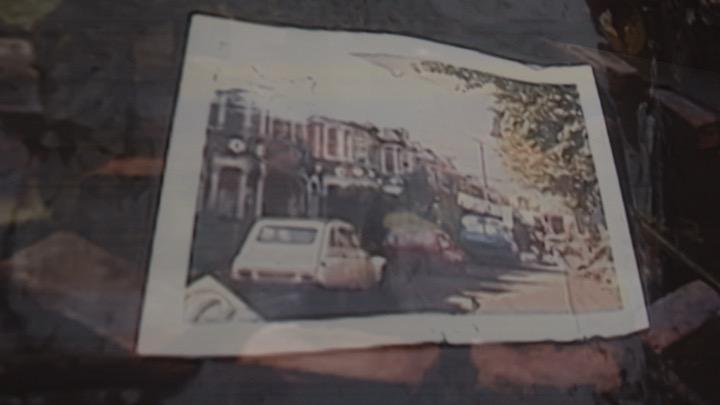
OI: It is a question of understanding what an institution is. This is an image from a film that I made called a so-called archive, which was thinking about and exploring the former Empire and Commonwealth Museum in Bristol as the ground from which this thinking emerges.
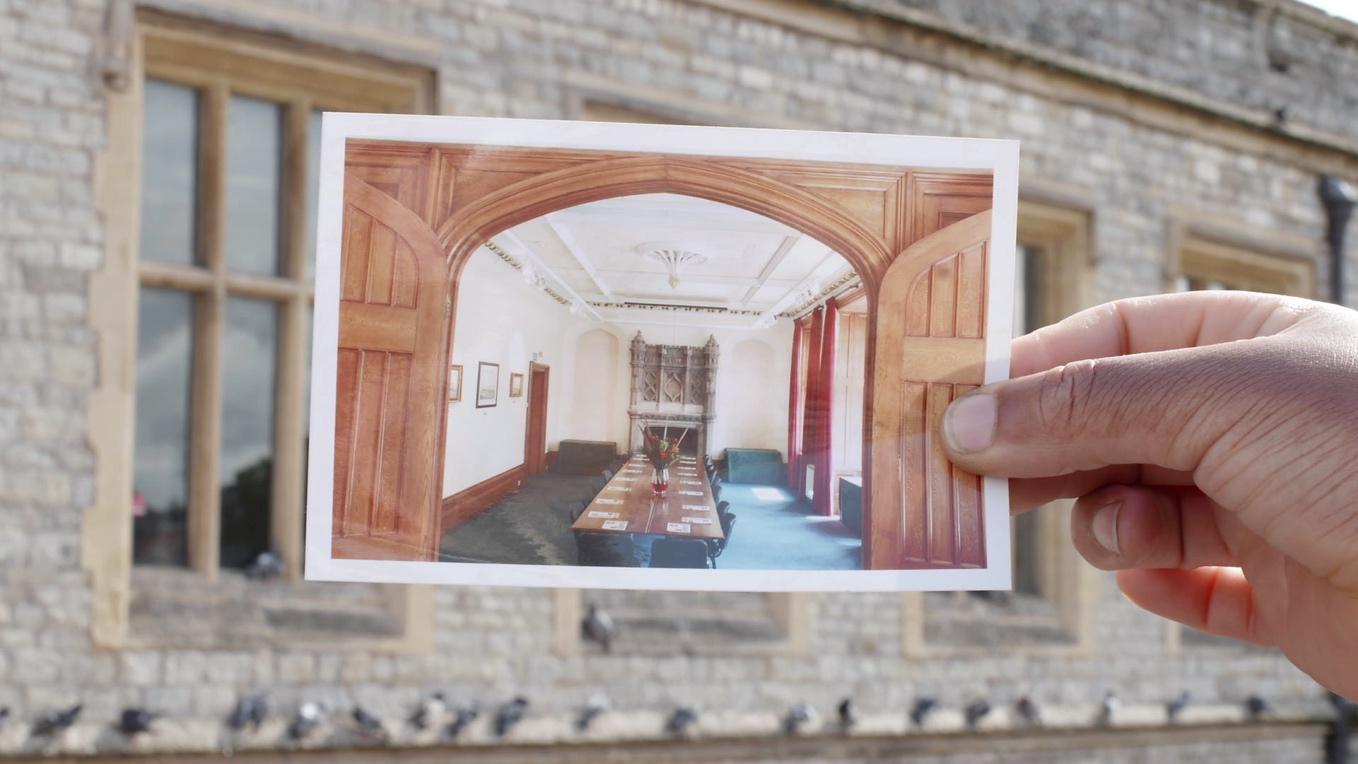
The question of what it means for something to become archival, the movement of “object, material, writing, letters” when it is made into the condition of the archive is a transformation that is not passive or neutral. It requires an institution and an understanding and demands that we reckon with what an institution is and what it wants. The archive cannot be understood independently of the institutional structures that produce it.
2. Extraction, Collection, Hoarding, Monetisation
OI: There’s this complex web of a continual [drive]to extract, collect, hoard, and monetize, or in some way, the things that they [the archive] collect—when [it] becomes archival material.
Consider the constitutive logic of archival institutions, a logic not grounded in abstraction but in the specific trajectory that the Empire and Commonwealth Museum created itself by seeking materials from former colonial administrators and their families, recording oral histories and acquiring what it could. What it is obsessed with is collecting. Its dissolution is as instructive as its formation. The entire arc from colonial households to private museums to eBay to skips to bonded warehouses enacts the same extractive logic across different institutional forms, and that logic is ongoing.
3. eBay and the circulation of archival value
OI: eBay came up a lot as a place where you get “archive” or where archive material goes when it becomes unuseful or it stops circulating within the realms of importance or being valuable.
eBay surfaced repeatedly across the symposium’s first day as a site of archival dispersal as the destination for material that exited the circuits of institutional value. Onyeka Igwe connected this to the structure of Empire and Commonwealth Museum’s illegal sales on that platform, which are not an aberration but an illustration of a structural condition: the archive’s relationship to value is relational and contingent. What gets sold, discarded or rescued reveals as much about institutional logic as what gets collected and preserved. The platform of eBay becomes an unlikely index of what institutions decide no longer matters for archival preservation.
4. Specificity of institutions
OI: Are we thinking about institutions as only those that we don’t like? I mean, I heard a library counted as an opposition to an institution, but I think libraries are also institutions.
Onyeka Igwe raises a concern about the imprecision with which the word “institution” circulated through the symposium. She calls for greater specificity to distinguish between state institutions, community institutions and the family, which was invoked as a space of respite or refuge from institutional power. She questions whether the family-as-institution forms a useful binary with the museum or archive. The family, she argues, operates by structurally analogous logics: it has absences, concealments and acts of unequal transmission that parallel archival silences. She recalls a workshop in which a mother who had hidden photographs of her estranged family from her daughter during a difficult divorce; a common story, she notes, and one in which the familiar charge against the archive that it withholds, selects, suppresses belongs equally to the domestic sphere.
OI: The family isn’t a utopia, you know? There are difficulties there, the same things that can happen in archival institutions can also happen in the family.
5. Ephemera—What Counts as Archival?
OI: What counts and doesn’t count as archival? What are ephemera?
The question of ephemera—small, apparently marginal objects, traces and materials—ran across the symposium’s engagement with queer archival practices, with Jose Muñoz’s scholarship cited as a cornerstone in this thinking. Igwe raised the following questions: Should ephemeral things enter the archive? Where should they be held and how should they be made accessible? These are not merely logistical questions. They are political ones—about whose small things are considered worthy of preservation, under what classification and on whose terms.
Muñoz, José Esteban. “Ephemera as Evidence: Introductory Notes to Queer Acts” (1996). In Cruising Utopia: The Then and There of Queer Futurity. New York: New York University Press. 2009.
6. Selection and Classification
OI: The way in which we think about archives today, is perhaps always about selection and always about classification. But in other cultures and other ways of thinking it’s not about that. It could be about other things.
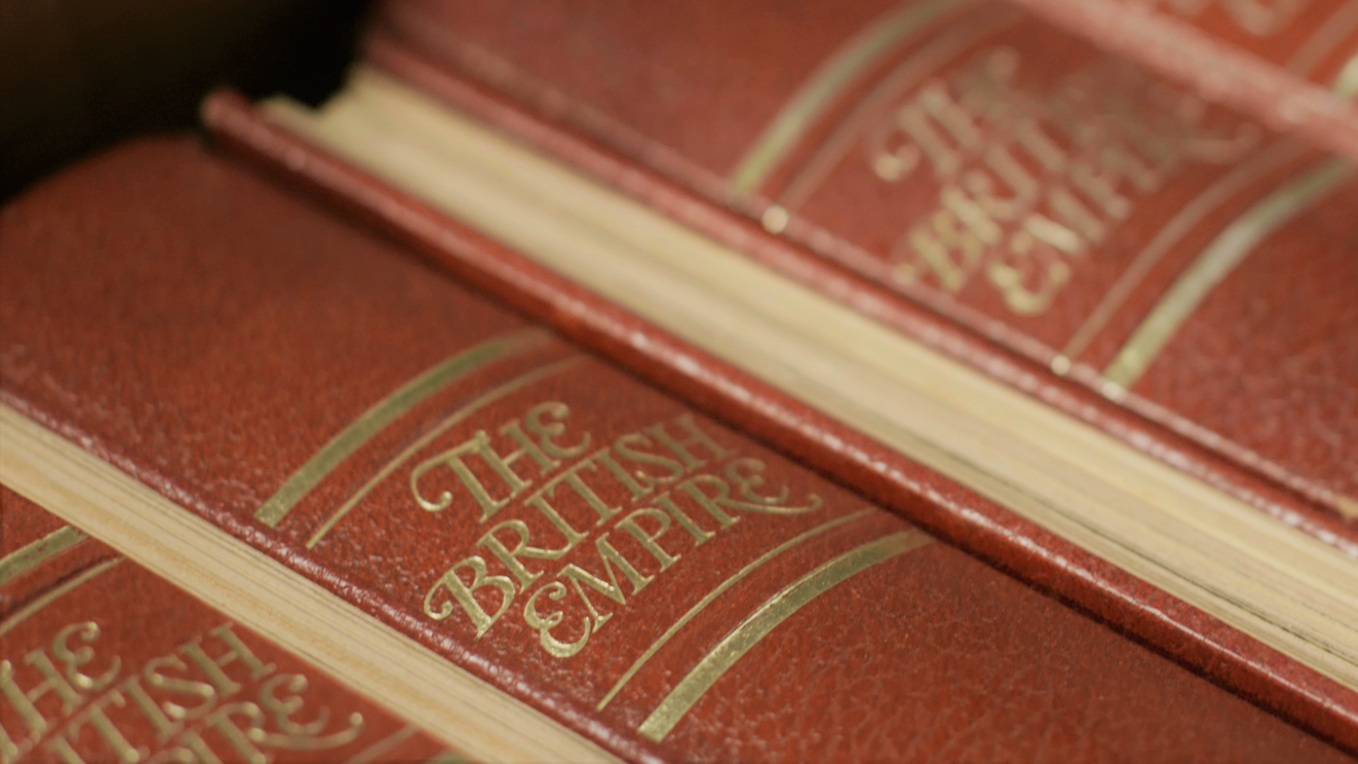
Selection and classification are the governing operations of archives while holding a claim of provisionality. That provisionality matters because it opens up to the possibility that in other cultures and other epistemic frameworks the archive might be organised around entirely different principles. Within institutions, we generally engage with what are structured as colonial archives, where the selection and classification processes determine whose histories are preserved, their form and to what end (the purpose of preservation). Selection and classification are never innocent, meaning that they are the work of power and knowledge that structure and determine these choices.
7. Claustrophobia
OI: The amount of material, this need to collect, this need to preserve, can create this feeling of “too much”.
During the symposium, several contributors observed that the claustrophobia of museums and institutions comes from the sheer volume of the material and content, which is a sign of the affective consequences of the extractive logic. Driven by the impulse to collect and preserve, this produces at times not a richness in the archive but a feeling of suffocation. Claustrophobia is not incidental to the archive; it is what the accumulative impulse feels like from inside it. This connects to the broader question of what it means to perpetuate these structures.
8. Absence
OI: Family histories also have absences, in the same way that an archive has absences.
Absence, in the archive and in the family is a structural condition rather than an oversight. Igwe brings this to bear on her own situation through the lens of migration, both from Nigeria to the United Kingdom and internal (within Nigeria), which has severed the transmission of cultural knowledge across generations. Cousins who moved away from their villages did not learn local customs, did not sit with their elders, did not receive the stories that previous generations would have passed down. Those kinds of histories haven’t been passed down. The archive steps into the space left by that rupture, which is not an ideal repository but sometimes is the only one that remains.
OI: Sometimes an institution simply has the capacity to hold things that other spaces can’t hold.
9. Going looking for yourself
OI: What does it mean to go looking for yourself and where do you end up going? The places that you go to are predicated on a certain socialisation but also of what’s available.
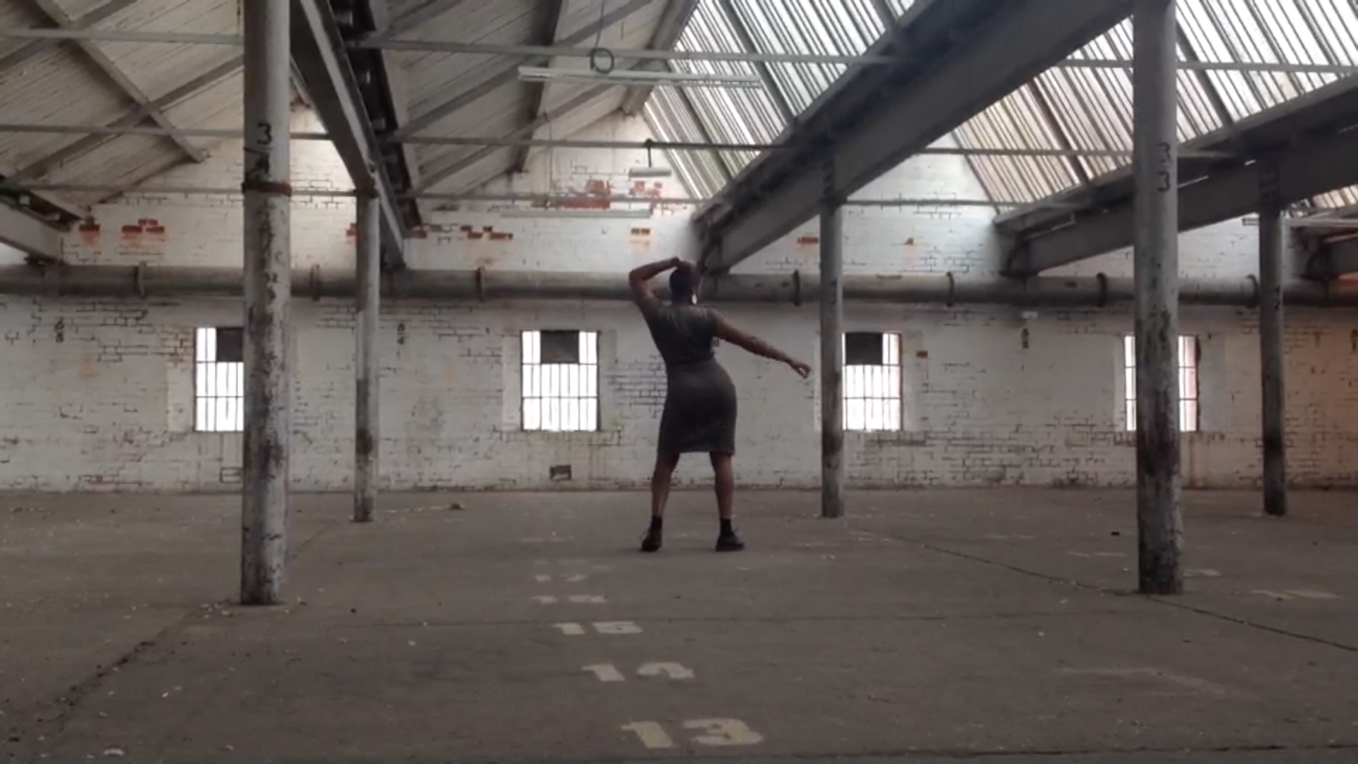
This question names the originating tension behind Igwe’s practice. The search for oneself in the archive is never neutral: where one ends up is shaped by what one has been taught to value and where one has been taught to look, as well as by what is materially accessible. When Igwe asked her father about her family history and he told her to “just go and read a book”, she does not dismiss this but holds it as revealing something about her father and about the institutions that stood in for the conversation that did not happen. The archive is sometimes the only destination available, which does not make it an uncomplicated one.
10. Critical Proximity
OI: I was trying to transform colonial images and think about a transformation of them that actually got to [address] how the images were functioning, like the archival, like the films… the archival films were functioning, the grammar of filmmaking, and I was trying to shake that in some way to make people look differently.
This is a methodological approach that Igwe cites as “critical proximity”: working with colonial archival footage not by simply deploying it but by intervening at the level of grammar in the medium of film. The formal structures and assumptions that make colonial images function as they do, aims to not provide commentary but rather instigate transformation. This method led Igwe during her PhD to the essay “Undoing the Colonial Archive” by Isaac Juien, which confirmed the approach that she was developing independently.
Julien explicitly set out to eliminate voiceover to challenge authority, re-photographed images, slowed material down and refocused them, which are all among the strategies Igwe arrived at instinctively. “Oh yes, I think Julien was doing this… it’s good to know.”
The encounter raises a question she posed to the symposium as a whole: why do artists across different generations and contexts converge around these same approaches? What is the theory behind this method?
Julien, Isaac. “Undoing the Colonial Archive”. In Film and the End of Empire. Ed. Lee Grieveson and Colin MacCabe. London: BFIPalgrave Macmillan. 2011. pp. pp. 273–75.
11. Interjection of the self into the colonial archive
OI: What is at stake in that type of work, in this method? What does it mean to perform for a camera? And what are the questions of gaze inherent in that?
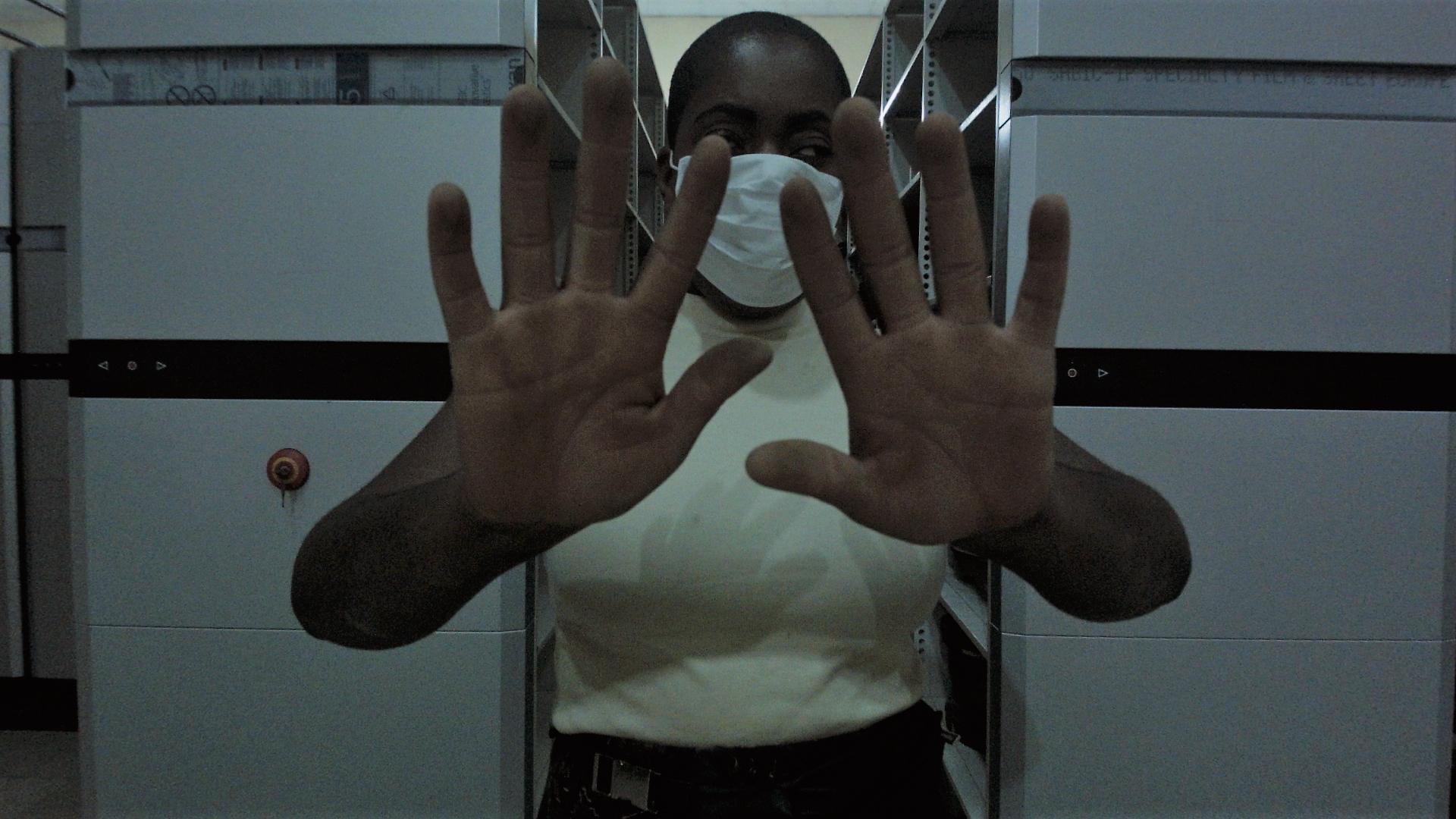
Igwe identifies the interjection of the self into the colonial archive as a recurring strategy across the symposium presentations and frames it as a series of open questions rather than a settled method. What does it mean to place one’s body in or against the colonial image? What is produced by that act and what is risked? This provides a connection to bell hooks’s concept of the oppositional gaze: the act of looking back, of refusing the invisibility that colonial visual regimes assigned to those who are marginal in the archival material.
Hooks, bell. “The Oppositional Gaze: Black Female Spectators”. In Black Looks: Race and Representation. Boston: South End Press. 1992.
12. Reenactment
OI: Reenactment came up several times, but also in kind of unusual ways. I was thinking about rebuilding spaces as reenactment, about the manipulation of photography, about performance and staging.
Igwe noted that reenactment appeared across the symposium in expanded and non-literal forms; not simply as restaging historical events but rebuilding spaces, manipulating photography, staging performances. What connects these practices is a shared question: what is the relationship between the present body and the historical image? What is reproduced in the act of return and what is inevitably, productive and transformed? Reenactment in this extended sense becomes a method of critically inhabiting the material rather than its historical reproduction.
13. Legibility, Opacity, the Unruly
OI: Techniques of opacity, of remaining at the margins, being undecipherable, unruly, blurred, is a question of legibility.
Igwe observed that there was a countertendency towards visibility and access: strategies of remaining at the margins deliberately, of being unruly, blurred, undecipherable. Rather than making marginalised histories legible and thus available to the same regimes of knowledge that produced their invisibility in the first place, several practices insist on finding ways to protect identities and experiences through strategies that embrace opacity. This proposition connects directly to the questions Igwe posed at the close of her remarks: whether counter-archives and dissident materials want to be made accessible at all, and what the benefits of remaining opaque might be.
14. The Sensorial as Archival Material
OI: The sensorial concepts of music, texture, smells, drinks, intimacy—how that can be used as a material, and how to capture and archive emotions.
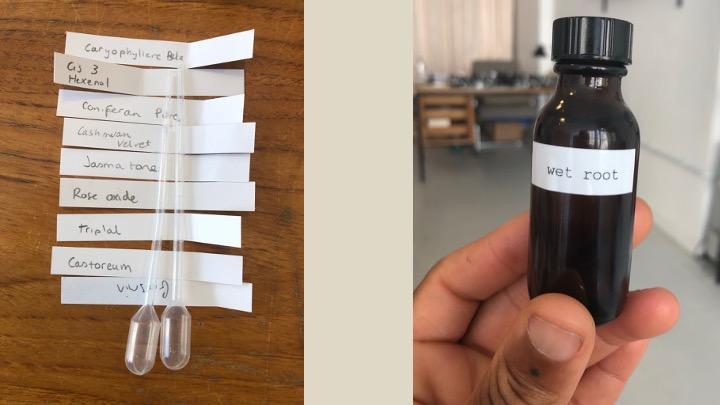
This highlights the significance and value of the sensorial as a form of archival material. This resonated with Igwe’s own developing preoccupation: what cannot be photographed or catalogued—smell, touch, a sonic atmosphere, the feeling of a room—is not thereby unarchivable. It requires different methods and different thinking about what preservation means. The question of how to capture and archive emotions is not peripheral but central to any archival practice that takes seriously what is lost when only the visual and the textual are deemed to count.
15. Layering, Montage, The Cut as Opening
OI: These kind of approaches—layering and montage—allow for a critical reshaping of image visualities, and they open space for future imaginaries because of the interruption of the image, because it’s not taken as read, it’s like interceded on, intervened on, and the idea of the cut as an opening.
Igwe identifies a cluster of interrelated formal strategies across the symposium’s film and image work: temporal and cultural layering, which is described variously as collage, montage, editing, remixing, sampling. What unites them is the refusal to take the archival image as given. Each of these strategies is a form of intervention, an intercession that opens the image to other temporalities and other readings. The cut, in this account, is not a break or a wound but an opening: a productive rupture that creates space for future imaginaries by refusing the closure proposed by the original.
16. Critical Fabulation
OI: The creation of new narratives or critical fabulation to borrow from Saidya Hartman came up a lot. It seems to be a very rich category.
Critical fabulation from the Saidiya Hartman reference surfaced as one of the most prominent methodological categories across the symposium. It is a practice that combines archival research with speculative and fictional narrative, specifically to address the silences and gaps in regards the lives of marginal subjects in the archive as a significant strand in contemporary practices with archival sources.
Hartman, Saidiya. “Venus in Two Acts’. “Small Axe: A Caribbean Journal of Criticism”. vol. 12. no. 2. 2008. pp. 1–14. DOI: https://doi.org/10.1215/-12-2-1.
17. The Sonic Monument
OI: He [Emeka Ogboh] talked about it as like, yeah, a sonic monument to that, to those protests.
The concept of the sonic monument connects most directly to Igwe’s own current practice and her encounter during the Covid pandemic through an online talk with the Nigerian sound artist Emeka Ogboh on the themes of sound, space and remembrance. Ogboh spoke about creating a sonic monument to the #EndSARS protests, the 2020 youth uprising in Nigeria against the Special Anti-Robbery Squad. This is an idea of the sonic as a form of collective memory and political witness that broadens the scope of interventions in the archive and how the sonic is constitutive of the archive.
Emeka Ogboh: Nigerian, sound and installation artist working with field recordings, urban memory and political history.
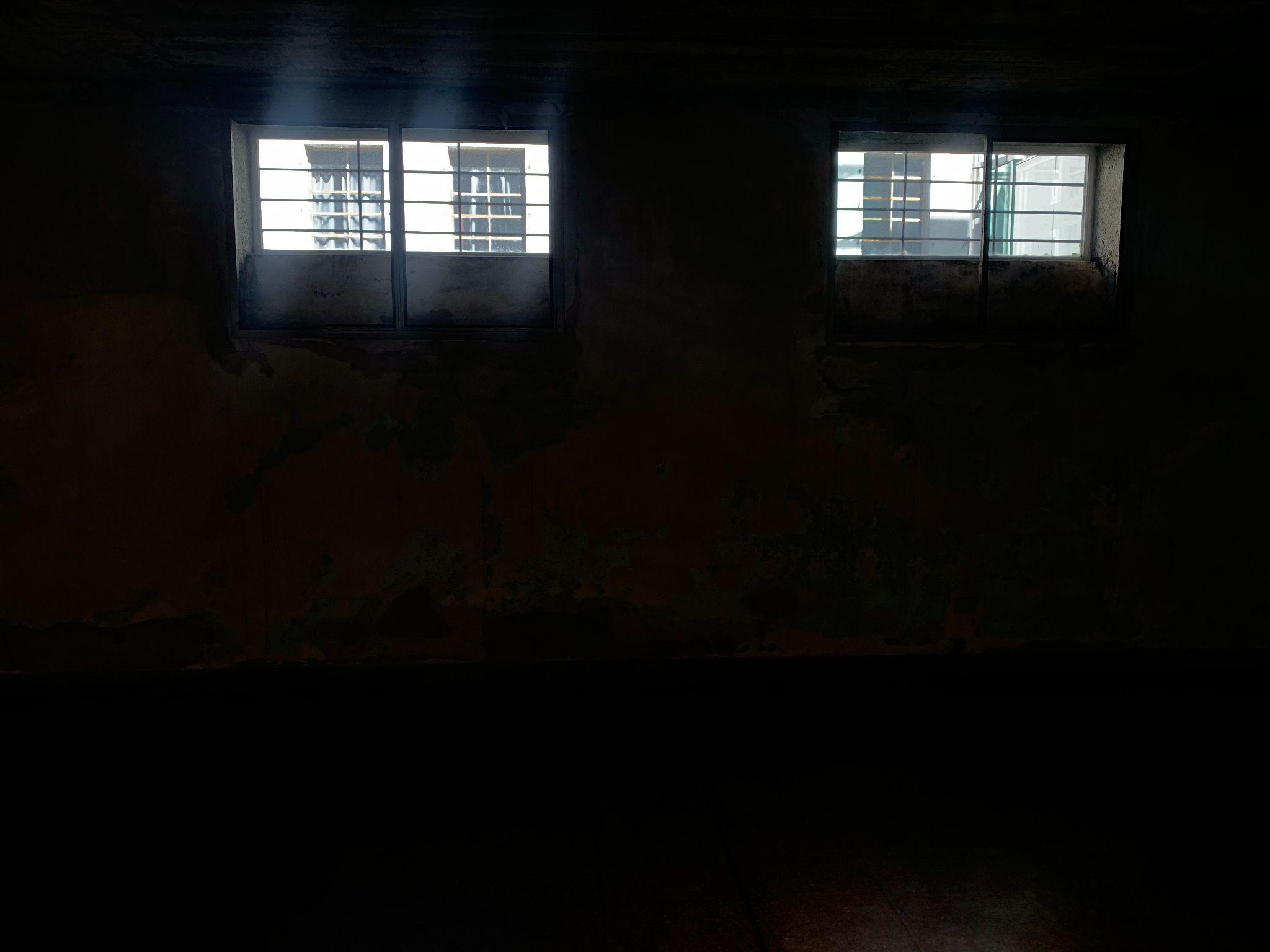
OI: I went to a film festival in Argentina and I didn’t really know much about what happened in the 1970s and 80s and the dictatorship and the kind of disappearances and imprisonment and they took us to this site… people were held and tortured and… the people who were in prison and could hear the sounds of the tournament and it made me think a lot about sounds and space.
Onyeka Igwe visited a site of detention and torture in Buenos Aires in 2022 from the period of Argentina’s military dictatorship (1976–1983), where she was told that prisoners from inside the building could hear the sounds of the 1978 FIFA World Cup (hosted in Argentina). The disjunction between the sonic spectacle of national celebration and the experience of those imprisoned beneath. The subsequent sonic memorial Igwe made for the Nigerian Pavilion at the 60th Venice Biennale (2024) is the direct outcome of this experience.
18. Reverence And Its Unlearning
OI: Maybe in this film your work is about unlearning your reverence for archives. And I was kind of enamoured with that concept. I realised that I did start with a reverence for archives.
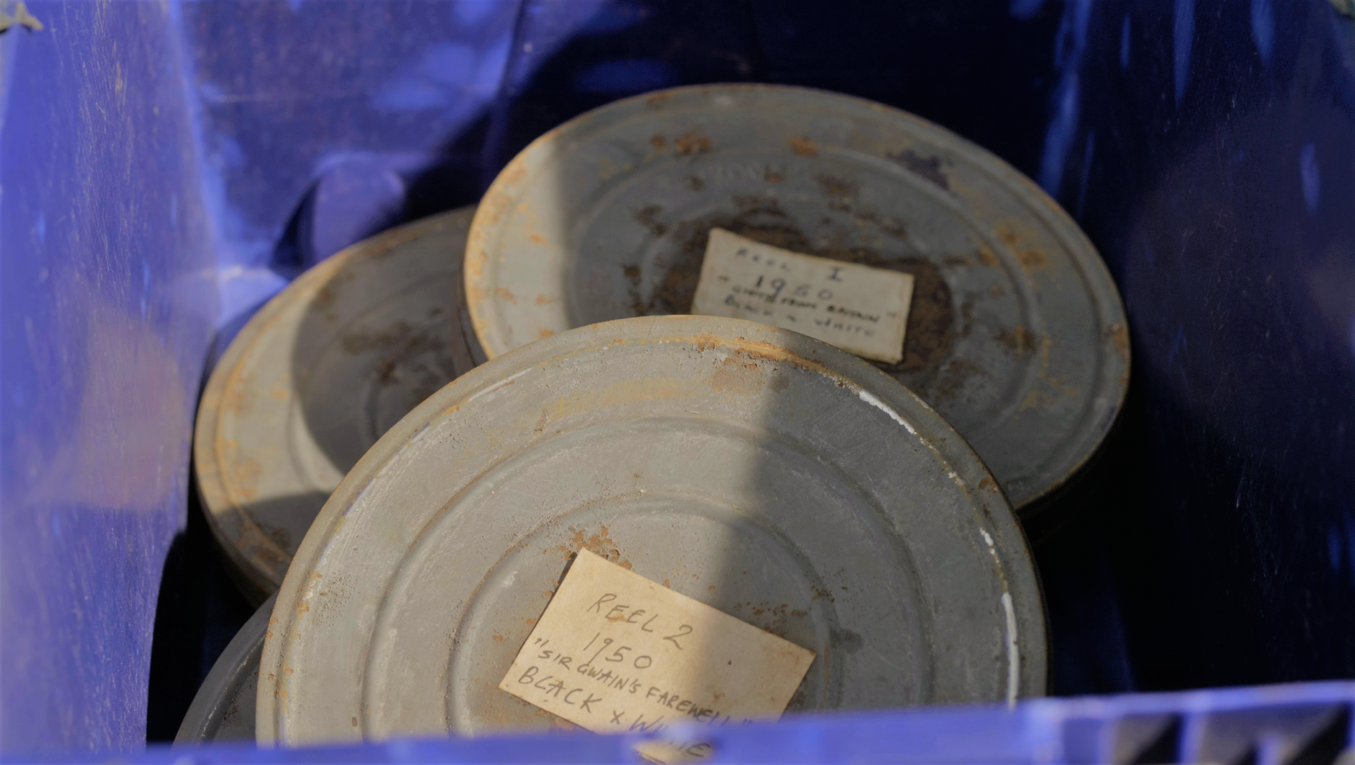
Igwe describes a formative conversation after the completion of a so-called archive with the scholar and filmmaker Ariella Azoulay, who suggested that the film might be about unlearning one’s reverence for archives. It is a proposition Igwe describes as a feeling of being “called out”. The admission is significant because it addresses critical distance as a sense of enchantment. The work of the film was coming to terms with that enchantment, which recognises reverence is a precondition of moving through it.
Azoulay, Ariella Aïsha. Potential History: Unlearning Imperialism. London: Verso, 2019.
19. Complete Refusal
OI: Why don’t we just leave these archives to rot? Why do we keep on perpetuating, as I said at the beginning, these ideas of extraction, collection and exploitation? Usually, it’s other people’s cultural wealth.
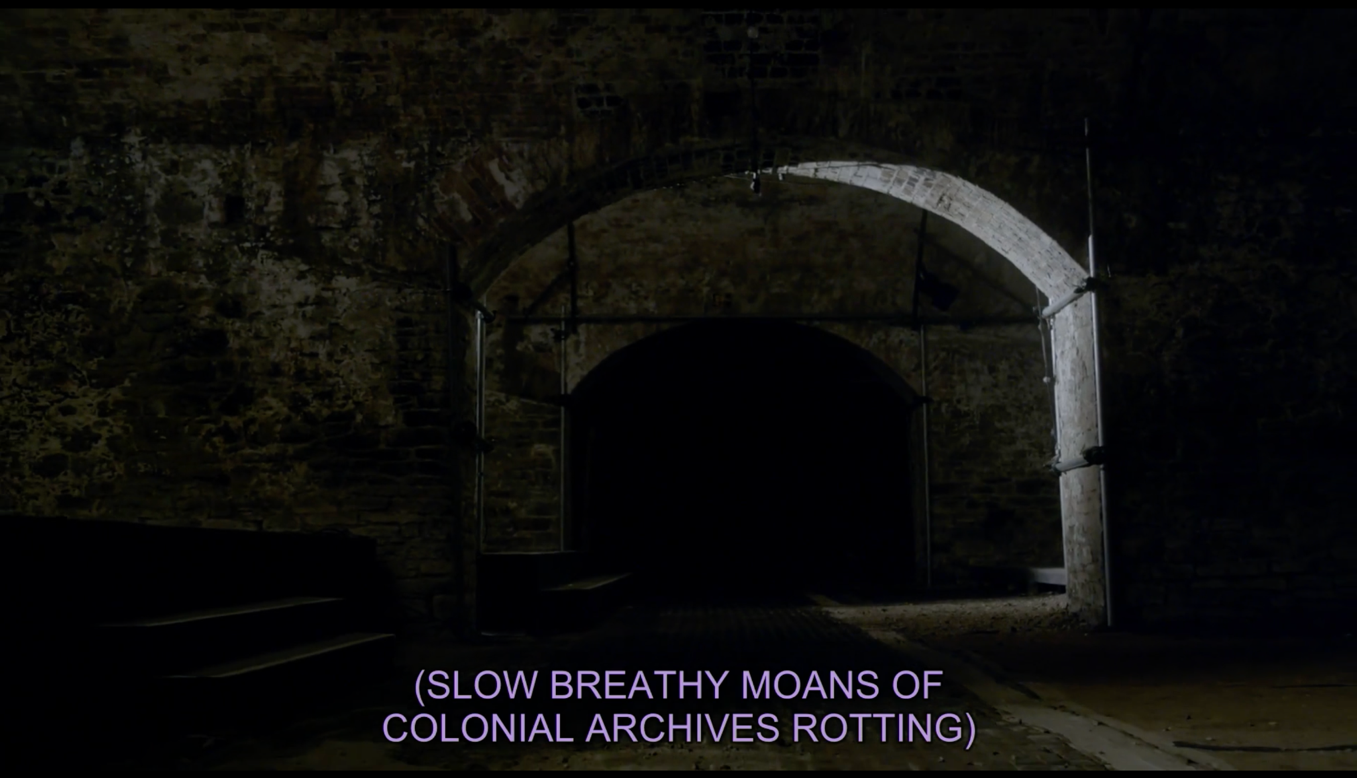
Is this provocation a useful inquiry? Having traced the extractive logic of archival institutions, having worked through the problems of classification, power and colonial epistemology, the film a so-called archive arrives at a gesture of abandonment. This is presented not as a permanent position but as a moment in a longer trajectory: “this is where I was in 2020”. The question of the counter-archive is not one of reforming the archive but of refusal as potentially a genuine possibility rather than a rhetorical provocation.
20. Return and the Murky Question of Enjoyment
OI: Psychoanalysis talks about enjoyment as being a complicated thing—it’s not just pleasure; it’s also like a negative enjoyment or something that you don’t like. And so I wonder if there’s something bound up with that.
In the possibility of refusal, Igwe recognises that while she took a calculated hiatus from working in archives—arriving at a position of refusal—she has recently returned to archives for a new exhibition project. She expressed the proposition: what would a “fantasy archive” look like? Furthermore, there is the issue of the institution and questioning what activates this return. Enjoyment, in a psychoanalytical framework, is not simply pleasure but can be a negative compulsion, an attachment to what one resists. This may be related to Isaac Julien’s writing about the “murky question of our [relationship] to these images” and about a “surplus pleasure” in working with archival material. This return is not resolved; it is held as a question.
For further reading on the “surplus pleasure” and related to ideas of a murky pleasure as Igwe describes her feelings, see Julien, “Undoing the Colonial Archive”.
21. Multiplicity and Archives of Dehiscence
OI: I really like this Fred Moten quote where he talks about archives of “dehiscence”, which is like a scab, or not a scab, a wound that won’t heal.
Against the archive’s tendency to produce a single, authoritative narrative—capital-H History—Igwe asks what it might mean to suffuse an exhibition with a multiplicity of approaches. Not one archival logic but many, in productive tension. She draws on Fred Moten’s figure of “dehiscence” to think about this. Dehiscence, as a biological term, describes the splitting open of a seed pod or surgical wound—it names both rupture and generative opening. For Igwe, dehiscence is not a harmonious plurality but a wound that cannot be closed, and multiplicity in these terms means maintaining the wound within archival structures: creating openings that cannot be reclassified, preserved or sealed back into a single story.
Fred Moten uses the concept of “dehiscence” to describe a kind of rupture or bursting open particularly in relation to blackness, sociality and the limits of enclosure or containment.
Moten, Fred. “Black Op”. PMLA. vol. 123. no. 5. 2008. DOI: https://doi.org/10.1632/pmla.2008.123.5.1743.
Moten, Fred. Stolen Life. Durham, NC: Duke University Press. 2018. DOI: https://doi.org/10.1215/9780822372028.
22. Counter-Archive, Opacity, Open-Endedness
OI: Where should these counter-archives, ephemera, off-cuts, dissident strategies be kept, held and made accessible? Do they want to be made accessible? What are the benefits of opacity here? And what do we understand as a public [commons]?
The closing leads to a range of opening questions: where are the spaces for counter-archives to exist? And through what platforms might they be accessible? What might opacity protect? And at what cost does this come? It is important that to maintain a robust engagement with archives, we cannot resort to singular, classifiable answers but instead need to ensure that we hold the space for an open-endedness of what the archive invites.