This is an experiment in fabulating while also thinking through what it might mean to fabulate, when the form is constitutive of the argument. It consists of nineteen fragments that appear in a random sequence each time they are read.[1] While fabulating around—under, through and in between—the Greek myth of Echo, I draw on modes of creative criticism, also known as post criticism,[2] écriture feminine,[3] and diffractive reading.[4] The result is, I believe, a story full of openings and possibilities. I offer no conclusions.
Inspired by literary montage techniques and devised theatre methods, I write consciously from my position as woman, academic and artist.[5] The work is deliberately rhizomatic, disjunctive and repetitive, seeking to trouble traditional and hierarchical assumptions around linear argument-building. The reader is invited to discern their own connections. As an experiment, the piece may, of course, not work as intended.
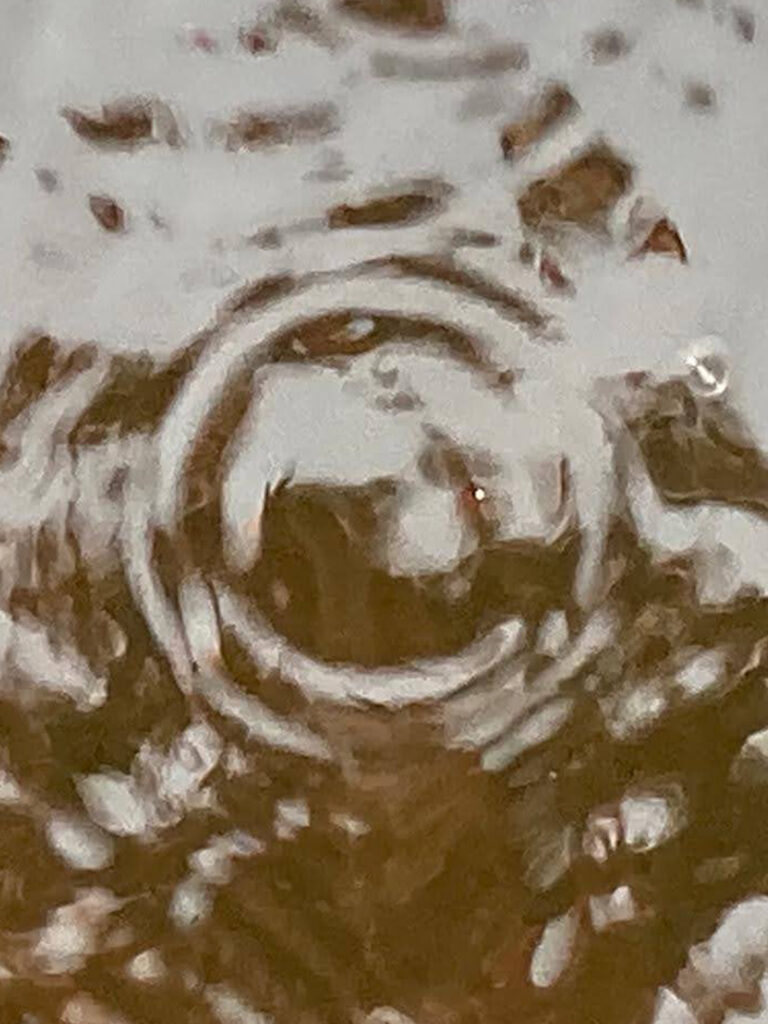
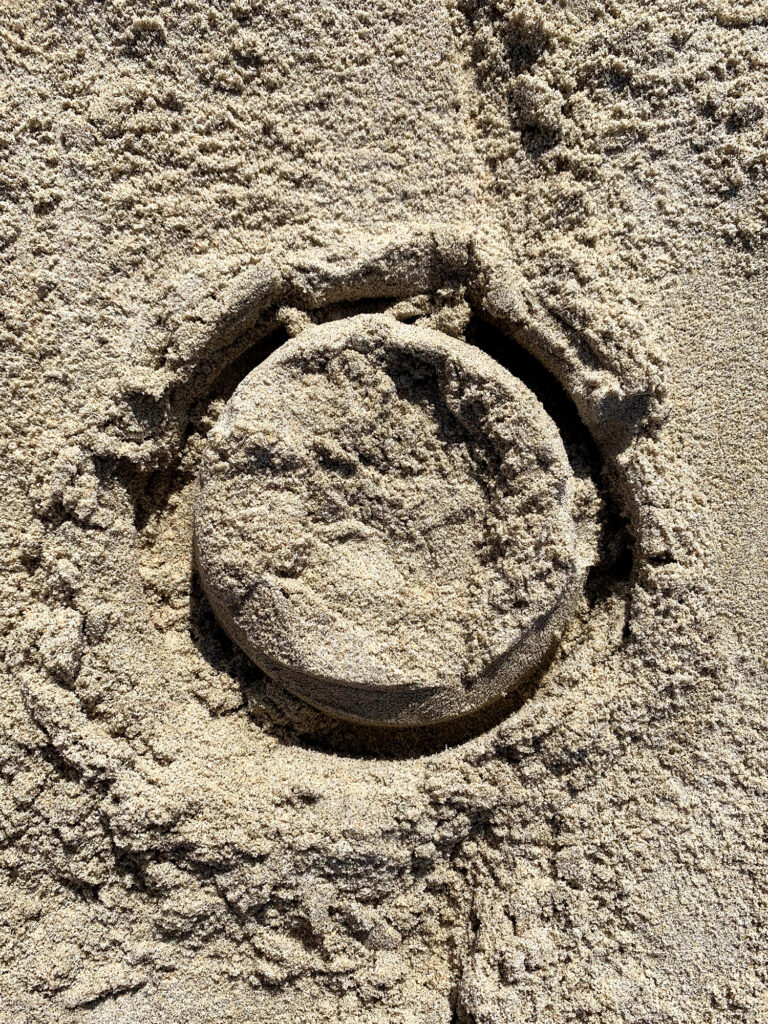
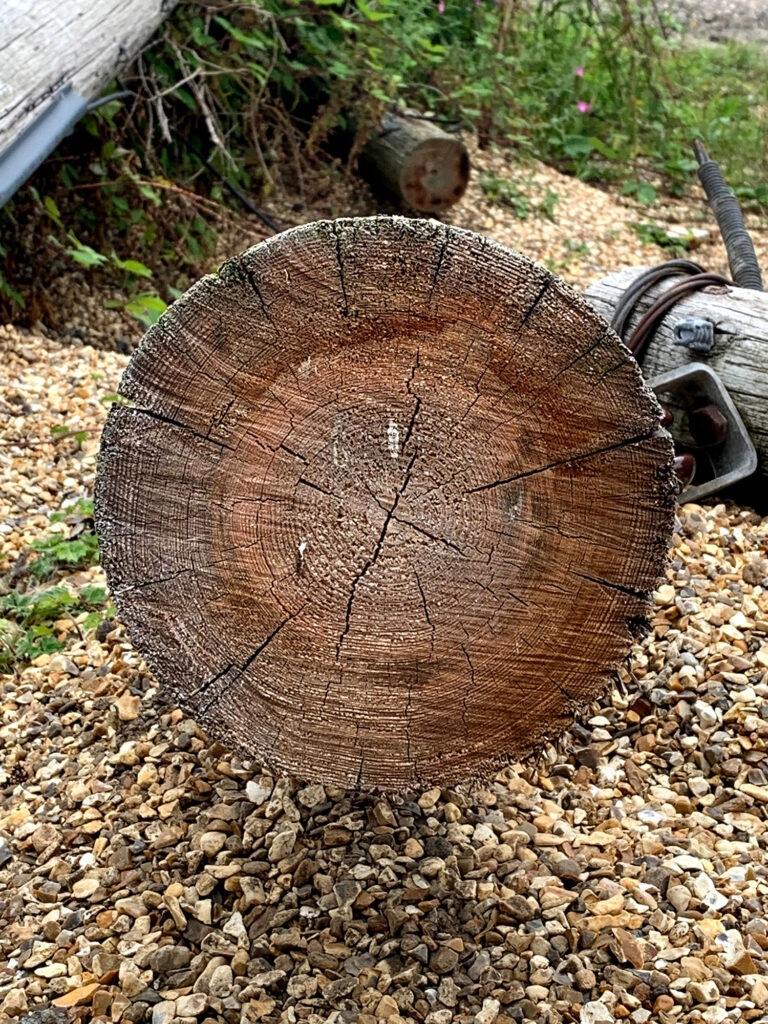
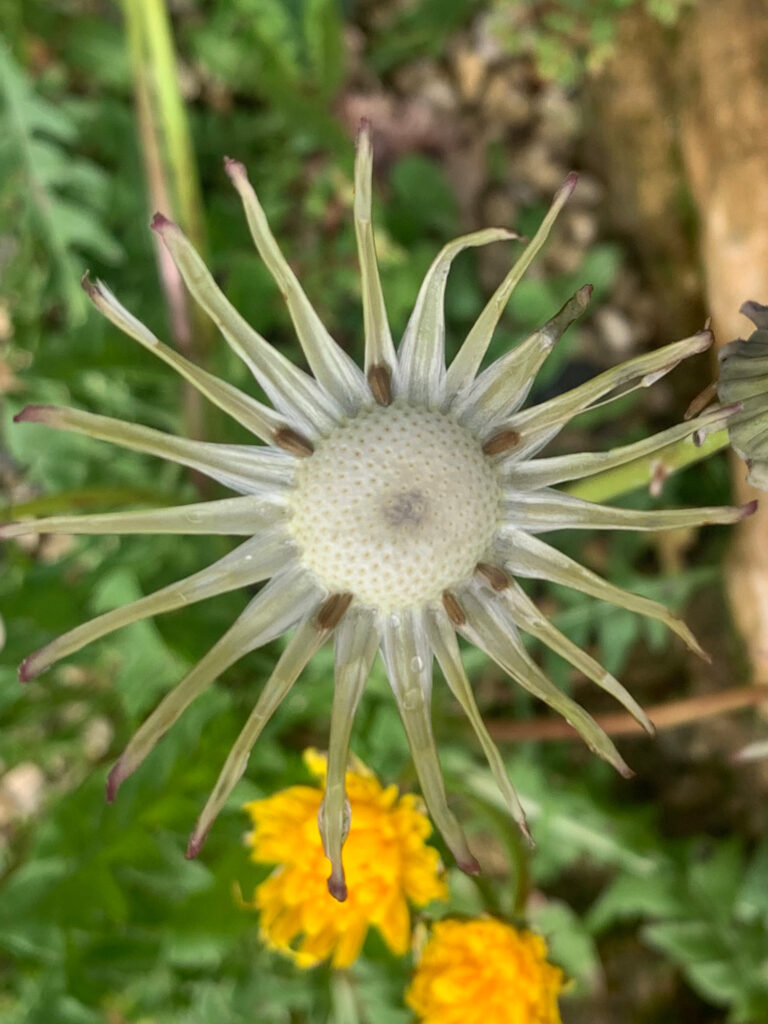
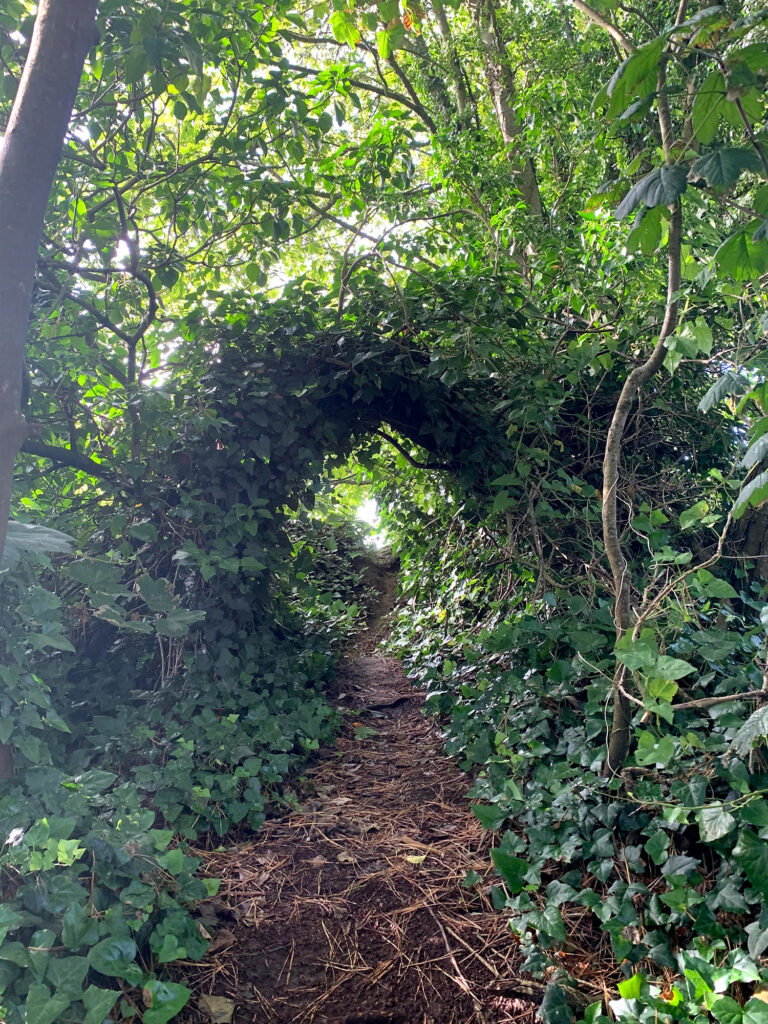
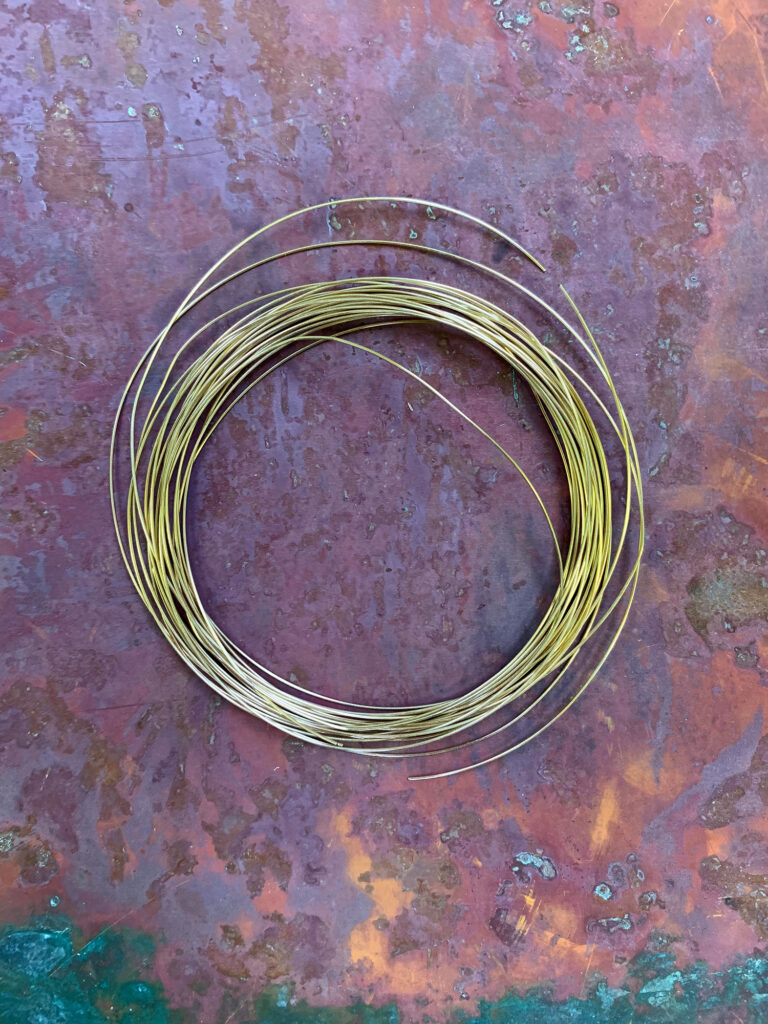
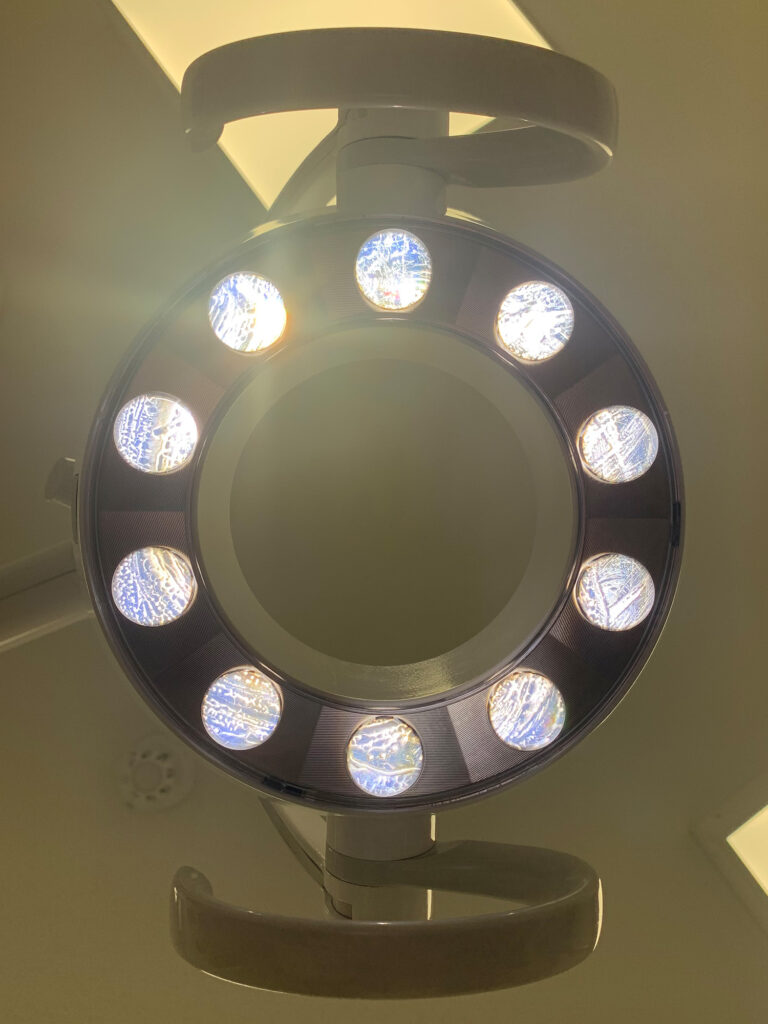
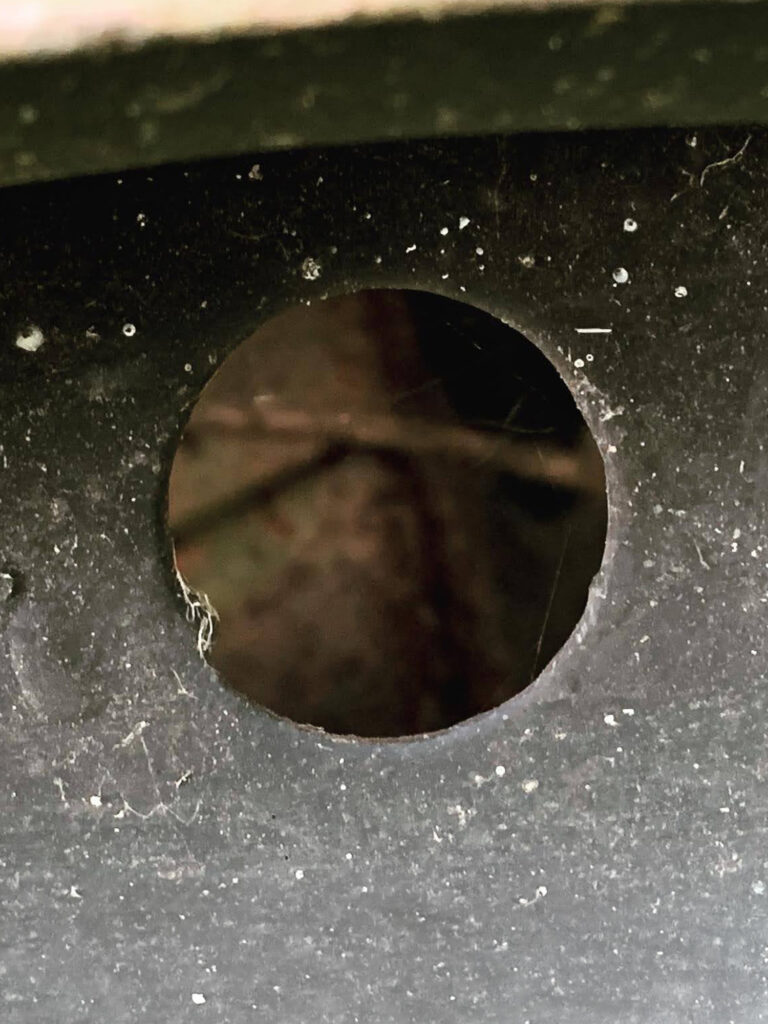
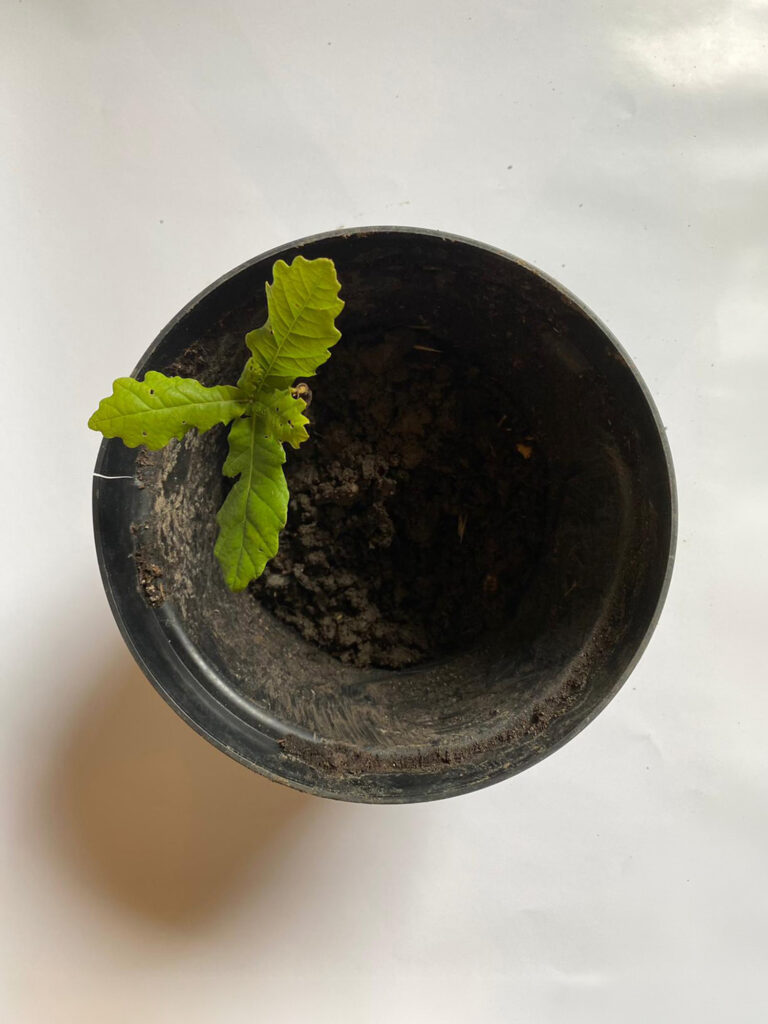
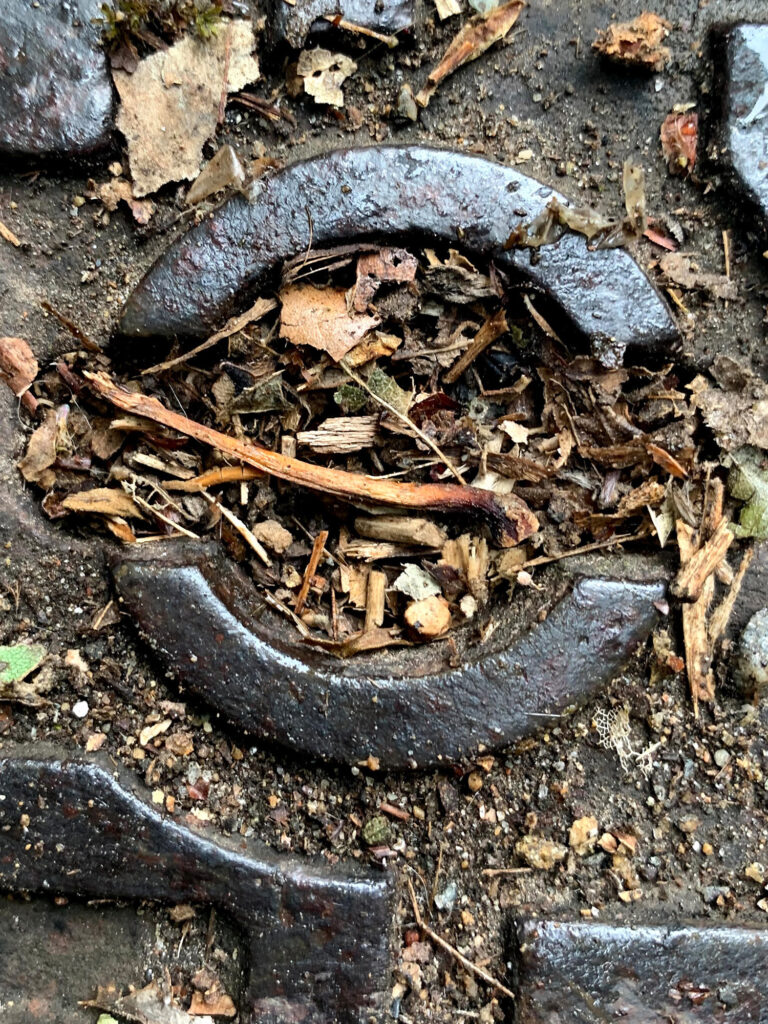
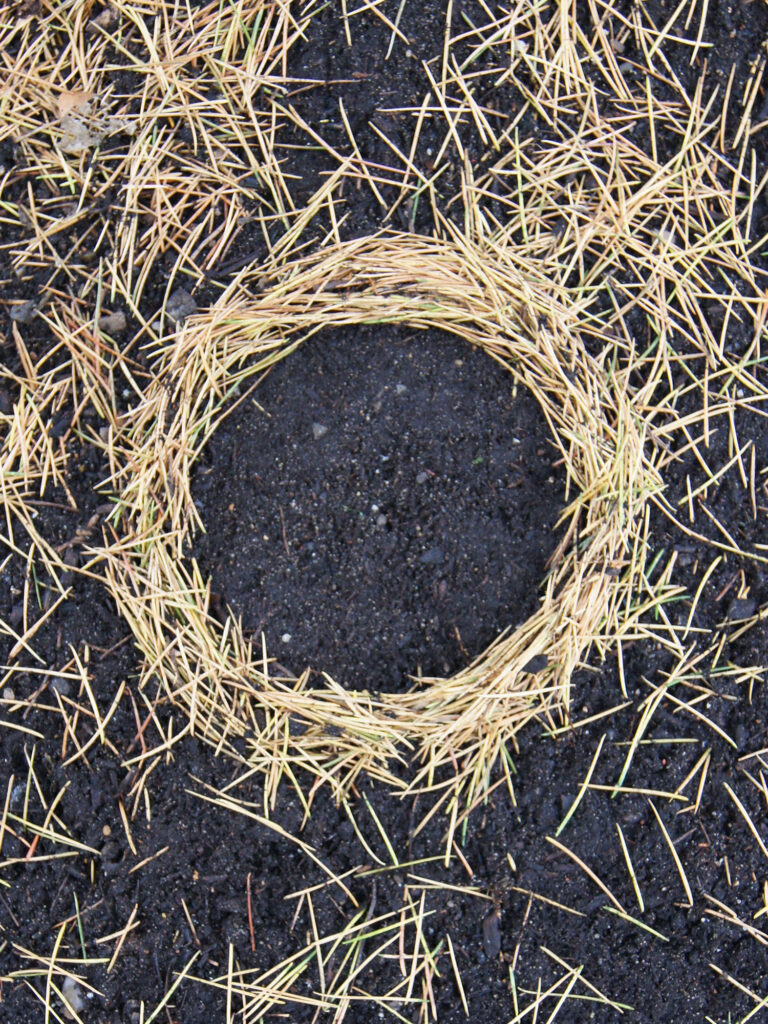
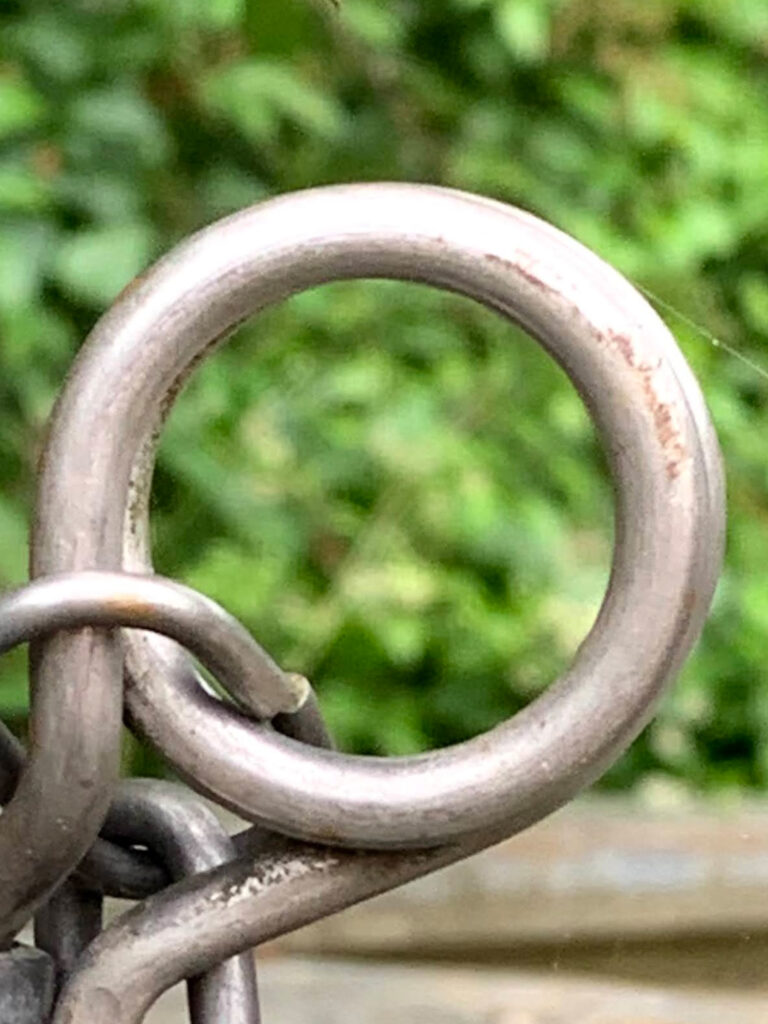
Each fragment is accompanied by a photograph, which, like Echo, echoes the one prior to it, as well as the one afterwards, gently disrupting unidirectional understandings of time and space. The photographs were taken over a two-year period in collaboration with fellow artists and thinkers Christopher Heighes and Katja Hilevaara, and present a series of circles. Not only do they celebrate the non-linear, but they also suggest a manifestation of concentric soundwaves echoing outwards, or diffracting, from multiple sources.
There is no beginning.
RECORDS
From the records we have today—and, of course, what is a record, if not always full of holes and only very particular stories?—Echo, the mountain nymph, emerges in fragments of Homeric and Orphic hymns and other poems and plays dating as far back as the seventh century BCE. Then, at the beginning of the first century CE, the Roman poet Ovid writes her story—one of her stories—in the third book of his Metamorphoses, a continuous mythological narrative in fifteen books. He is believed to have been inspired by a range of precursors—such as Callimachus’s Aetia from the third century BCE, and Hesiod’s Theogony, eighth century BCE—and these, in turn, would have been transcriptions of oral histories, living tales, told, or most probably sung, by countless poets in all their forms, at gatherings and around fires, not fixed but always changing shape, to fit the mouths and imaginations of those doing the telling, and obviously, to fit the ears of the listeners. In other words, Echo was always multiple.
Ovid’s version of her, the talkative nymph cursed to only repeat the words of others, was then translated into other written versions, different languages, paintings and operas, mainly by men.[8] In the last one hundred or so years, some of these versions have been taken on by women. This marks the emergence of multiple feminisms, across a range of fields, including translation, adaptation and myth criticism.[9]
But that is just one series of starts.
And starts, of course, are often also ends. Or they begin in someone else’s middle. As children of mothers, as we are, as humans, we might remember that we arrived on the planet, inevitably and necessarily, as interruptions in the cycles of another. We were born into cyclical time. Times of iteration. Beginnings, ends, continuations, echo, echo.
Begin again?
Multiply.
THE LOVER
Tim Ingold writes:
What the thinker and the lover have in common is that they are uniquely vulnerable. They are in a condition of surrender whether to the idea or to the beloved. But the condition is far from passive; on the contrary, it is passionate, an affectation of the soul that calls mind and body to contemplation.[11]
This is, among other things, a love story.

FABULATION
Saidiya Hartman and Donna Haraway both write about the importance of fabulation, which word comes from the Latin fabulat, meaning to relate as a fable or myth. While it is rooted in everyday storytelling practices, it defamiliarises perception and disrupts habitual ways of knowing. Hartman’s concept of Critical Fabulation blends archival research, critical theory and fictional narrative as a means of redressing history’s omissions. She uses storytelling and speculative narration to challenge dominant paradigms and reinterpret accepted histories, to fill in the gaps and silences in the archives of enslaved women from the Middle Passage and young Black women in early-twentieth-century America.[15] She writes into and against the archive, weaving the personal, experiential and historical to give voice to those absented from records or reduced to mentions in court documents and ledgers. By rearranging story elements and incorporating events from contested viewpoints, Hartman displaces authorised accounts and imagines what might have happened, and what might have been said.
Haraway’s distinct concept of Speculative Fabulation is another kind of imaginative resource that makes way for living differently in the present. It involves the blending of the real and the implausible to open pathways for examining the tensions within the narratives we are used to. By making stories and catalysing new embodied ways of knowing, she suggests that fabulations draw attention to the contested nature of knowledge production while caring about their repercussions, nurturing an “obligation of and capacity for responsive attentiveness”.[16] Speculative fabulations have the capacity to nurture diverse, pluralist, feminist and interspecies versions of history.
Both Critical and Speculative Fabulation call for a more meaningful and ethical engagement, not only with the archives we consult when we do research, but with all the stories that have become part of the canon. They both call for a telling of stories of difference in order to challenge and un-fix entrenched forms of inequality that structure the way we read, think and produce knowledge. They celebrate the imaginary and trouble the re-inscription of the narratives that have shaped us: the patriarchal, the progress-oriented, the linear, the heteronormative, the hierarchical, the racial, the white, the colonial.
These thinkers call for imaginings. In ways that are playful but also open to pain and risk.
They call for thinking and making otherwise in the spaces between. The unrecorded, the forgotten, the as-yet-unthought.
Let us fabulate.
NYMPH
Nymphs have been largely misunderstood, as I understand it. Because we have never been just one thing. I began as a mountain nymph, for example, indistinguishable from the tree I was born besides, within, around. I began as a pine tree.
Indeed, all nymphs begin as multiple. And mostly we continue this way. Opening outwards, on and on. Dictionaries have lists to define us. As if the threads of us can be singled out, measured, grasped, taken apart.
Girls, trees, rivers, ships. Human and non-human at once. It depends how the light catches us, if it catches us at all.
Semi-divine spirits that take the form of maidens. Attendants on particular gods—as if the gods did not attend on us!
Sex workers, sex slaves. You think nymph and you may think young and nubile. Specifically, and more rarely, extravagantly dressed Frenchwomen of the Directory Era. (It is true that I have been known to dress in the fashions of that time, donning diaphanous tunics which leave little to the imagination and gaudy wigs in green and blue. Gold circlets and pearls around my calves. Perfumes and reticules. But I have not been young for a long time.)
Insect larvae. Mites. Ticks. Cicadas, praying mantis, damselflies. Many-legged. Fishing flies.
See? Multiple. Sometimes in succession and sometimes all at once.
As I say, I began as a pine tree. My sister was an oak.
ONE STORY OF MANY
The story goes like this: that I was cursed because I was too talkative. Cursed to repeat only what other people had just said. I was cursed because when Hera came looking for her lover Zeus, I distracted her with stories so that he could get away. He had grown fond of hanging around the nymphs. Hera was jealous, came looking, and I kept her at the door, long enough for him to get out the back. When she realised what I was up to she cursed me so I couldn’t talk again. Unless, that is, I repeated what I had just heard. Echoed. The story goes, then, that I fell in love with the beautiful Narcissus. I could not seduce him with my own words but could only repeat what he’d just uttered. He rejected me outright, as he had rejected all his other suitors, and proceeded to fall in love with his own reflection—another curse, from someone else. He fell so deeply in love that he pined away to nothing, staring helplessly at the impossible and empty version of himself. And I, in turn, who was so deeply in love with him, pined away to nothing too. Nothing but my own voice. Echoing.
But the story really goes like this: it was Hera and I who were lovers.

MORE POSSIBLE
What if to hear you were to make you more possible?
Or, to put it another way: what if to make you more possible, I lend you my ear?
Or another way: to make you more possible, I give you a part of me?
Or another way: to make you more possible, I dissolve?
DESTABILISATION
Gayatri Spivak offers a complex feminist and postcolonial reading of the myth of Echo, which raises a number of important questions about the ethics of interpretation and representation. I navigate with care. While carefully tracing the cultural and philosophical impact of Ovid’s Narcissus narrative on the history of Western thought—psychoanalysis in particular—she considers how the figure of Echo is always marginal. In her own words, she seeks to “give woman to Echo, to deconstruct her out of traditional and deconstructive representation and (non)representation, however imperfectly”.[17] For Spivak, Echo becomes more than a philosophical concept struggling “for emergence in the text”, and rather a character that issues an ethical challenge to the cultural critic.[18] Echo, as disempowered female responder, becomes a version of the Subaltern, a term used for those outside the established structures of political representation—or more specifically women in conditions of radical exclusion, oppression and disenfranchisement. She shows that while Narcissus has come to represent the construction of self as object of knowledge, Echo represents a subjectivity that lies outside the perimeter of this self-knowledge. Her exclusion relegates her to an apparently passive subject who can only respond to the voice of the so-called empowered self-knowing subject. For Spivak, her punishment, or curse, becomes a “dubious reward” because she does not offer an exact facsimile of what was uttered with her echoes but deconstructs it in fragments.[19] Calling on Jacques Derrida’s notion of différance as both difference and deferral, by responding in the way she does, Echo destabilises the knowledge of the utterer.
Spivak offers me Echo as deliberate destabiliser.
She repeats the dominant narrative, but with a difference.
She does not have her own voice, but she can fragment what she hears to make space.
I would like to make that space, however small, matter. What if, for example, it was a space for dancing? For becoming army?
In Ovid’s telling of her story, there is a gap between what Narcissus says and what Echo would have been able to echo. In this gap lies Echo’s deconstructive power, to differ from Narcissus. “Narcissus is fixed”, Spivak writes, “but Echo can disseminate”.[20]
Echo as disseminator.
As Spivak casts Echo, the Subaltern, I cannot know her and should not need to, but I can celebrate her power to respond differently, whether it is her intention or not. Whether she chooses to resist consciously or not. To choose to resist is, of course, a privilege. She nevertheless destabilises.
Begin?
Again.
IMAGINATION
Ursula LeGuin writes:
The exercise of imagination is dangerous to those who profit from the way things are because it has the power to show that the way things are is not permanent, not universal, not necessary. Having that real though limited power to put established institutions into question, imaginative literature has also the responsibility of power. The storyteller is the truthteller.[21]
Echo opens up spaces, however small, in which to imagine otherwise.
In which to tell stories.
In which to fabulate.

WHAT IF?
What if, we would ask each other, hands entangled in the other’s hair, we were able to imagine outside time? What if we could find new languages? If we could think in circles and not lines? Speak in shapes? Touch without touching? What if? What if we could think, not in heres and theres but in everywheres? Not in thens and laters, but all at once? And then never? What if finishing and beginning happened at exactly the same time? What if we could only listen when we wanted to speak, and when we wanted to speak we sang? No, echoed? How might we speak beyond language? Or not speak at all? At all?
At all?
And then:
How can we listen?
NEVER A CURSE
Hera and I: furious, passionate, sparring lovers. If I was talkative, then so was she. The nymph and the goddess. We seduced each other with words and ideas long before we touched. We built whole galaxies with language, infused with energy and light, before we even held hands for the first time. Sparks had been igniting long before they flew.
It was my idea to stop talking, a reckless act of the highest commitment—a challenge, a choice—as we rushed on, creating new constellations. To respond, not with my own words, but only by echoing what I had just heard. It was never a curse.
At the height of passion, in that precipitous flush of feeling that your life is as full as it could ever be and nothing else matters but the objects of your desire, this made sense to me. It was proof of my affection for life and for the living. It was an articulation of everything I had ever wanted to articulate without speaking. I wanted to fly beyond language. Find silence, climb above it, offer it back, feel more.
FRAGMENTS
Sara Ahmed writes about fragments as those things that remain after the shattering, or what she calls the snapping. This action, the breakage, is a galvanising one in taking on feminist work.[6] It can be a catalyst or a reminder that this kind of work needs doing. The shattering is often painful, but the pain ushers onwards.
Ahmed asks:
Is there a way of relating to breaking that does not aim for restoration? Can the fragments reassemble in or from being shattered?… A fragment: what snaps off is on the way to becoming something else. Feminism: on the way to becoming something else. Shattering: scattering. What is shattered so often is scattered, strewn all over the place. A history that is down, heavy, is also messy, strewn. The fragments: an assembly. In pieces. Becoming army. [7]
Here I refuse to aspire to present wholeness. Becoming army is different to becoming whole. Becoming army is a coalescing, a coming together side by side, an assembling.
I write to unsettle the narrative flow, the hierarchical sequence, the linear, the normative order. I choose to disrupt. Assembling fragments as method offers an alternative mode of cultural production that challenges coherence and wholeness and invites imaginative negotiation. I might suggest it as a form of resistance to thought as purely outcome and the exclusion of process and engagement. The explanation is implicit, or rather, I explain myself in bursts.
THE VOICES THAT CAME BEFORE
To choose to write about Echo, then, is already to echo a whole series of other voices, which carry their own reverberations. (I begin in the middle).
In choosing to write about Echo now, it is important to acknowledge that she was initially wrought in classical mythology, a series of stories that have been constructed as underpinning ideas of white supremacy and empire.
Scholars such as Kwame Appiah[12] and Mathura Umachandran[13] have written about how the deeply embedded narrative that Greek and Roman civilisations are the foundational source of Western culture—including philosophy, art and governance—is a relatively modern invention. As a discipline, the classics have been deliberately intertwined with the construction of whiteness and the marginalisation of other cultures, whereas the ancient Greeks and Romans did not have a concept of whiteness as a racial category. The concept of Western civilisation as an exclusively white heritage was actively promoted by white supremacists and eugenicists in the nineteenth and twentieth centuries—see, for example the writing of Arthur de Gobineau, Madison Grant and Theodore Lothrop Stoddard—to create a false origin story that glorified an all-white Greco-Roman world and justified “imperial systems of control, racial hierarchies and oppressive aesthetic regimes”.[14]
To choose to write about Echo now, I must not overlook the fact that I am becoming caught up in complex and harmful histories that have produced foundational privileges of whiteness. It would be dangerous to deny this connection, but I can try to expose it at the very least. This feels particularly pressing at a time when nationalist thought is increasingly weaponised across the world, and the concept of so-called Western civilisation is used to project a sense of historical legitimacy and a connection to a powerful, perceived white monoculture. As I write this in 2026 in the UK, for example, the inflammatory Operation Raise the Colours campaign, which involves displaying the Union Jack and St George’s Cross flags in public places, has been underway for ten months already and continues to gain traction. In the US, early in 2025 Elon Musk performed a gesture interpreted by many as a fascist salute, which his followers defended as a Roman one. On a more perennial level, a simple Google search today will reveal how white nationalist and far-right groups in the UK and the US continue to appropriate acronyms and symbols from classical antiquity to promote their exclusionary and racist ideologies and narratives of cultural decline.
To choose to write about Echo now, I tread carefully. I ask, keep asking, how do I look back to look forwards? Or, how do I listen before echoing on? Re-read the old stories in a spirit of critical reflection that seeks to challenge epistemic injustice and ingrained structures of power? To disrupt rather than amplify assumptions around race, gender, class and the colonial? How do I offer a reinvention? A provocation? How do I approach a story from the canon in a way that does not reproduce the idea of white antiquity but begins to dissolve it? How do I do this from where I am standing in my white body, which was trained in white, colonial, patriarchal institutions? How do I navigate this dilemma? My body, even before I say anything, speaks of privilege and injustice. My voice, I am aware—and in many ways I am also not, and cannot be, aware—has its own echoes and reverberations, with implications that ripple outwards and reinforce walls that I would like to dismantle. To un-mantle. To dissolve.
And I know there are many walls I cannot even see.
I invoke Echo, in her multiplicity.
How can I listen?
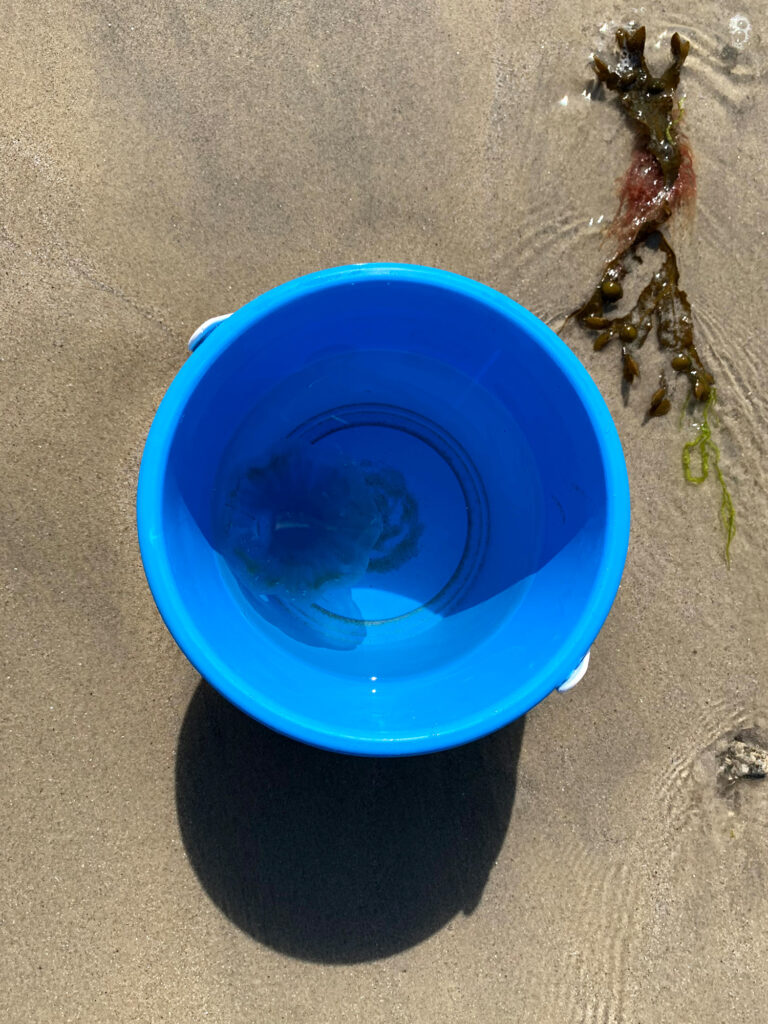
MANY VOICES AND BODIES
Tim Mathews writes:
from the start there is no start, there’s no one moment belonging only to one of us, it’s not so much “us” in any case as others, all sorts of stages and stadiums made of many voices and bodies and echoes.[10]
SPECULATION
What might have been said
Might have been
Might have been
Might have been
Said.
INVENTION
In the words of Doreen Massey:
We come to each place with the necessity, the responsibility, to examine anew and to invent.[23]
THE ECHOING
Echo.
Echo.
How do I look back to look forwards?
How do I listen before echoing on?
How do I re-read the old stories in a spirit of critical reflection that seeks to challenge epistemic injustice and ingrained structures of power, and to disrupt assumptions around race, gender, class and the colonial, rather than reaffirm them?
How do I offer a reinvention?
A provocation?
How do I honour new multiplicities of time and space?
How do I approach a story from the canon in a way that does not reproduce the idea of white antiquity but begins to dissolve it?
How do I resist reproducing what I was taught and instead begin to imagine what I want to find out?
How do I turn ends into multiple beginnings?
Replace full stops with question marks?
How do I fill the canon with new possibilities?
How do we do this together?
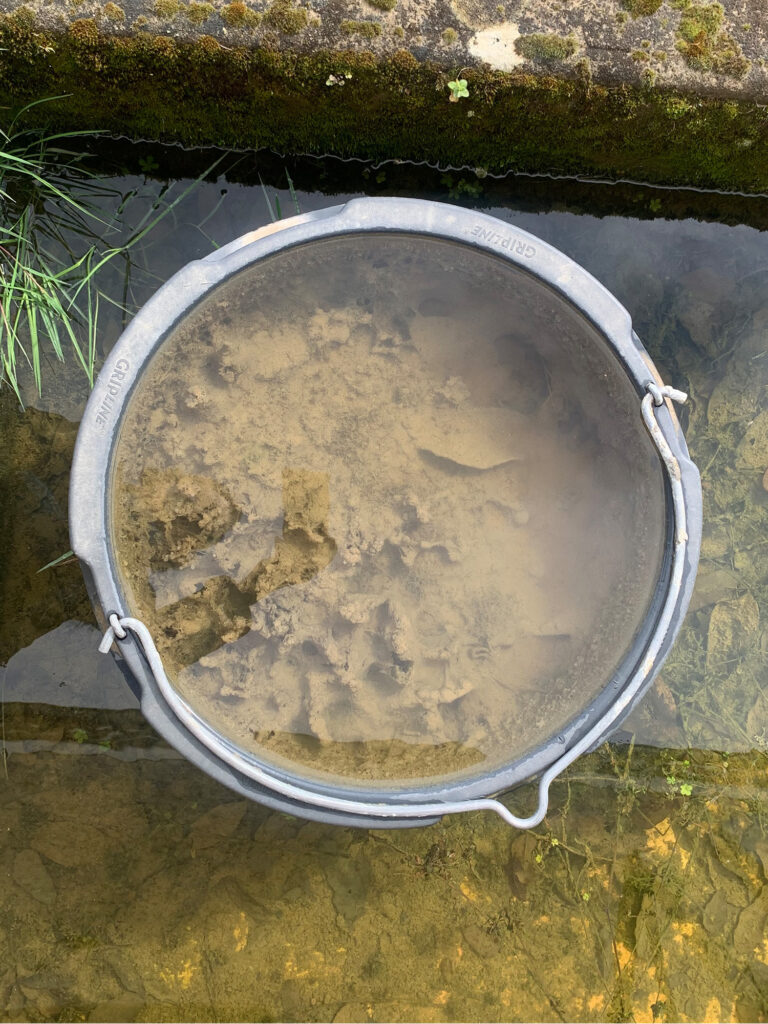
DISSOLUTION
The story goes that I eventually pined away to nothing but my voice echoing.
Dissolved.
As if this were a bad thing.
But I am still listening.
Dissolving and inventing in response.
I will put it another way:
What if, every time I listened, I temporarily dissolved?
This is not about losing my agency but about choosing to become liquid. As in, I break down, become undone, as I refuse wholeness in response to the listened-to object—you? My body, my bodily reaction is still valid, but my action, in that moment, is more-than-body. In unbecoming, I become part of a wider and more complex collective of responding.
What if, when I listen, I dissolve, not into nothing, but into everything.

MAGIC
In the words of Leonora Carrington:
You may not believe in magic but something very strange is happening at this very moment. Your head has dissolved into thin air and I can see the rhododendrons through your stomach. It’s not that you are dead or anything dramatic like that, it is simply that you are fading away and I can’t even remember your name.[22]
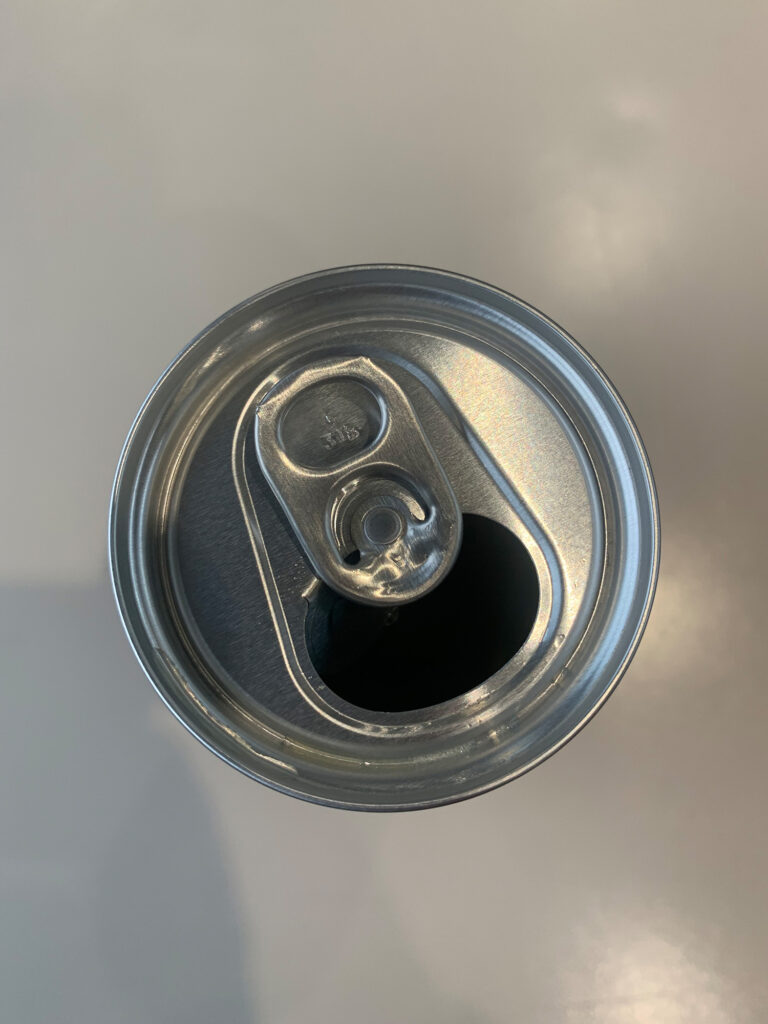
BEFORE BEING A LOVER
Before Hera, and it is difficult for me to imagine it but there was a time before Hera, I was like all other nymphs, complete with body and voice. But maybe everyone who has been in love feels that way afterwards when looking back.
References
- I would like to thank Lucy Cathcart Frödén, one of my two generous peer reviewers, for this insightful and joyous suggestion. ↑
- Creative criticism is a writing practice that involves merging creative and critical discourses to generate embodied and theoretical insights. It is an experimental form of criticism that in engaging with artworks, texts and historical figures, not just analytically but also imaginatively, is literary in its own right. See for definitions, Hilevaara, Katja and Orley, Emily. Eds. The Creative Critic: Writing as/about Practice. London: Routledge. 2018; Mikkilä, Elina. “The Art of ‘Creatical Writing’: Unlocking Insights Through Creative-Critical Fusion”. Life Writing. vol. 21. no. 3. 2024. pp. 535–48; and Schad, John, Callus, Ivan and Corby, James. “The CounterText Interview: John Schad”. CounterText. vol. 10. no. 2. 2024. pp. 79–94. ↑
- Écriture Féminine as a concept and textual practice was developed in France in the 1970s as a kind of writing that exists outside masculine economies of patriarchal discourse. The concept has since evolved through different waves of feminism. Hélène Cixous coined the term in her essay “The Laugh of the Medusa”, in which she defines it as “precisely the very possibility of change, the space that can serve as a springboard for subversive thought, the precursory movement of a transformation of social and cultural structures.” See Cixous, Hélène. “The Laugh of the Medusa”. Trans. Keith Cohen and Paula Cohen. Signs. vol. 1, no. 4. 1976. pp. 875–93. For a contemporary discussion of the practice, see Taylor, Jacqueline. “Thinking Difference Differently: An Exploration of l’écriture féminine, Women’s Art Practice and Postfeminism”. L’Esprit Créateur. vol. 58. no. 2. 2018. pp. 41–55; and Kaiser, Birgit M. Hélène Cixous’s Poetics of Voice: Echo–Subjectivity–Diffraction. London: Bloomsbury Academic. 2025. ↑
- The concept of diffractive reading was first proposed by Donna Haraway in her essay “The Promises of Monsters: A Regenerative Politics for Inappropriate/d Others”. In Cultural Studies. Ed. Lawrence Grossberg, Cary Nelson and Paula Treichler. London: Routledge. 1992. It was significantly developed and formalised into a specific posthumanist and materialist methodology by Karen Barad, particularly in Meeting the Universe Halfway: Quantum Physics and the Entanglement of Matter and Meaning. Durham London: Duke University Press. 2007. In Barad’s terms, it involves reading different texts, theories and other artifacts “through one another” to generate new, emergent insights and patterns of difference, rather than reading one against another in a critical, comparative way. As a method it undoes historical order and aesthetic hierarchies. ↑
- I am thinking of the written work of Gertrude Stein, Walter Benjamin, John Berger, Anne Carson, as well as the devised theatre work of Complicité, Tim Crouch, Frantic Assembly, Javaad Ali Poor and Katie Mitchell, to name a few. ↑
- In Chapter 8 of Living a Feminist Life, Sara Ahmed describes a “feminist snap” as a moment of feminist refusal, a decisive refusal to reproduce harmful worlds or ideas, and a breaking point after repeated experiences of oppression or discrimination. Snapping signifies resistance by exposing problems and acting as a refusal to concede to systems that perpetuate sexism and other injustices. Ahmed, Sara. Living a Feminist Life. Durham, NC: Duke University Press. 2017. ↑
- Ibid., p.186. See also the first sentence from Ahmed, Sara. “Feminism and Fragility”. Feministkilljoys. 26 January 2016. Available at https://feministkilljoys.com/2016/01/26/feminism-and-fragility/ (accessed 2026-04-20). ↑
- These include Greek writer Longus in the second century CE, for example, as well as Nonnus in the fifth century. Then Guillaume de Lorris wrote about Echo in the thirteenth century, and she inspired paintings by artists such as Nicolas Poussin in the seventeenth and John William Waterhouse in the early twentieth century. Operas about her include Domenico Scarlatti’s Amor d’un’ombra e gelosia d’un’aura (1714) and Christoph Willibald Gluck’s Écho et Narcisse (1779). Female painter Evelyn Grace Ince did, however, produce a painting of Echo in 1915. ↑
- European and American pioneers of feminist myth criticism include Harrison, Jane Ellen. Prolegomena to the Study of Greek Religion. Princeton: Princeton University Press, 2021 [1908]; Harding, Esther. Woman’s Mysteries, Ancient and Modern: A Psychological Interpretation of the Feminine Principle as Portrayed in Myth, Story and Dreams. London: Rider & Co. 1971 [1935]; and De Beauvoir, Simone. The Second Sex. Trans. Constance Borde and Sheila Malovany-Chevallier. London: Vintage. 2011 [1949]. Other women who have carried out and written about the importance of feminist re-tellings of Greek myths include Rich, Adrienne. “When We Dead Awaken: Writing as Re-Vision”. College English. vol. 34. no. 1. 1972. pp. 18–30. https://doi.org/10.2307/375215; Stone, Merlin. When God Was a Woman. Dorchester: Dorset Press. 1993 [1976]; Gimbutas, Marija. The Goddesses and Gods of Old Europe 6500–3500 BC: Myths and Cult Images. Berkeley, CA: University of California Press. 2020 [1982]; Ostriker, Alicia. Stealing the Language: The Emergence of Women’s Poetry in America. Boston, MA: Beacon Press. 1986. Available at http://archive.org/details/stealinglanguage00alic (accessed 2026-04-20); Warner, Marina. From The Beast to The Blonde: On Fairy Tales and Their Tellers. London: Vintage. 1995; Zajko, Vanda and Leonard, Miriam. Laughing with Medusa: Classical Myth and Feminist Thought. Oxford: Oxford University Press. 2008. https://doi.org/10.1093/acprof:oso/9780199237944.001.0001; and Beard, Mary. Women & Power: A Manifesto. London: Profile Books. 2018. See also the Canongate Myth Series, conceived in 1999 and published between 2005 and 2010, comprising eighteen short novels in which ancient myths from myriad cultures are rewritten by contemporary authors, such as Margaret Atwood, Jeanette Winterson and Ali Smith. Female literary and cultural critics who have written specifically about Echo include, but are not limited to, Spivak. Gayatri Chakravorty. “Echo”. New Literary History. vol. 24. no. 1. 1993. pp. 17–43. https://doi.org/10.2307/469267; Carson, Anne. Glass, Irony, & God. New York: New Directions. 1995; Berger, Anne-Emmanuelle. “The Latest Word from Echo”. New Literary History. vol. 27. no. 4. 1996. pp. 621–40; Cavarero, Adriana. For More than One Voice: Toward a Philosophy of Vocal Expression. Trans. Paul A. Kottman. Redwood City, CA: Stanford University Press. 2005; Bloom, Gina. Voice in Motion: Staging Gender, Shaping Sound in Early Modern England. Philadelphia: University of Pennsylvania Press. 2007; Wallach Scott, Joan. The Fantasy of Feminist History. Durham, NC: Duke University Press. 2012. https://doi.org/10.1215/9780822394730; LeVen, Pauline. “Echo: On Listening”. In Music and Metamorphosis in Graeco-Roman Thought. Cambridge: Cambridge University Press. 2020. https://doi.org/10.1017/9781316563069.005; Finer, Ella. “Feminism and Sound”. In Sound and Literature. Ed. Anna Snaith. Cambridge: Cambridge University Press. 2020. https://doi.org/10.1017/9781108855532.016; and Kaiser, Birgit M. Helene Cixous’s Poetics of Voice: Echo—Subjectivity—Diffraction. London: Bloomsbury Academic. 2025. The first woman to translate Ovid’s Metamorphoses into English was Mary Innes in 1955, published by Penguin. Over fifty years after her, feminist translator Stephanie McCarter produced the first full translation into English in verse by a woman as Metamorphoses. Ed. Stephanie McCarter. London: Penguin Classics, 2022. As a side project, I am currently gathering lists of art and performance works about Echo made by women in the last twenty years. ↑
- Mathews, Tim. There and Not Here: Chronicles of Art and Loss. London: Ma Bibliothèque. 2022. p.15. ↑
- Ingold, Tim. Correspondences. Cambridge: Polity. 2021. p. 2. ↑
- Appiah, Kwame. The Lies That Bind: Rethinking Identity. Londn: Profile Books. 2019. ↑
- Umachandran, Mathura. “Fragile, Handle with Care”. EIDOLON. 13 November 2017. Available at https://eidolon.pub/fragile-handle-with-care-66848145cf29 (accessed 2026-04-22); Umachandran, Mathura and Ward, Marchella. Eds. Critical Ancient World Studies: The Case for Forgetting Classics. London: Routledge. 2024. ↑
- Umachandran, “Fragile, Handle with Care”. ↑
- Hartman, Saidiya. “Venus in Two Acts”. Small Axe: A Caribbean Journal of Criticism. vol. 12. no. 2. 2008. pp. 1–14. https://doi.org/10.1215/-12-2-1; and Hartman, Saidiya. Wayward Lives, Beautiful Experiments: Intimate Histories of Riotous Black Girls, Troublesome Women and Queer Radicals. New York: W.W. Norton & Company. 2019. ↑
- Haraway, Donna. “Speculative Fabulations for Technoculture’s Generations: Taking Care of Unexpected Country”. In The Multispecies Salon, ed. Eben Kirksey. Durham, NC: Duke University Press. 2014. p. 102. Previously published in Australian Humanities Review. vol. 50. 2011. DOI:10.22459/AHR.50.2011.06. ↑
- Spivak, Gayatri Chakravorty. “Echo”. New Literary History. vol. 24. no. 1. 1993. p. 17. ↑
- Ibid., p. 35. ↑
- Ibid., p. 23. ↑
- Ibid., p. 38. ↑
- LeGuin, Ursula. The Wave in the Mind: Talks and Essays on the Writer, the Reader, and the Imagination. Boulder, CO: Shambhala Publications Inc. 2004. p. 219. ↑
- Carrington, Leonora. The Hearing Trumpet. London: Penguin Classics. 2005 [1975]. p. 17. ↑
- Masey, Doreen, For Space. Thousand Oaks, CA: Sage Publications Ltd. 2005. p. 169. ↑