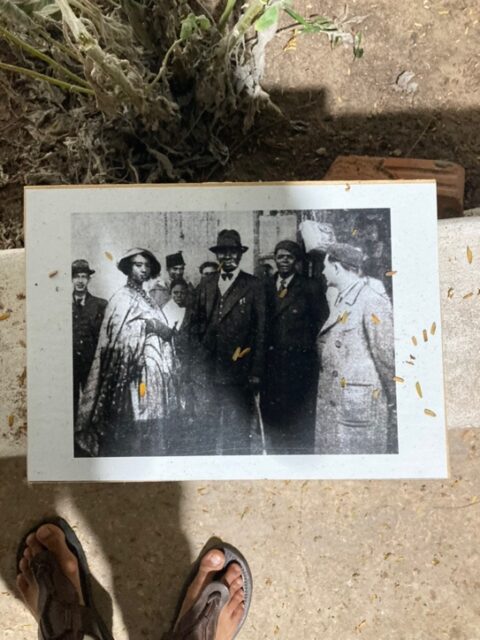
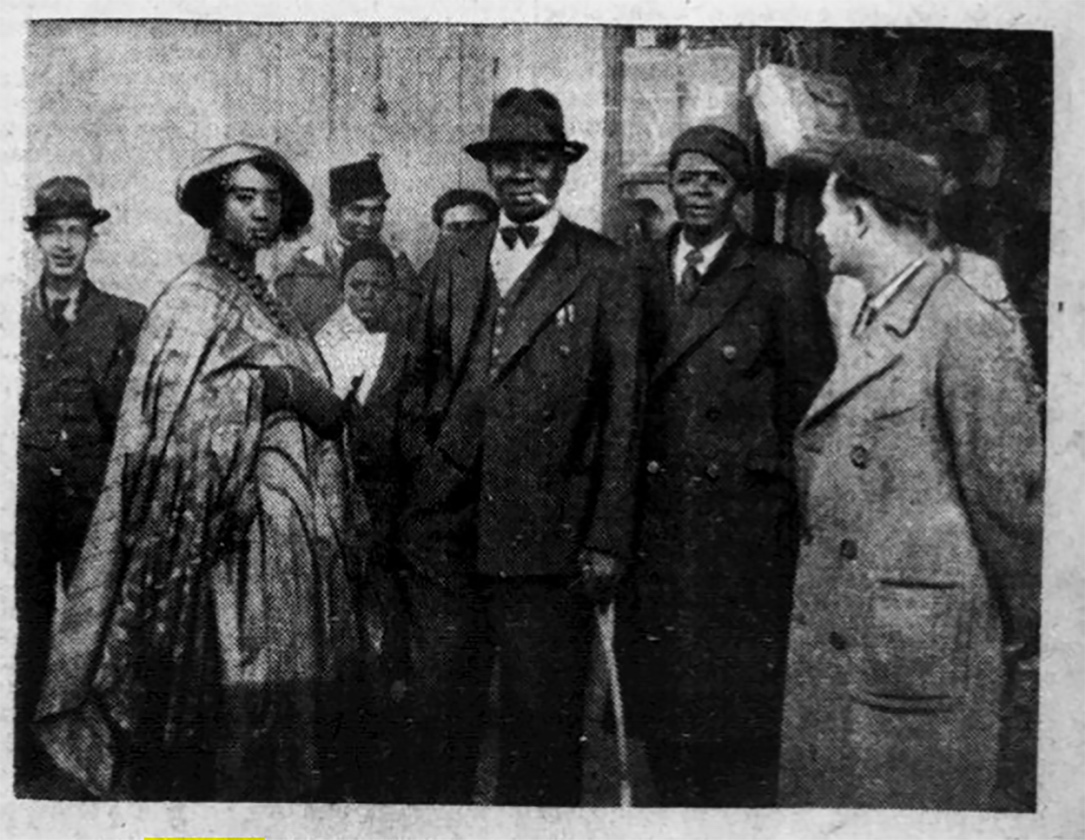
This photographic essay, which is part of my research project “Black Yarns: Fashion and Women’s Resistance in the Parisian Afropea (1939–1966)” started in 2021. Here I investigate the life of Raby Diop, my Senegalese aunty, who at 29 years old travelled to Paris in January 1939, following her husband Galandou Diouf, my then 64-year-old great-great-grandfather. Throughout the research in my family archive, I uncovered many photographs of Raby—a Wolof woman from Rufisque—whom I never met. I was able to trace her journey at a time when France remains reluctant to confront its colonial history and voices like hers, along with those of other African women living in Paris, are crucial to recovering that Afropean Parisian past.
Insisting on wearing her Senegalese garment instead of assimilating, Raby stood out as one of the very few African women in the city then, raising curiosity and sometimes mockery from journalists. Recovering the story of my family and making her presence and voice matter is essentially a practice of radical kinship. It allows the hidden potential story of a French Senegalese woman—who was considered “illiterate”—to be told through textiles.
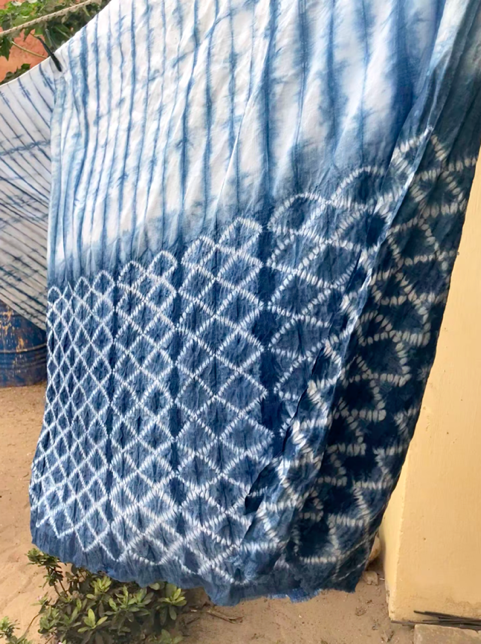
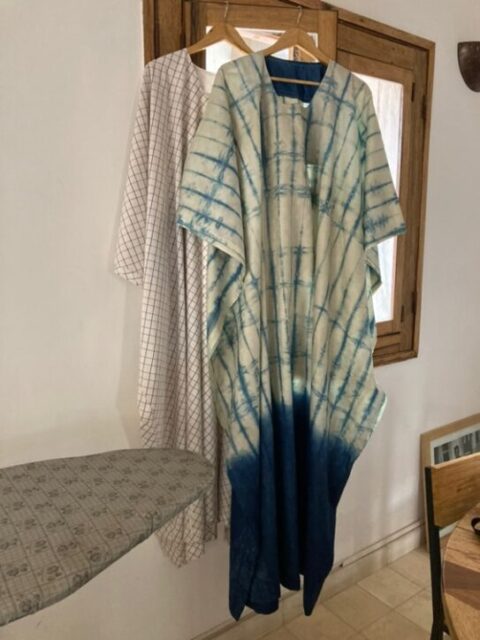
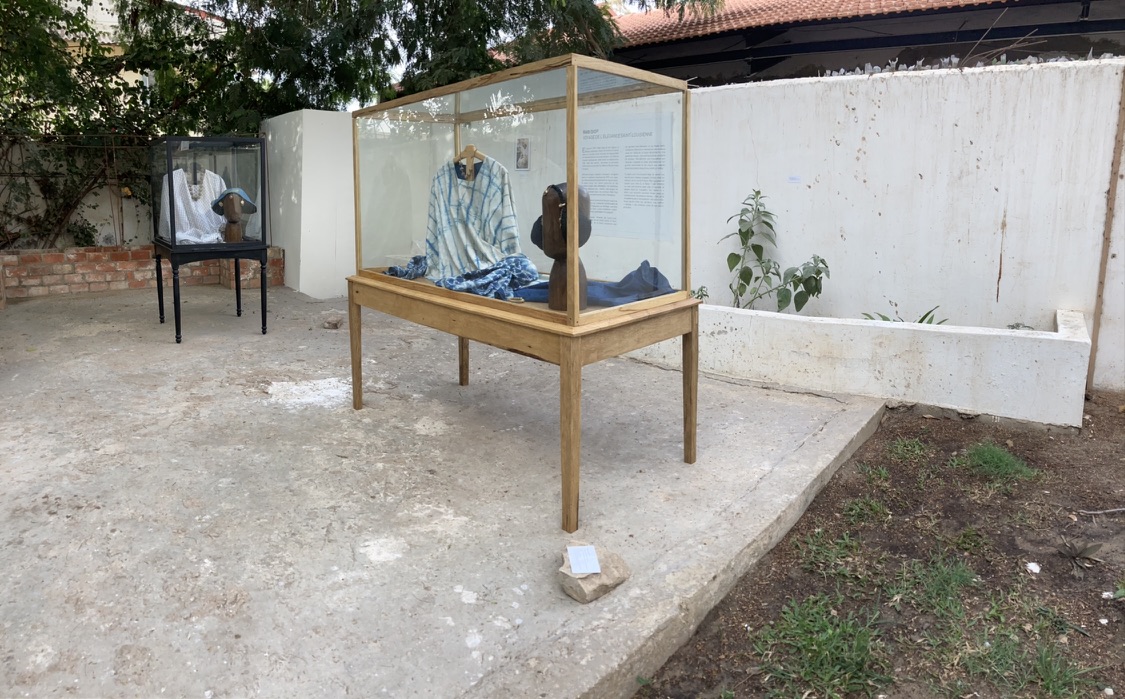
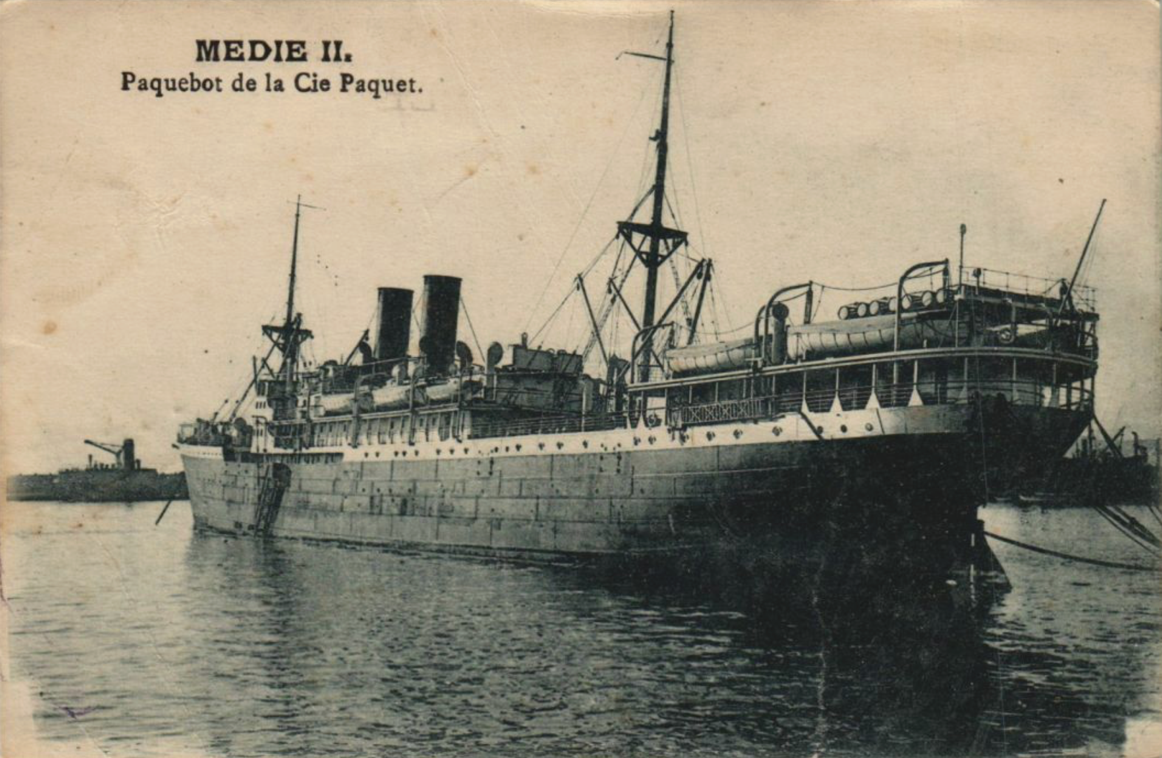
In this text I imagine the twenty days before her journey on the vessel Medie II from Dakar to Paris. Meanwhile, relying on a practice of stitch-resist dyeing technique using indigo, together with Atelier Tesss’ Binta Gaye and Maï Diop in Saint-Louis in Senegal we reproduced the garment Raby proudly wore during her layover in Casablanca. “No, I won’t wear European style,” she asserted in a French newspaper, while wearing her indigenous dress.
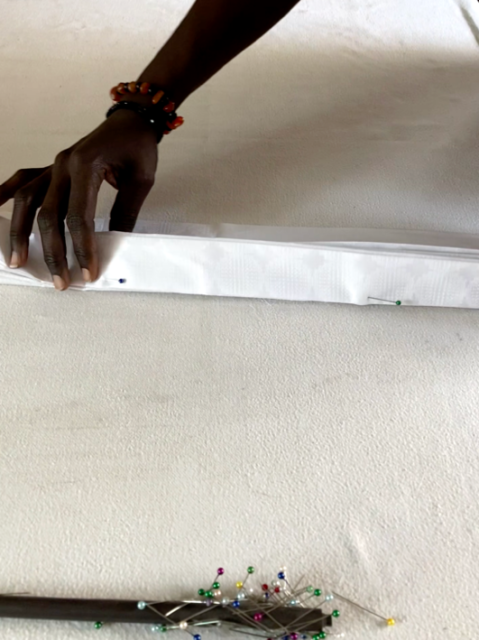
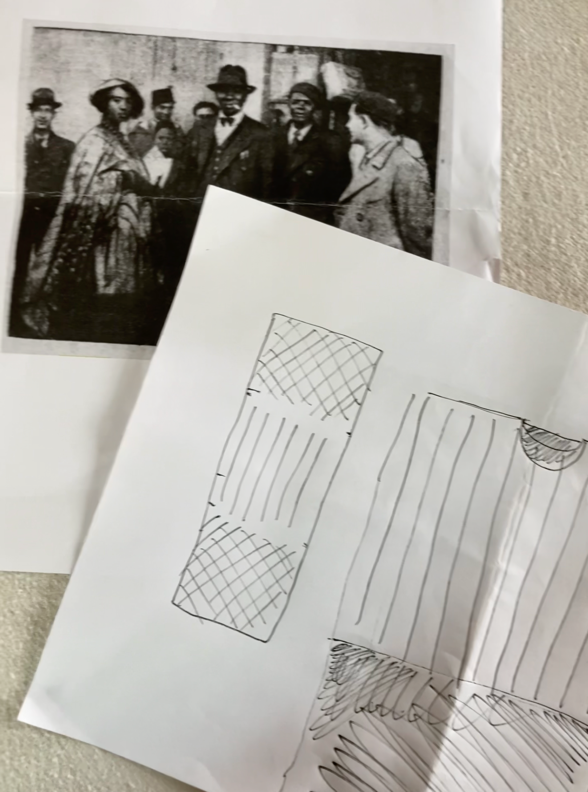
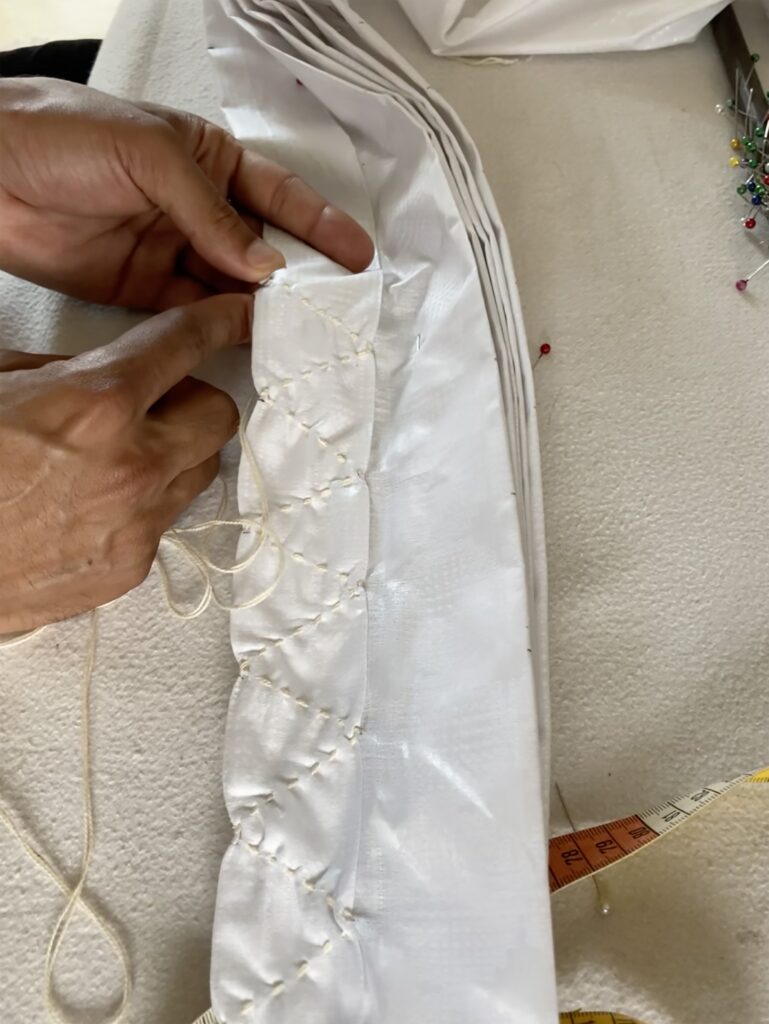
Day 17: The Dance
One could imagine Raby Diop in the days following Mawlid, her feet still aching from the celebrations. Perhaps, she suffered in the heavy December heat, the dusty Harmattan wind a constant breath from the Sahara. Her days before her departure were likely spent at home, in prayer, in the careful selection of her jewellery, in the meticulous perfection of her looks. Later, there would be Rokhaya’s wedding at the Mosque, and Raby may have held the necklace, the one Rokhaya was so fond of when they were children. Perhaps she felt a pang of her own past greed, having kept it from her sister, but now judged it to be the right time to offer it: a talisman for good luck and for protection in her impending absence. Raby may have thought her sister Rokhaya to be inconsiderate, a woman whose comfort always came first. She may have recalled nursing Rokhaya for an entire week after a mild flu, managing all her chores, and yet not having her sister’s help just last Saturday, when she herself was overwhelmed with packing for her journey. Galandou would have been telling her of the marvels of Paris, insisting she would find incredible textiles there. He probably spoke of the Lafayette stores as holding gorgeous treasures, wonders unavailable to them in Dakar.[7]
And at Rokhaya’s wedding, Raby would have danced. Even as her shoes constricted her toes, she would dance until she could no longer stand. Raby may have taken great pride in her marriage to Galandou a few weeks before. The rhythm of the drums, the claps of the gathered hands, the shimmering sound of the jewels, all of it may have conspired to make her forget, for a few precious hours, the deep-seated anxiety about her forthcoming journey.
At Villa Ndar, Binta and I worked to put the finishing touches on the pleated fabric. Following three long days of preparation, we finally achieved the desired result, securing the pleats with additional stitches along their edges to ensure they remained perfectly defined and crisp. My fingers had grown sore, keeping time with every stitch. We use a thick needle to match the heavy thread, which must be pulled taut, stretched tightly to block the indigo dye from penetrating the cloth. With each pass, the needle bites into our flesh, leaving its mark on our hands.
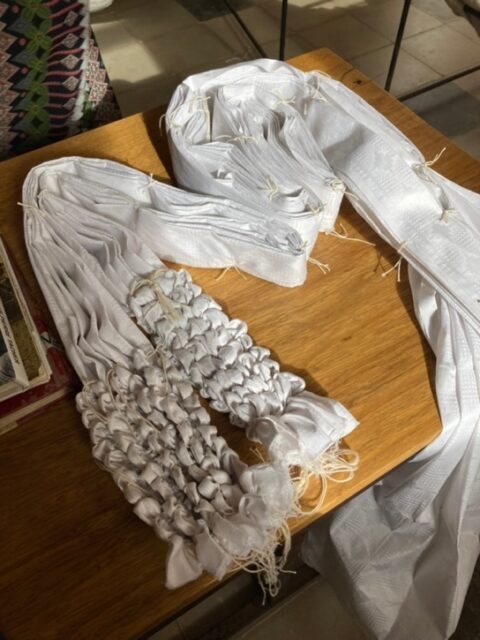
Day 5: The Boat
Raby Diop may have recounted how Galandou had to file administrative papers for their journey. The boat would have been prepared as they spoke. Yétou may have come back the day before, screaming that a griot had told her the boat would sink. She would have been running and crying, as if possessed. Raby would have told her not to say such things, perhaps remembering the story about the liner Afrique from when she was ten years old, where Senegalese soldiers had drowned and were said to have been eaten by whales.[12] From that day, a deep trepidation may have settled in her at the thought of boarding boats, save for those local occasions of celebration and reception foe whch she could adorn herself in her finest jewels.
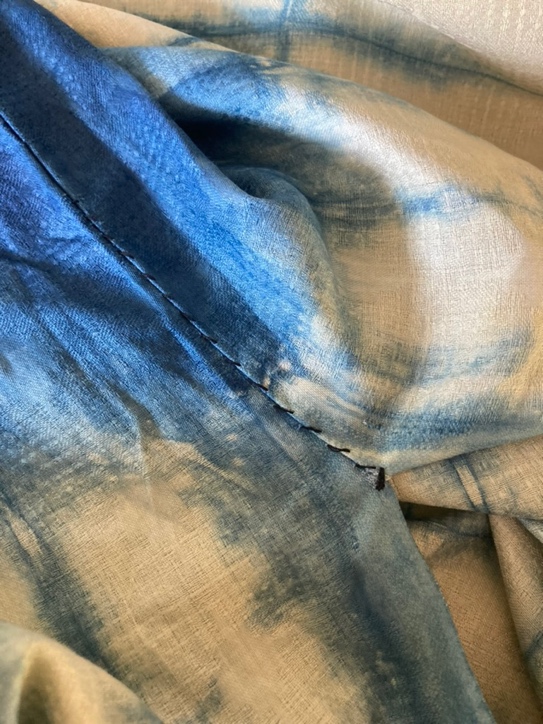
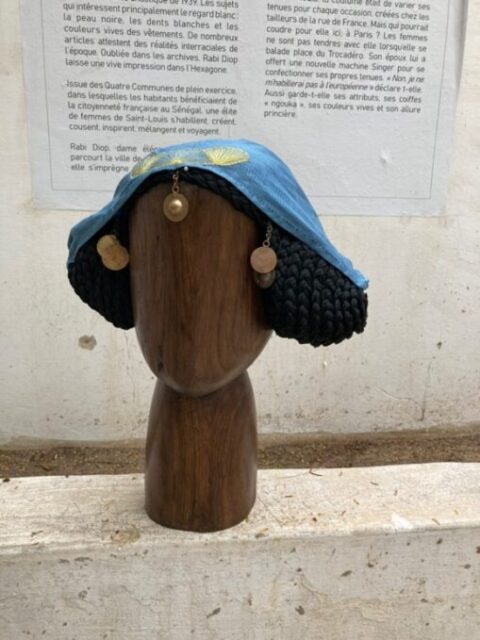
She would have packed her beautiful necklaces from Thiam, the jeweller in Dakar, including the ostentatious piece from her wedding panié, complete with its matching earrings and libidors. She may have run her hands over her braids, which Yétou had so kindly helped her untie, and thought of the wig Mariama would bring the next day. Mariama would help her secure the headpiece on the day of her departure. She would also have been preparing to collect her dress; the indigo dye would then have been set, and the final stitches would have been placed.
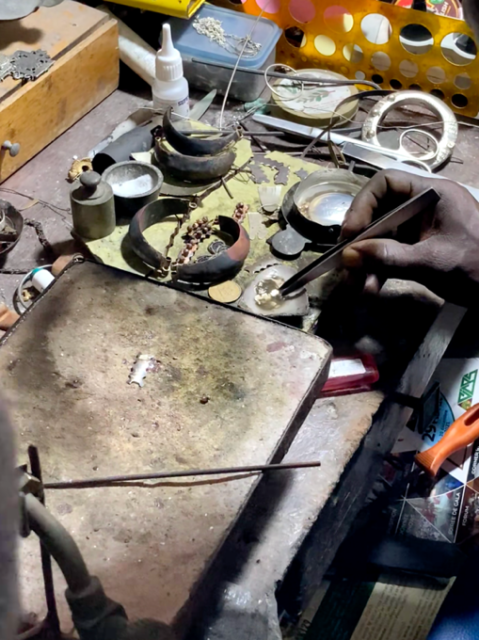
The dress took a few extra days to complete. After the indigo fabric was delivered to Ahmed, the tailor on Rue Khalifa Ababacar Sy, and the jewellery was finished by Cheikh Guèye’s shop. The final touch was the embroidery, a gold-thread motif that shone in stark contrast with the deep blue fabric. For the hairstyle, I used plastic ropes bought at the Ndar market, the kind normally used to mend fishing nets. The salesman must have thought I was going fishing. Weaving this plastic cord into braids and then stitching those into a snail-like form was a wonderfully meditative process. My fingers indulged in the rhythmic work, which was soothing; it transported my mind elsewhere. As I suffer from hyperacusis, the piercing call to prayer from the mosque near the French Institute was the only noise potent enough to break the spell of my peaceful concentration. This led me to think that, to quote Anna Laura Stoler, moving beyond the “guarded frame of the archive” through acts of remembrance is to hack a system of memory.[13] It is a process of making while contesting the very framework of the museum. Similarly, Azoulay describes how
my muscles and nerves memorize things I have not experienced,
and my body surprises me with them, as I do nothing to bring the
memories from my ancestors’ deep sleep and into my life [14]
This process will not produce an active object. My hands move with an instinct of their own, tracing the patterns of an ancestral practice. Meanwhile, Cheikh’s hands are handling the bracelets, which will be polished and plated with a gold finish, for the last time.
Footnotes
- Kopytoff, Igor, “The cultural biography of things: commoditization as process” [1986]. In The Social Life of Things: Commodities in Cultural Perspective. Ed. Arjun Appadurai. Cambridge: Cambridge University Press. 2014. pp. 64-91. ↑
- Hartmand, Saidiya. “Venus in Two Acts”. Small Axe. Vol. 12. No. 2. 2008. pp. 1–14. https://doi.org/10.1215/-12-2-1; Azoulay, Ariella Aïsha. The Jewelers of the Ummah: A Potential History of the Jewish-Muslim World. New York: Verso. 2024. ↑
- In his 1952 novel, Abdoulaye Sadji states: “Their degree of emancipation astonished Maïmouna and charmed her. They were real women of the world.” Sadji, Abdoulaye. Maïmouna. Paris: Présence Africaine. 1952. p. 80. Translation from French by the author. ↑
- Listen to Fall Niang, Fatima. “Maam Kumba Bang: Mythe ou Legende?”. 22 September 2022. Institut International de Recherche sur la Radio et la Magie. Available at: https://archive.org/details/maam-kumba-bang-master-100922 (accessed 2025-10-09). The act of pouring milk in the river Senegal is still in practice today. ↑
- See Patricia Gérimont’s research on bazin: “Just like wax fabric, bazin is an industrial textile, designed and manufactured by Europeans, which has paradoxically become an emblem of West African identity.” Gérimont, Patricia and Veirman, Anja. FANI FANI: Une conversation autour des savoir-faire du Mali. Brussels: LUCA School of Arts—Asbl Autres Regards. 2018. p. 84. Translation from French by the author. ↑
- Unless indicated otherwise, all images © the author. ↑
- Victoria Rovine describes a “craft-centered nostalgia” in interwar France and how textiles were, ironically, “recreated” in West Africa and sold in the big Parisian department store Galeries Lafayette, as “pure craft” because “[colonial administrators blamed] West African artisans [to be] responsible for the corruption of their own work.” Rovine, Vitoria L. “Crafting Colonial Power: Weaving and Empire in France and French West Africa” In Rhapsodic Objects: Art, Agency, and Materiality (1700–2000). Ed. Yaelle Biro and Noemie Etienne. Leiden: De Gruyter Brill. 2022. p. 180. https://doi.org/10.1515/9783110757668-009 (accessed 2023-10-23). ↑
- Raby Diop and Galandou Diouf are described in their Parisian apartment filled with birds, which they imported with them from Senegal. See Villiers, Noël, ‘La Propagande des oiseaux’. Le Monde Illustré, 4 February 1939. Available at https://gallica.bnf.fr/ark:/12148/bpt6k6201724t/f12.image.r=galandou?rk=214593;2 (accessed 2025-10-13). ↑
- Diop, Birago. A Rebrousse-Temps. Paris: Présence Africaine. 2000 [1982]. pp. 29–30. ↑
- See Mémoires de Paulette Nardal, Nardal recounts her encounter with one of Galandou Diouf’s “concubines” (perhaps Raby?) during which they shared a dish with shrimps in Saint-Louis. Grollemund, Philippe, Fiertés de femme noire: Entretiens / Mémoires de Paulette Nardal. Paris: L’Harmattan. 2019. https://doi.org/10.4000/clio.17569. ↑
- Botanist and chemist Michel Garcia is renowned for making indigo dyeing accessible through his signature 1-2-3 method. At his atelier in Brittany, France, he hosts workshops in which participants learn techniques such as making dye from dried leaves and preparing an ancient indigo compost vat. I was introduced to this practice in 2023 by Lieve Jacobs (Lieve Bluefingers) during an indigo and Shibori workshop in Flobecq. ↑
- On 12 January 1920, the vessel Africa sank en route from Bordeaux to Dakar. The disaster resulted in the deaths of 570 passengers, among them 192 African infantrymen known as Tirailleurs. Today, some of these soldiers’ graves can still be found in Sables-d’Olonne, France. See Mornet, Roland. La Trégédie du paquebot Afrique. Paris: Geste. 2006 ; and Corlouër, Jean-Luc. Le Bosco de Kerpalud. Paris: Ramsey. 2015. Also listen to the podcast “Les oubliés du paquebot Afrique”. France Culture. 20 August 2022. Available at https://www.radiofrance.fr/franceculture/podcasts/une-histoire-particuliere-un-recit-documentaire-en-deux-parties/les-oublies-du-paquebot-afrique-3985031 (accessed 2026-05-16). ↑
- Stoler, Ann Laura. “The Rot Remains: From Ruins to Ruination”. In Imperial Debris: On Ruins and Ruination. Ed. Ann Laura Sloter. Durham, NC: Duke University Press. 2013. p. 5. ↑
- Azoulay, The Jewelers of the Ummah, p. 112. ↑
- A photograph in the February 1939 issue of Vu: Journal de la semaine depicts Raby Diop enveloped in her sky-blue cape, the image clearly showing the shiny, textured quality of the velvet. Available at https://gallica.bnf.fr/ark:/12148/bd6t521305628/f2.item.r=galandou (accessed 2025-10-09). ↑