Launch
Fri 30 Oct 2026

Fabulation: Responses and Propositions

Screening Room, Valand

Participants
Nikita DhawanSaskia HolmkvistNobunye LevinJyoti MistryRam Krishna RanjanStacey Sacks

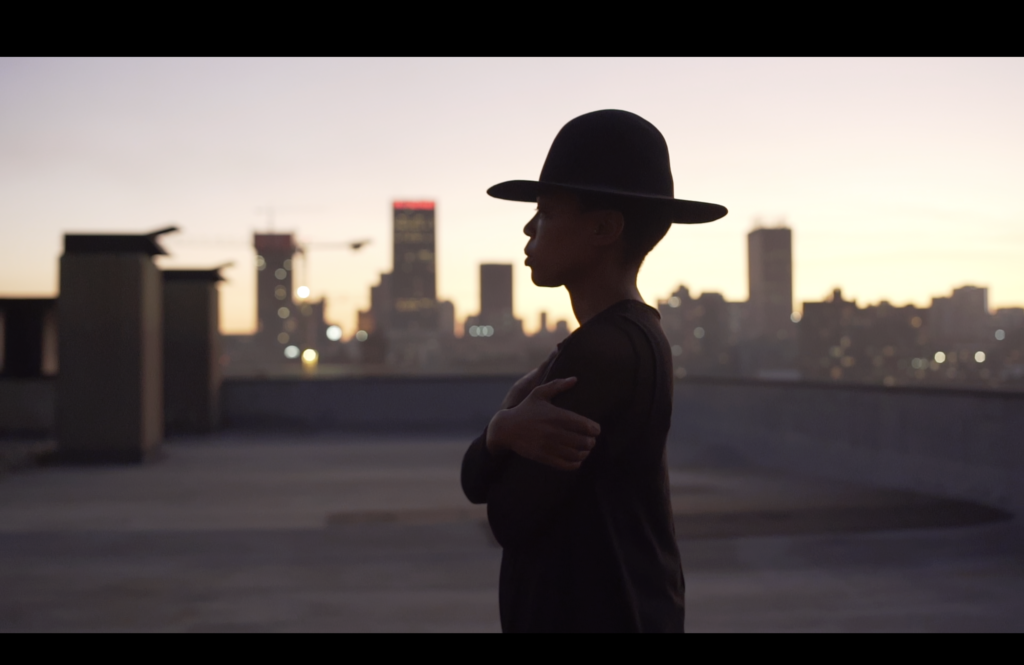
SpilLover, dir. Nobunye Levin, 2021, South Africa

Venue: Screening Room, Valand
Date: Friday, 30 October 2026
Time: 13:00–18:00

Marking the launch of the Fabulation issue of PARSE Journal, this event takes the publication as a point of departure for extending, challenging, and further developing some of the propositions that run through the issue. Four invited artists and thinkers will engage with propositions from the issue, grounding their responses in their own artistic, theoretical, and research practices to open these ideas toward other concerns, contexts, and possibilities.This launch event is conceived as a way to create a space to encounter the issue through what it might provoke, unsettle, or make possible, and to see where its propositions might travel next.

Schedule

Friday30 Oct 2026

13.00-13.10

Welcome and Introduction

Ram Krishna RanjanJyoti Mistry

13.10-14.00

Aesthetic Utopias and the Politics of Imagination

Nikita Dhawan

Considering the historical role of art within colonial and fascist regimes, can art be entrusted with the task of emancipatory politics? Can it awaken us from indifference and irresponsibility, making us more political and ethical beings? Might critical artistic practices facilitate transnational justice and democracy, thereby protecting and promoting human rights? Or should art remain autonomous and non-purposive, resisting being harnessed for political and ethical agendas?

Given that art operates within structures of capitalism and neo-colonialism, its political, social, and economic roles—as well as those of artistic practices and institutions—remain ambivalent and controversial amidst global inequalities. This talk will explore the role of aesthetic education in advancing global ethics. Can the political labor of training the imagination nurture democratic structures and practices?

14.00-14.10

break

14.10-14.50

The making of a Back Translation

Saskia Holmkvist

I will speak of back-translation, a forgotten performance, the radical presence of a still image and how it led me into the realm of critical fabulation. Through the idiosyncratic investigation into the artist Heather Allens performance KLub from 2001 held in Belfast, I will introduce the making of the film Margaret (Back Translation) 2024. A linking of an art event from a rather near past and the creation of new memories related to a contested history. 

The work moves through the uncertain terrain between what is remembered and what cannot be spoken, constructing meaning from hesitation, incompleteness, and the moments where narrative falters. In this sense the film Margaret (Back Translation), does not reconstruct neither Margaret Wright’s story nor Heathers Allen’s performance as a stable narrative. Rather, it exposes the ethical and linguistic boundaries that shape how such stories are told and retold. Foregrounding a politics of listening—one that resists closure, embraces uncertainty, and recognises that history is always mediated through power, translation, and desire.

14.50-15.30

Donkey Normal Times

Stacey Sacks

i’m honoured to be invited to respond to – or sense – this latest 23rd issue of PARSE: Fabulation. in typical hybrid clown fusions i shall use the opportunity to attempt an intervention on uselessness as a tool for navigating these particular techno-geo-political times. this intervention is offered in the spirit of playful encounter. through a series of masks and questions around agency and fabulation, this performing essay attempts an impossible task and that is to make (non)sense of it all.

15.30-16.00

coffee break

16.00-16.50

Dreaming is Serious Work: Filmmaking and Radical Imagination

Nobunye Levin

This experimental presentation will explore processes and expressions of radical imagination as slippery analogues to fabulation as, following Jyoti Mistry and Ram Krishna Ranjan, an unsettled and non-singular concept and method invested in ‘political, transformative and emancipatory’ gestures (2026). I will look at this in relation to the politics of film aesthetics in the context of beauty, the quotidian and the oneiric as method in some of my film work. Towards this, I will focus on the politics of ‘dreaming of different women dreaming of themselves’ (Levin and Shongwe 2024) in the relationship between self-making and worldmaking and will discuss how I have tried to use the aforementioned methods to foreground formulations of interiority at the threshold of worldmaking. This presentation is an invitation into processes of thinking and making and asks questions to generate a dialogue on the possible affordances and limitations of these methods towards different political acts of radical imagination and fabulation.

16.50-17.00

break

17.00-18.00

Discussion and Closing Remarks

Contributors

Nikita Dhawan

Nikita Dhawan holds the Chair in Political Theory and History of Ideas at the Technical University Dresden. Her research and teaching focuses on global justice, human rights, democracy and decolonization. She received the Käthe Leichter Award in 2017 for outstanding achievements in the pursuit of women’s and gender studies and in support of the women’s movement and the achievement of gender equality. Selected publications include: Impossible Speech: On the Politics of Silence and Violence (2007); Reimagining the State: Theoretical Challenges and Transformative Possibilities (ed., 2019); Rescuing the Enlightenment from the Europeans: Critical Theories of Decolonization (2026, Duke University Press). In 2023, she was awarded the Gerda Henkel Visiting Professorship at Stanford University and the Thomas Mann Fellowship, Los Angeles.

More

Saskia Holmkvist

Saskia Holmkvist is an artist based between Stockholm and Oslo.
Holmkvist´s practice is concerned with the limits of translation, drawing from forms of practice within the domain of translation in exploring how positions and interactions shape relations and historical trajectories. Her work combines aspects of ethnography and theatre to create films and performance that relate through past artworks, language, and political movements. This serves as a source from which she abstracts to speaks back through gestures, staged scenes, documentary elements into the newly mediated narrative memories which form the aesthetic and theoretical fabric of her practice. For over two decades Holmkvist has worked using video, performance, and text alongside new approaches to relational and oral archives that encompass critical listening, speculation, and performative translation. She has a particular focus on contemporary history, translation processes and ethics. 
More

Nobunye Levin

Dr Nobunye Levin is a Lecturer in Film Studies at King’s College London. She is a filmmaker and scholar. Her films and research are concerned with experiences from the Global South expressed through film aesthetics, the politics of aesthetics, radical cinemas, decolonial feminisms, anti-racism, and tactics of feminist filmmaking. She is the author of several essays on her film work. Her recent film work includes Dreaming is serious work (2025) and the video essay Reverie (2023), made in collaboration with Palesa Shongwe. Reverie received the runner-up award for videographic criticism at the 2025 British Association of Film, Television and Screen Studies awards. Nobunye completed a practice-based PhD at the University of the Witwatersrand, Johannesburg (Wits). Prior to her appointment at King’s, she was a Lecturer in the Film and TV Department at Wits, and a Postdoctoral Research Fellow in Decolonising Screen Worlds in the ERC-funded ‘African Screen Worlds: Decolonising Film and Screen Studies’ project, situated at SOAS, University of London.

More

Jyoti Mistry

Jyoti Mistry is Professor in FILM at Valand Academy and works in film both as a research form and as a mode of artistic practice. She has made critically acclaimed films in multiple genres and her installation work draws from cinematic traditions but is often re-contextualized for galleries and museums that are outside of the linear cinematic experience. Select film works include: When I grow up I want to be a black man (2017), Impunity (2014), 09: 21:25 (2011), Le Boeuf Sur Le Toit (2010) and I mike what I like (2006).

Select publications include: we remember differently: Race, Memory, Imagination (2012) a collection of essays inspired by her film which explores the complexity of racial identity in South Africa. Gaze Regimes: Films and Feminisms in Africa (2015). Places to Play: practice, research, pedagogy (2017) explores the use of archive as an exemplar entry to rethink colonial images through “decolonised” film practices. She has co-edited a special issue of the Journal of African Cinema: “Film as Research Tool: Practice and Pedagogy” (2018).

She has taught at University of the Witwatersrand (South Africa), New York University; University of Vienna; Arcada University of Applied Science Polytechnic in Helsinki, Nafti in Accra and Alle Arts School at University of Addis Ababa. Mistry has been artist in residence in New York City, at California College of Arts (San Francisco), Sacatar (Brazil) and a DAAD Researcher at Babelsberg Konrad Wolf Film University (Berlin). In 2016-2017 she was Artist in Residence at Netherlands Film Academy. In 2016 she was recipient of the Cilect (Association of International film schools) Teaching Award in recognition for innovation in practices in film research and pedagogy.

More

Ram Krishna Ranjan

Ram Krishna Ranjan is a lecturer in Film at HDK-Valand, University of Gothenburg. He works at the intersection of research, pedagogy and film practice. His educational background is in Economics, Media and Cultural Studies, Fine Art and Film. In his work, he critically explores decolonial and postcolonial perspectives and the intersectionality of caste, class and gender. He has made several films on these issues. His latest, Fourth World, delves into the various facets and stages of a creative-collaborative practice that attempted to foreground and engage with Dalit experiences of the Bengal famine of 1943.

More

Stacey Sacks

Interested in trans-generational and intra-cultural haunting, Sacks’ artistic research frequently experiments with auto-ethnography and productive discomfort in multi-modal ways, attempting to discover sharper ways of giving attention, making safe space for generative failure. Via a series of inter-disciplinary corporeal and material experiments, the research at root asks questions around how to mobilize Sacks’ own positionality as a privileged body in the anti-colonial conversation. The ongoing research explores if and how clowning generates a kind of ethico-poesis, particularly examining how satire and parody might destabilize and rethink issues relating to power, race, privilege and identity. Or not. 

A professional actor/writer/director/researcher/clown, Sacks has taught and supervised at BA, MA and PhD levels in South Africa, Sweden, Lithuania, Estonia, Finland and the USA; was a Fulbright Scholar in Connecticut, USA (2021-2022); presented The Walls Have Tongues or… at the Research Pavilion (Venice Biennale, 2017); published their PhD ‘thesis’ SQUIRM (2020), and is co-author of The Clown Manifesto published by Bloomsbury/Methuen Drama  (2015).

Sacks currently occupies the position of Professor of Acting at Stockholm University of the Arts (SKH).

More

More from Fabulation