In a roundtable conversation, filmmakers, artists and researchers Nnenna Onuoha, Joseph Steele and Hope Strickland share their reflections on their practices and respective films: Memory Guardians (2024), Untitled Essay Film [poiēsis] (2024) and I’ll Be Back (2022). The exchange builds on a post-screening conversation held during the PARSE “Fabulations” workshop hosted in Gothenburg in April 2025.
Introduction
Fabulation has been conceptualised and applied by a wide range of thinkers and artists—from Donna Haraway to Saidiya Hartman, Cheryl Dunye and Mati Diop, among others—as a creative and critical mode of reimagining histories and futures that so far have been silenced and rendered invisible. In April 2025, during the PARSE “Fabulations” workshop in Gothenburg, each of us screened a short film—The Memory Guardians (2024) by Nnenna Onuoha, Untitled Essay Film [poiēsis] (2024) by Joseph Steele and I’ll Be Back (2022) by Hope Strickland—and reflected on the role of fabulation within our respective practices. Over the subsequent weeks we rewatched cuts of each other’s films and discussed them via e-mail threads and in a shared document. The three explorations find common ground in this essay, which unfolds as an extension of those conversations, and in which fabulation is tried and tested and stretched out across temporalities and materials. The conversation draws on references from a variety of texts, while each work deals with gesture, pace and negotiations of the past, present and future in presenting the raw material of the stories.
Synopses to the Three Films
- The Memory Guardians (Nnenna Onuoha, 2024)
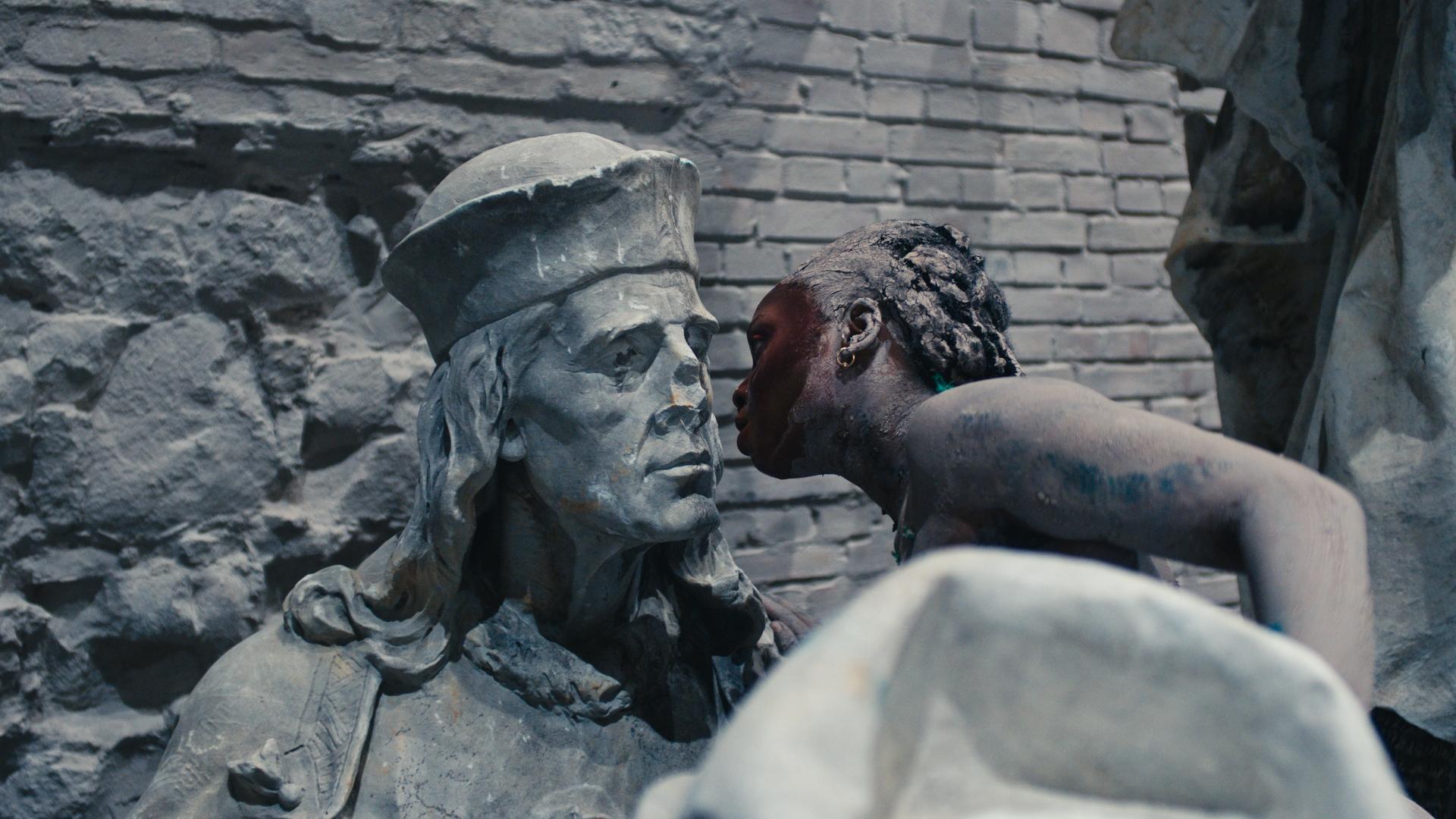
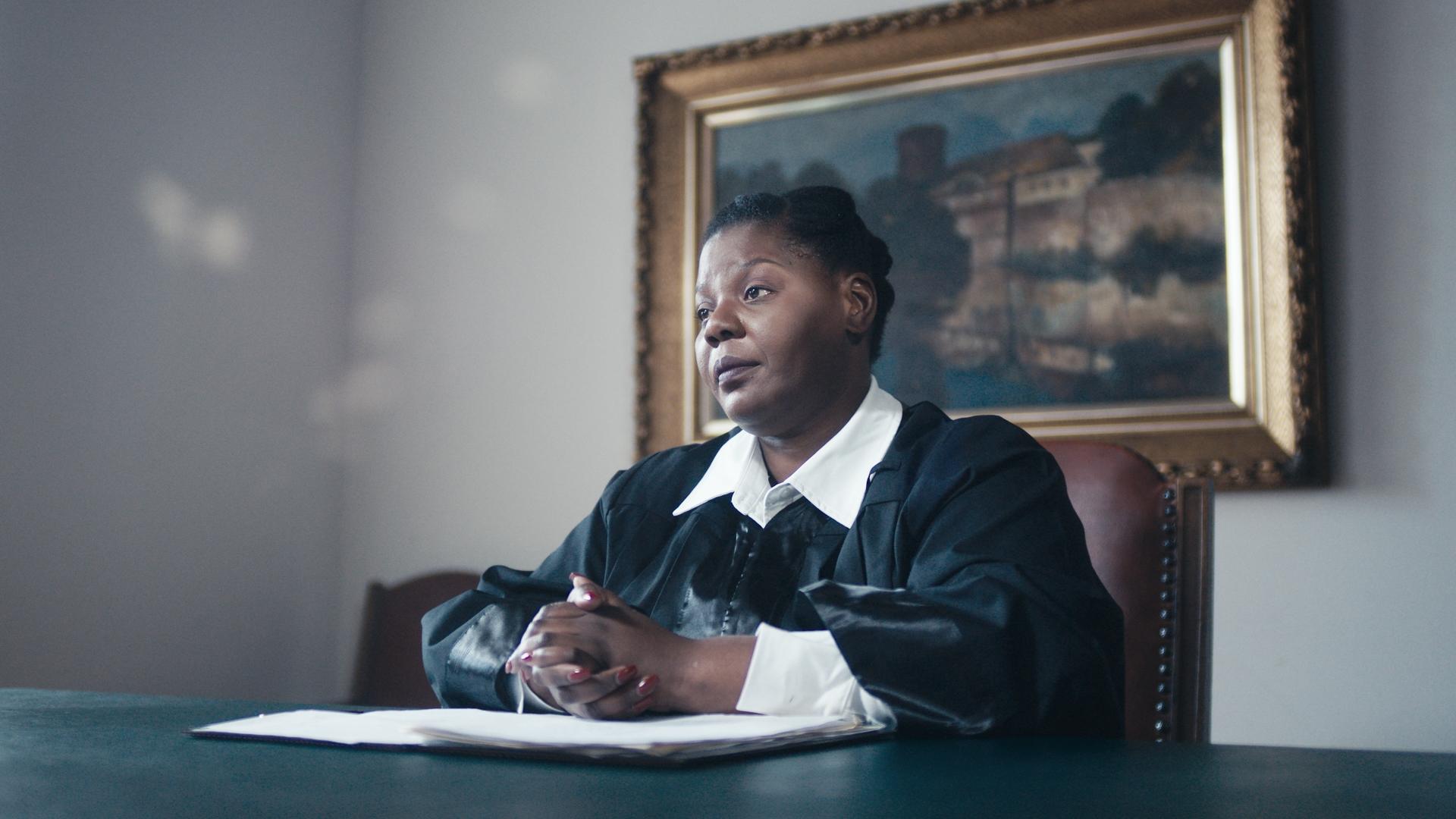
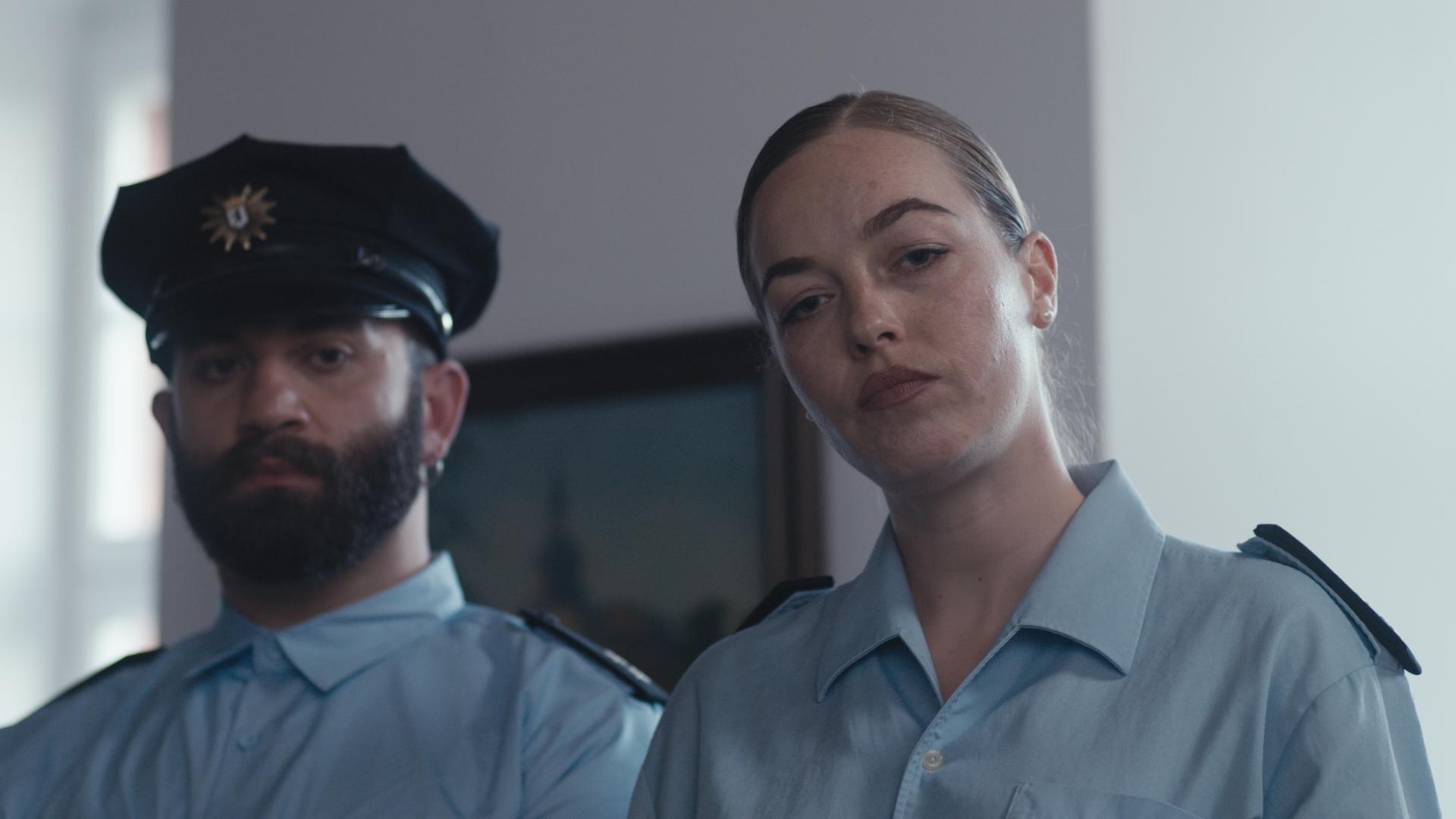
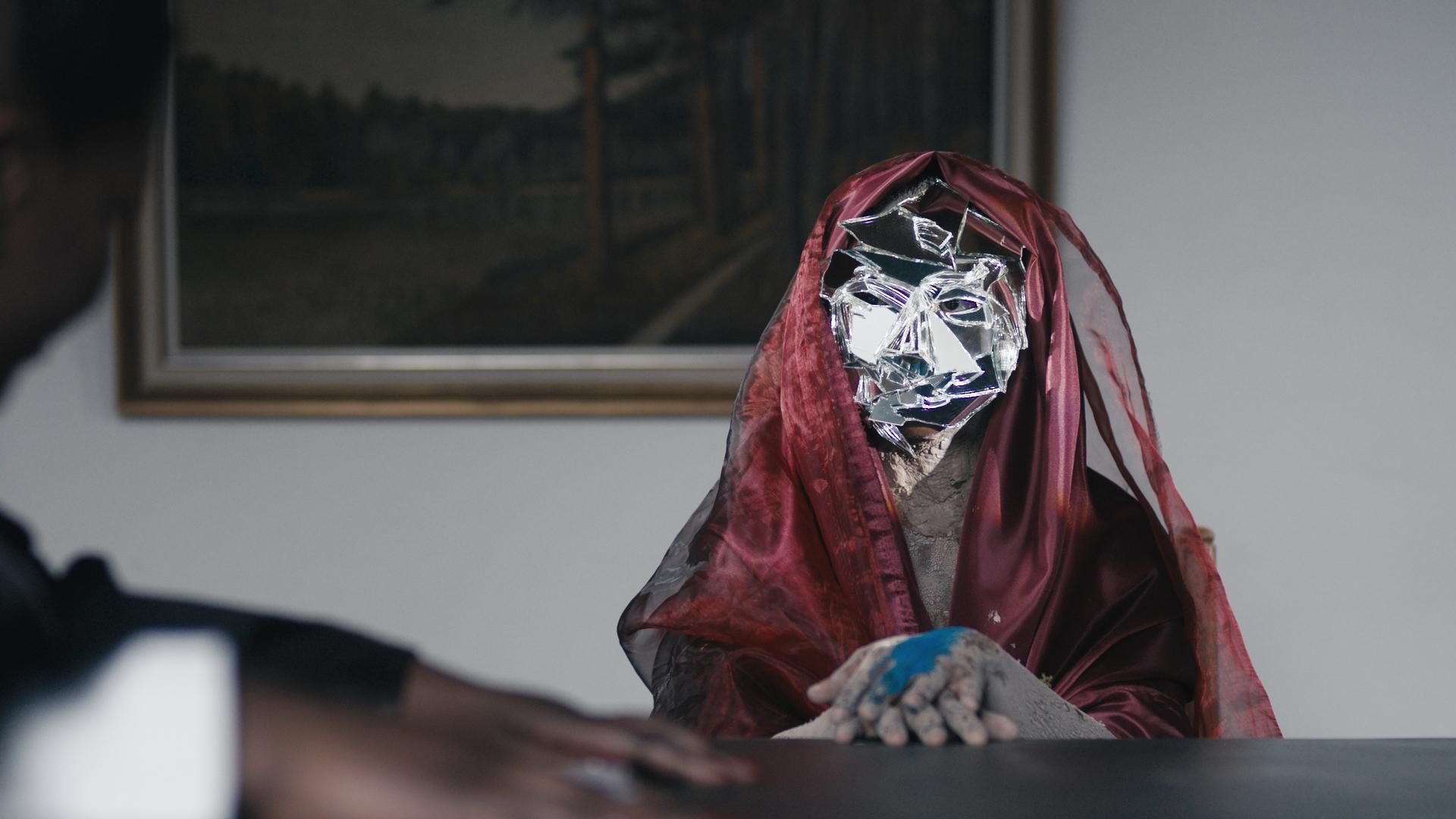
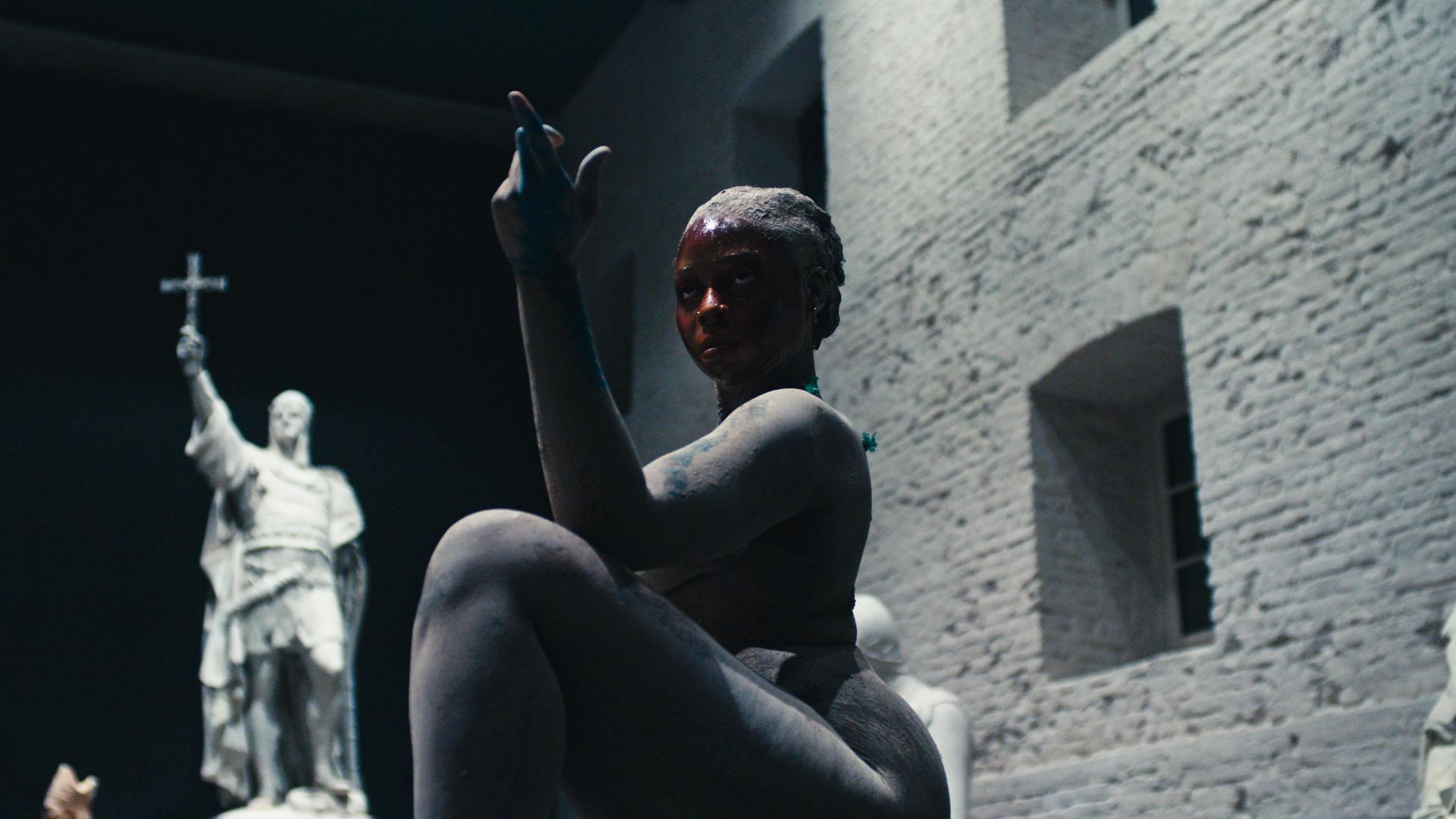
The Memory Guardians (2024) is a short film that unfolds in two parts: the first stages a speculative trial of The Kneeling Woman—a decommissioned statue of a Black woman, now held in Berlin’s Citadel Spandau Museum—to decide what her fate should be. The proceedings weigh up her uneasy origins—having been sculpted by a Nazi in the 1920s and labelled a racist slur by the district council in 2000—with her more recent violent fate—having been beheaded by unknown attackers following the announcement that she was to be removed from her roadside pedestal and sent to the museum. The film’s second part drifts into a dreamscape, in which the statue wanders the halls of the museum, encountering other wounded, decommissioned statues. In their midst, she reforms herself, reconstituting her face, but also tentatively trying out some of the other statues’ more upright, victorious poses as gestures towards repair.
-
Untitled Essay Film [poiēsis] (Joseph Steele, 2024)
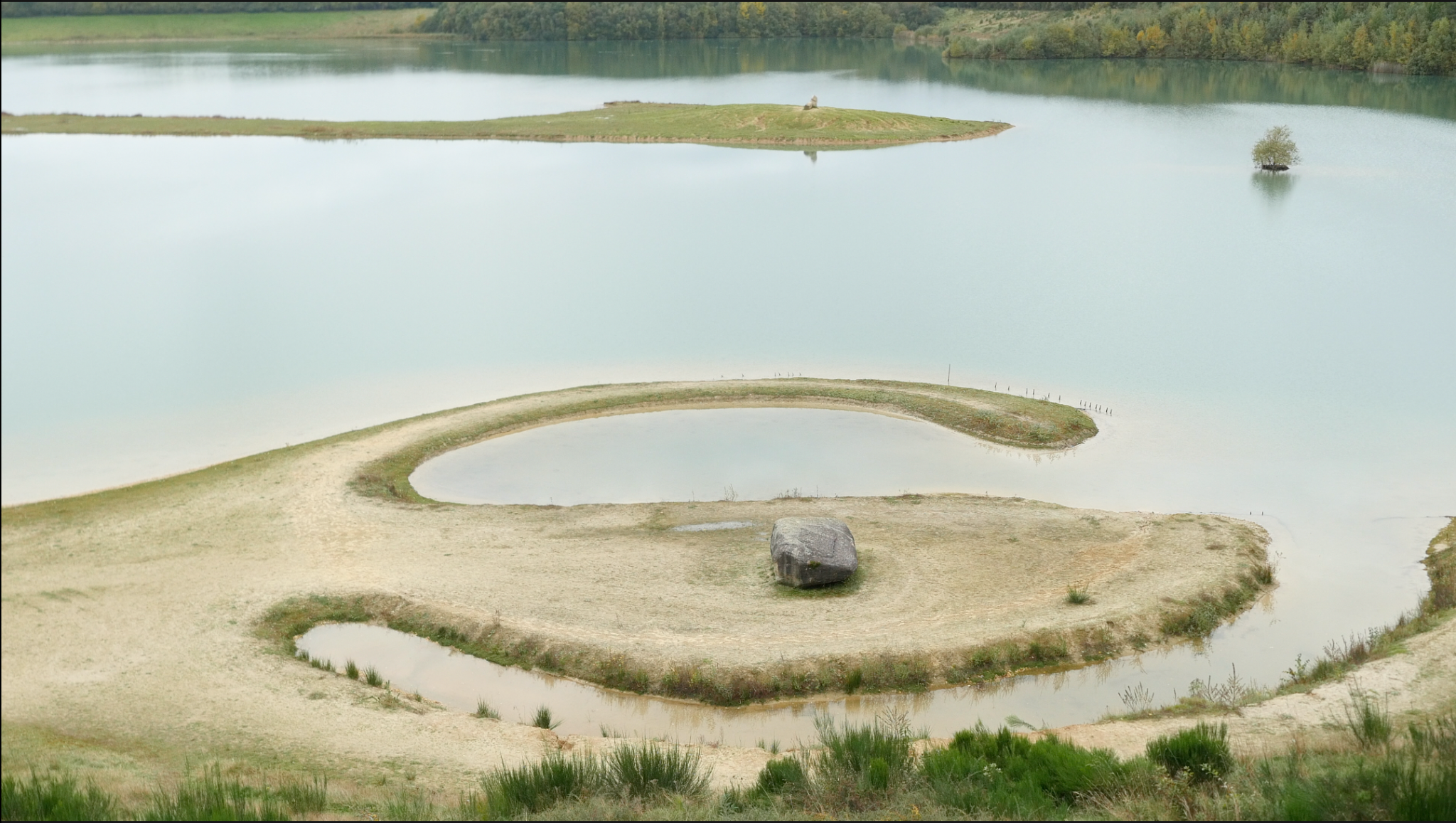
In the film Untitled Essay Film [poiēsis] (2024) and the installation After Miscellanies (2023), the traces of two 1990s projects by artist Renée Green are examined using a collective writing approach to inform cinematographic choices. By employing memory work through walking and 35 mm photographs, the film reorders reality, cuts fragments and rearranges them to highlight the gaps and divergences in the perception of time and memory. The author-filmmaker’s process meets the premise of Green’s essay “Certain Obliqueness” (2016), a text in which she speaks directly about her process–– in her words, the essay film allows language, sound and aurality/orality to merge “into one form”. [1]
Making the film was a way to work through questions about documentary and the trace. In an essay film, evidence––the use of footage and documents––leaves space for the viewer’s attention as a medium, working within the time of narrative. In a figure/ground relation, it is possible for us to imagine these gaps and caesuras between experiences, interpretations as a disarrangement of the trace, which is where the author’s formulation of the archive comes into relation with Green’s. Paul Ricoeur borrows from Lévinas on the significance of the trace.[2] It’s through this notion that Untitled Essay Film [poiēsis] approaches time, and these are revealed through an encounter with the Other. The trace expresses this disarrangement through a mutual contamination of two notions of time––namely existential and empirical time. Ricoeur notes that the trace is distinguished from other signs organised into systems.[3]
- I’ll Be Back! (Hope Strickland, 2022)
It is 20 January 1758, and the French colonial administration of Saint Domingue has assembled a crowd in the main square of what is now known as Cap Haïtien, Haiti. François Mackandal, a fugitive maroon, is to be burned alive at the stake. Up until now, Mackandal has remained elusive for over eighteen years and is considered responsible for the death of nearly 6,000 colonisers. Successful in unifying various maroon communities across the island, legend also surrounds his ability to evade capture through metamorphosis. “He is soon everywhere and in everything, in rain, thunder and earthquakes. So much so that in the end people confuse him with the island of Saint Domingue itself.”[4] The staging of his death is therefore no simple execution: it is the public performance of defeating resistance to colonial rule before an audience of both enslaved and free racialised peoples. In the records of French history, Mackandal will burn at the stake. In popular legend, Mackandal transforms into a fly, buzzing above the scene of his execution and crying out, “I’ll Be Back!”[5]
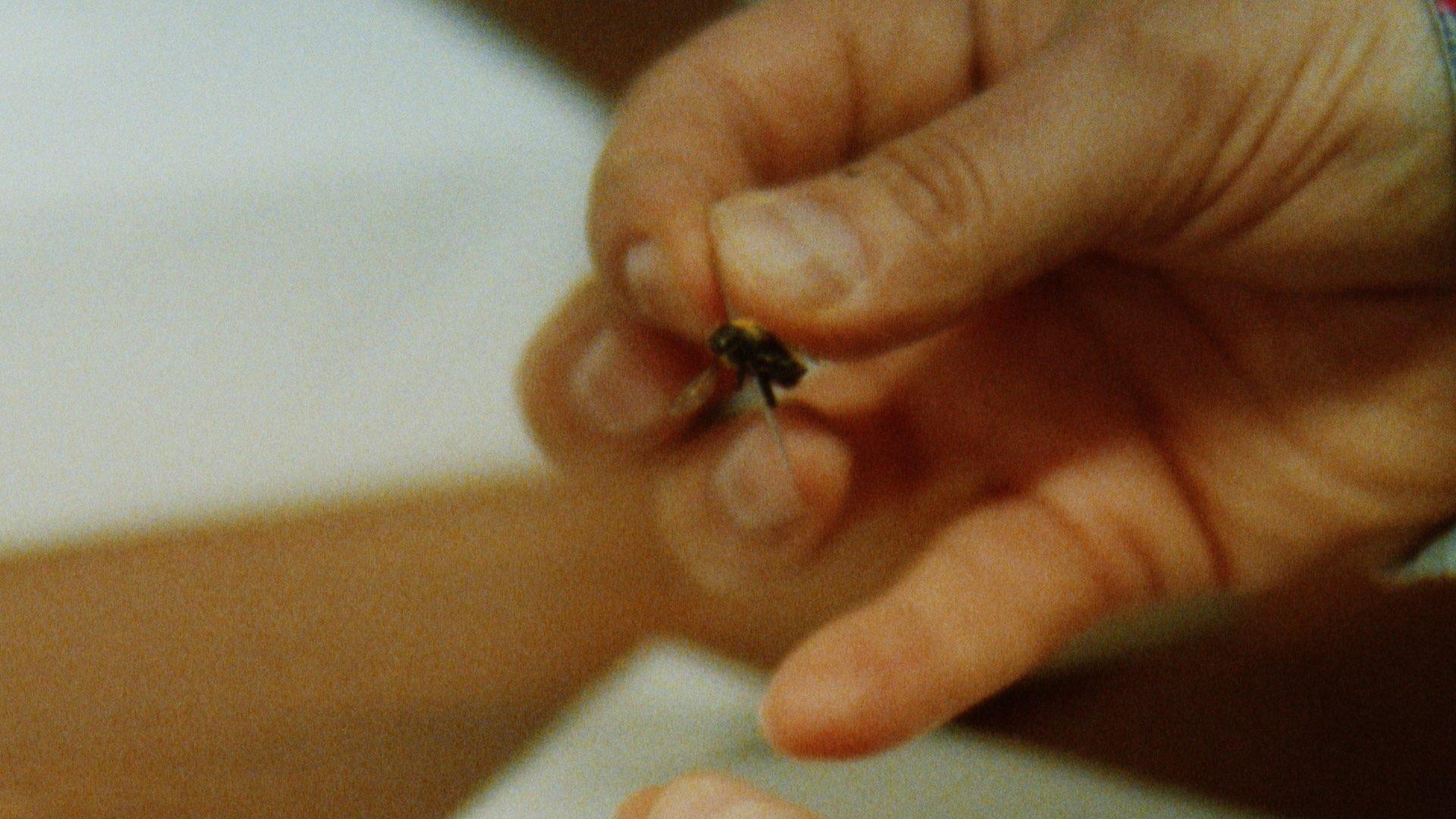
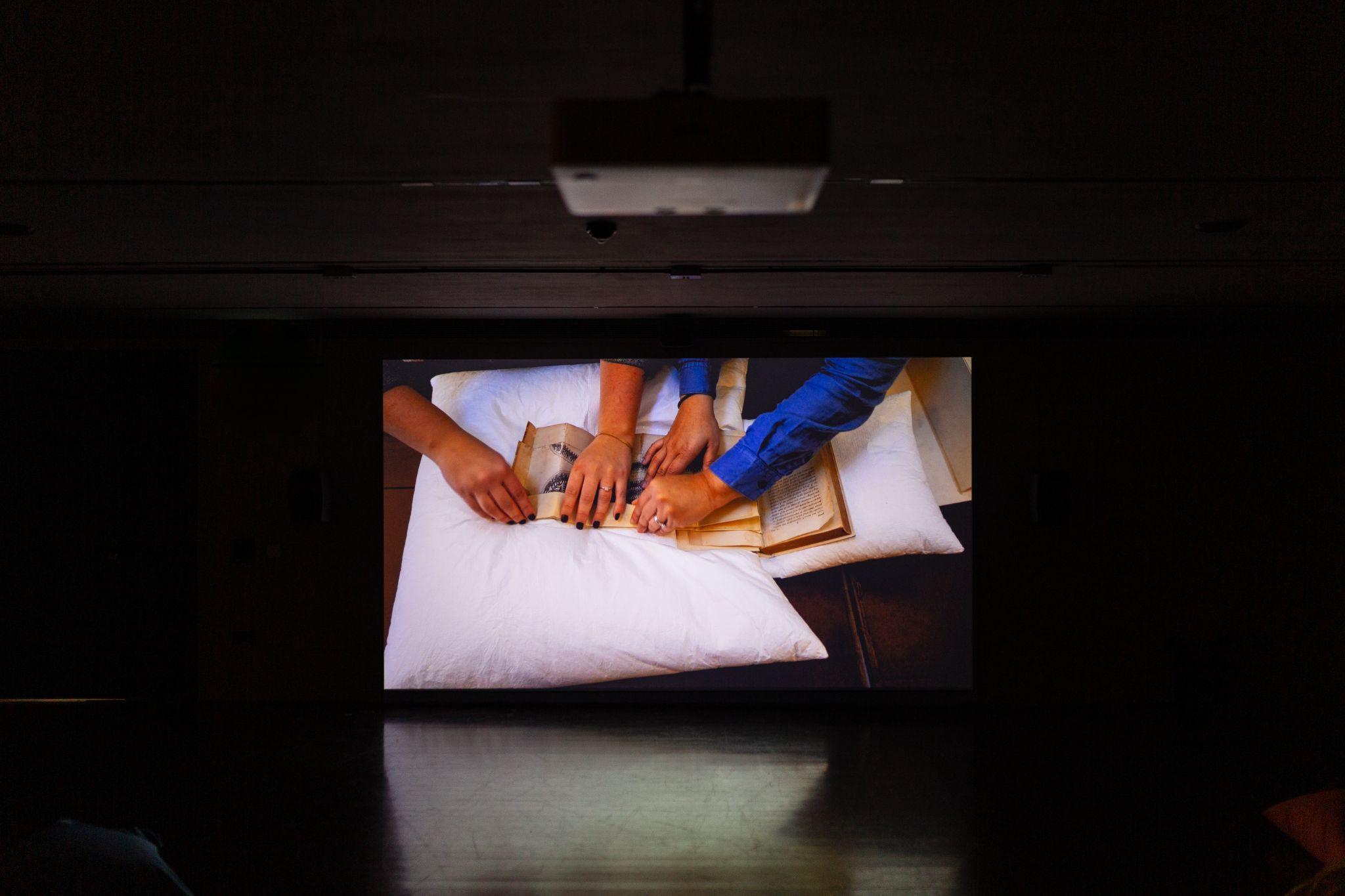
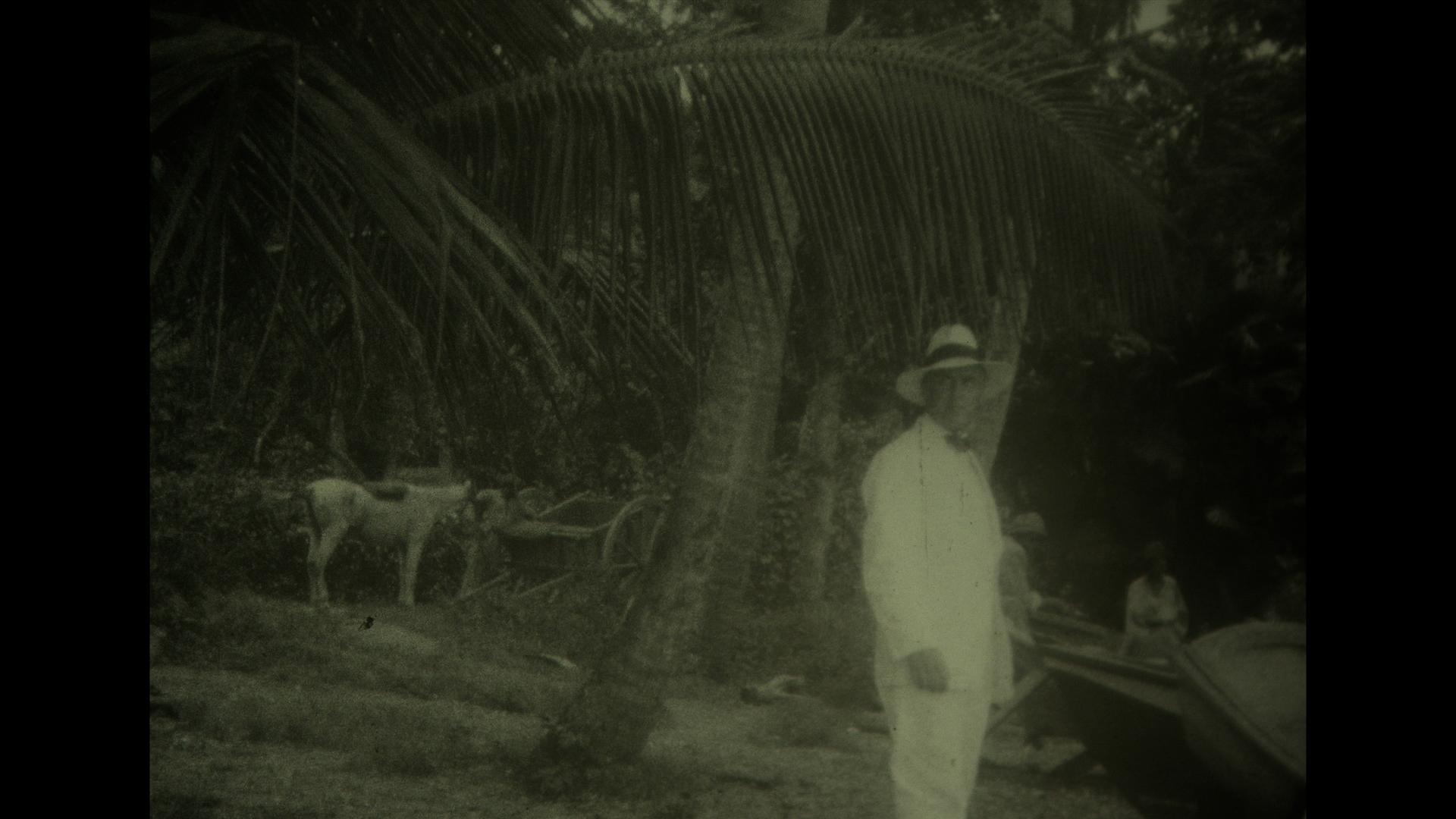
I’ll Be Back! begins and ends with this story of the rebel maroon, which acts as a framework through which to reconsider the distances between myth, history and machinations of power. Filmed in archives and museums across the UK, I’ll Be Back! explores a series of collections that hold objects of colonial violence. Among these is a book containing the architectural plans of a slave ship—a key document in the abolitionist movement and widely published for its shocking nature—and a collection of insects gathered in Sierra Leone by a colonial topographer mapping borders and demarcating British and French territory in West Africa. Shifting across digital, 16mm and archival formats, the film interrogates institutional collecting practices and uncovers ongoing modalities of revolution, speciation and colonial imaginaries.
In Conversation
Hope Strickland (HS): I thought it would be helpful to begin with our personal, political or philosophical interpretations of fabulation, outlining where our contextual references begin and end and how this relates to the films we will discuss. One thing I noticed during the symposium was the breadth of understanding around what fabulation itself entailed. It seems to roam like a floating signifier across various interdisciplinary and subject-specific strategies, so it seems useful to unpack this a little before we delve deeper into the creative process of each of us.
Nnenna Onuoha (NO): For me, fabulation is both a creative strategy and a form of epistemological redress. I started using it when I was making my film Lagos, Lagos (2018), which traces movements between Portugal and Nigeria across five centuries. My entry point was archival: I read Portuguese explorers’ accounts that described not only the new people and places they’d “discovered”, but also catalogued the fantastical sea creatures they’d allegedly encountered along the way. What struck me was how such mythological passages were granted historical authority simply because they appeared in print. So, I turned towards my own cosmologies: if the Portuguese could populate the waters with their sea monsters, why not invite Mami Wata—a water spirit said to prey on greedy men—to be one of my other narrators? I began to imagine how she might describe what she saw and how her voice could intervene in the historical record. At the time, I hadn’t yet encountered Saidiya Hartman’s notion of “critical fabulation”.[6] A friend introduced me to her work after seeing the film, but the impulse was certainly similar: to contest the authority of the colonial archive by placing African oral traditions, myth and imagination on equal epistemic footing. In this sense, fabulation for me becomes a way of repairing historical imbalance while opening up space for other ways of knowing the past.
HS: Nnenna, I really relate to this understanding of fabulation as an opportunity for epistemological redress and we share similar starting points of archival research and Hartman’s critical fabulation. In I’ll Be Back! I’m particularly interested in exploring the relationship between fabulation as a poetic strategy and the act of marronage as a form of real-world political refusal.[7]
Fabulation is embedded in marronage in both the construction of my film I’ll Be Back!, and in the legend of Mackandal that frames it. Through fabulation, Mackandal escapes the performance of his own death: “The image travels, it does not want to die, and so it walks with time.”[8] It is Mackandal’s willingness to align with different species and the world around him that enables his freedom. While entomology and the broader study of natural history was instrumental for colonial projects through categorisation and hierarchisation, Mackandal’s actions speak to an alternative, convivial approach to the natural environment wherein we find colonialism’s undoing. It is important to note that Mackandal’s legend is credited with precipitating the Haitian Revolution of 1871, which marked a radical break with the prevailing plantation logics imposed upon the island.
Mackandal’s legend forms the basis of a hypothesis for a working methodology of Caribbean cinema by Olivier Marboeuf—a “gesture of refusal”, a “shining tooth of a Maroon far off in a dark forest”.[9] A slippage occurs here between fabulation and marronage and while I am intrigued by the potentiality of fabulation in relation to marronage, I am wary of relegating marronage to a metaphorical register. Which is to say, since the workshop I have felt hesitant to discuss fabulation in relation to my work without an articulation of this distinction: I consider my work as invested in fabulation as a structural and poetic device in service of an analysis of marronage as a political act of refusal.
Joseph Steele (JS): I wanted to offer a reflection about jurisprudence in thinking about fabulation, because it stirs something in me. At the screening of Untitled Essay Film [poiēsis] in April, a text pertaining to the two kinds of reaching in poetry that Muriel Rukeyser speaks about floated in my mind: one that is documentary and another that is unverifiable.[10] The other quote I want to introduce is related to the sublime by the writer Anne Carson in her 2005 book Decreation. She defines the sublime as a “documentary technique” drawing on her reading of Longinus’s first-century CE treatise. Carson notes that documentary’s dependence on danger though another meaning is “a dependence on documents”, or a way of dealing with quotation and evidence pertaining to the real.[11] For me these links to magnitude, the unverifiable and reality must be mentioned when thinking of fabulation.
In reviewing our films again, what’s coming up now is the work of poet M NourbeSe Philip. There’s a connection to the two quotes I was playing with in my mind in relation to fabulation––the way in which Hartman comes up with this idea. If the text, she references this through a footnote and she refers to the way that Philip wrote about Canadian artist Stan Douglas’s practice as a “recombinant narrative”. The text, which Hartman refers to as a manuscript in the footnote of “Venus in Two Acts” (2008), appears in the “Notanda” [a postface] of ZONG!,[12]a documentary poem or found text that led to the text about the massacre on the slave ship Zong.[13] M Nourbese Philip, a lawyer and writer, also mentions “authorial absolution”, through which she can think “how to not tell that which had to be told”.[14] Through this absolving from authorial intention, Philip puts to work the blankness or emptiness of white space and our voices (as the readers), using found language to generate the fragmented words, phonemes, silences and sounds.
Typographically, the poems sometimes resemble a seascape or map and when read aloud they can imitate immersion or aspiration. Philip thinks through the Zong as an enclosed multicultural and multilingual space, and works with her knowledge of English and limited French, Spanish and Portuguese. She attends to levels of silence at play in the text and the constraint of only using the two-page decision as source, bringing in a book on contracts and another on insurance law, a branch of contract law. Following Zong! as a “repeating event”, I think this is the connection between fabulation and history––inhabiting the present or a not-too-distant future, while looking backwards.[15] Documents and footnotes are great places to look for these. Considering the repetition in the fugue and in antiphony, I think poetry is essential for non-fiction cinema, both in conveying the information—story, history—and in recitation, or “orality” that Philip mentions.
HS: I love this ellipsis, Joseph, between ways of reading poetry and strategies for maintaining space, silence and repetition between fabulation and film. The way you read poetry here is reminiscent of the way I understood the pacing in your film: errant and recombinant with lots of space to breathe. I was particularly taken by the way it operates cohesively, even though there is an absence of Green’s work in the film. It feels like a similarly enclosed space to that of Zong!, with its prevalence of gesture, orality and an expansive approach to storytelling despite and through any absences.
Joseph, we both insert ourselves into the structuring and narration of our own films, including our visual presence on screen at times. I am particularly interested in your consistent use of hands and your own voice as modes of narration, less as an interruption to the archival footage and more as a guide or keeper. It maps onto the inclusion of personal anecdotes and moments from your own life throughout the film, the retracing of Green’s steps with your own. I would be curious to learn more, both in relation to your personal experience of making the film and the motivation behind your presence in the film.
JS: Thanks for asking this, Hope, as it ties together many things I was thinking about, one of which is gesture. The way my hands are used are a tribute to Green’s work but also Harun Farocki’s film The Expression of Hands (1997). I think of the way the elements of film appear in the work of certain artists—Green, Chantal Akerman, Farocki, structural filmmakers—where the work inhabits the space between use/practical engagement and an awareness of the technology. I’m thinking specifically of cards, editing tables, flatbeds, decks and other equipment that appear in an essay film. To take one example, you never see Morgan Fisher’s hands in the film Standard Gauge (1984), but the way the narration unfolds with the understated voice creates the sense that you are sitting with someone. You can see hands in Production Stills (1970). I also like how the hands are edited out in Hollis Frampton’s Hapax Legomena I-II (Nostalgia, 1971, Poetic Justice, 1972) although it clearly describes a working situation or a rostrum set up.
Frampton defined nostalgia as the “wounds of returning”.[16] The breakdown between equipment and the broken tool in those works is quite incredible, and something about redirecting film material for a new purpose that is really exciting, especially when using a flatbed or the way someone’s hands interact with objects, artefacts. I think that rewinding and slowing down, or rephotographing through an analytical camera—e.g., in the films of Yervant Gianikian and Angela Ricchi Lucchi[17]—or running an analytic projector can let you focus on details and opens up to a presentness that wasn’t there before. This approach is used in many films but of course most readily conjures the image of the [Abraham] Zapruder film about John F Kennedy’s ’s assassination (1967), or an intense investment in enlargement in, say, Michelangelo Antonioni’s Blow-Up (1966). But I digress…
Renée Green’s approach influenced my decision to include myself in the film. I like how the narrator’s positionality, the “slideshow” where I go through the prints is like seeing someone’s holiday snapshots, the way you used to show friends or a neighbour’s slide carousel of shots. I was inspired by the Korea Slides in Green’s installation and essay film Partially Buried Continued (1997). That section is narrated by her father, who took the slides during the war, when he was stationed as a medic, but they are rephotographed on SD digital video. She also uses Super 8 footage she shot in the first part of Partially Buried. The decor of the room and wall colours play a role too in conjuring a certain affective space.
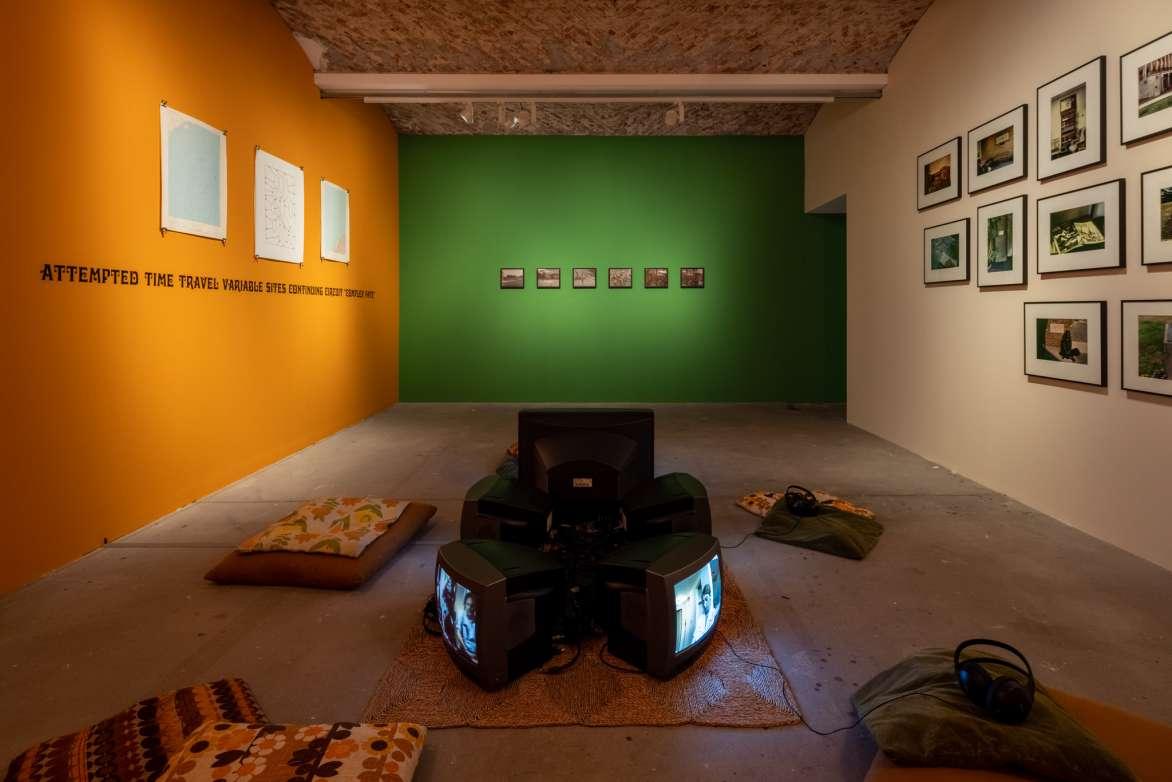
It’s crucial to mention that you can hear the projector and the sound of the slides switching and advancing. This slideshow forms a spine for the narrative, along with Green’s interview with a photographer and journalist of the Gwanju massacre/uprising of 1980. I didn’t rehearse too much, as I wanted it to seem off-the-cuff and I like the accidental or contingent nature, when there is still a kind of play and an element of tension. Farocki said he couldn’t write when not at the editing deck, with two images on the screen. Previously, I would have agreed, though now the process of writing has slowed down my filmmaking process, so there is a reciprocity and the film emerges from the writing. Finally, the hands are related to an editing station, which used to be linear, working with magnetic tape and film, and in front of large, expensive machines. Tactility and somatic knowledge were part of the process, and for this reason I sometimes struggle with non-linear editing software.
HS: The premise of the film does indeed remind me of “Venus in Two Acts” by Hartman, an essay that wrestles with the distance between mining the violence of an archive and attempting a form of redress through attending to it, while writing at the limits of the speakable, the knowable. In Nnenna’s The Memory Guardians the work presents two halves: a court room scene and the statue animated and dancing. To me, they seem to offer different modes of redress—say legal and fabulatory—and I am interested in learning more about the tensions and ties between the two that you explore in the film. Is there a relationship between the law and fabulation? Do you see a function for both and how does this play out in the film?
NO: Yes, there is definitely a relationship between the law and fabulation, with the latter perhaps offering a more imaginative and open-ended form of encounter. The courtroom sequence in The Memory Guardians was inspired by a tour of the museum’s Schaudepot, an experimental space where statues considered “too toxic” for the main exhibition on Berlin’s decommissioned monuments are stored. When we got to The Kneeling Woman, the museum director Urte Evert described the contestation around her fate: some right-wing politicians sought to instrumentalise her via public display, while the Black community requested a more private, mediated view, and others felt her story was too violent to be redeemable and that she should be destroyed. The trial structure allowed me to re-stage these conflicting positions through the characters of the three counsels.
In that sense, the first form of redress was already within the film’s aim: to make the debates legible without requiring viewers to confront the spectacle of the statue’s violated body. During the exhibition, I removed the statue and, in her place, visitors could watch the film and only if they chose to do so they would glimpse her remains through a small, adjacent window. The second half of the film turns even more towards speculation but rather than “give voice”, I let the statue act: she rests, wanders the halls, builds her face anew, chooses new poses for herself, etc. We can’t tell whether this is real or a daydream, but this newfound freedom offers a different kind of justice—less juridical, more embodied, speculative and reparative. This interplay typifies how the law and fabulation relate in my own practice as a whole. As someone working within the landscape of colonial remembrance in Berlin, oftentimes the legal and bureaucratic processes of redress—renaming streets, repatriating loot, etc.—can take decades. I see the role of my speculative work not as a replacement for these reparations, but as a kind balm while we wait for these processes to play out.
Both your films shift between two temporalities and materialities. On the one hand, historical traces are mediated through archival footage: in Hope’s work there are, for example, the fireworks/mythology images at the beginning and end of the film. In Joe’s work, the middle sections comprise footage of the Netherlands. On the other hand, there are scenes of you in the present as you engage with these traces: in Hope’s case there is the unfolding of the sketch of the slave ship or the handling of the insect slides; in Joe’s case, this happens when you look through the photo sheet or exhibition photographs you took. How do you understand the role of fabulation in navigating between these pasts and your own processes of engaging them in the present?
HS: In wading through ledgers, sifting between a world of captors and masters, it is an ongoing challenge to balance the libidinal violence of the archive with my refusal of its language and apparatus. Across my films, I have instinctively recycled the same 1926 travelogue of a family’s Christmas holiday around the Caribbean Islands. The same images are rewound, spliced, overlayed and reedited into unrelatable contexts and visual materials. This seeks to dislocate the authority with which the archival enters the screen and to enact what Rizvana Bradley describes as “a perpetual cutting, a constancy of expansive and enfolding rupture and wound”.[18]
The recycling of archival material is concomitant with the use of touch and gesture on screen. My hands appear repeatedly: holding archival objects, moving folders, gesturing towards diagrams, turning tired pages. After Hortense Spillers, this is an attempt to “touch-back” at archival violences, to re-insert violence as an intimate, fleshy subjection and to retrieve the tectonics of touch bound up in the production of the film into the visual field.[19] It is an attempt to disable the disciplining logics that surround archival materials, and in this vein, to also offer space for the possibilities afforded through fabulation. Although fabulatory, the film is also embroiled, unwillingly, in an intersubjective performance of violence played out across the apparatus of the archive. Touch seeks to reckon with this trouble, or at the very least, acknowledge this performance on screen.
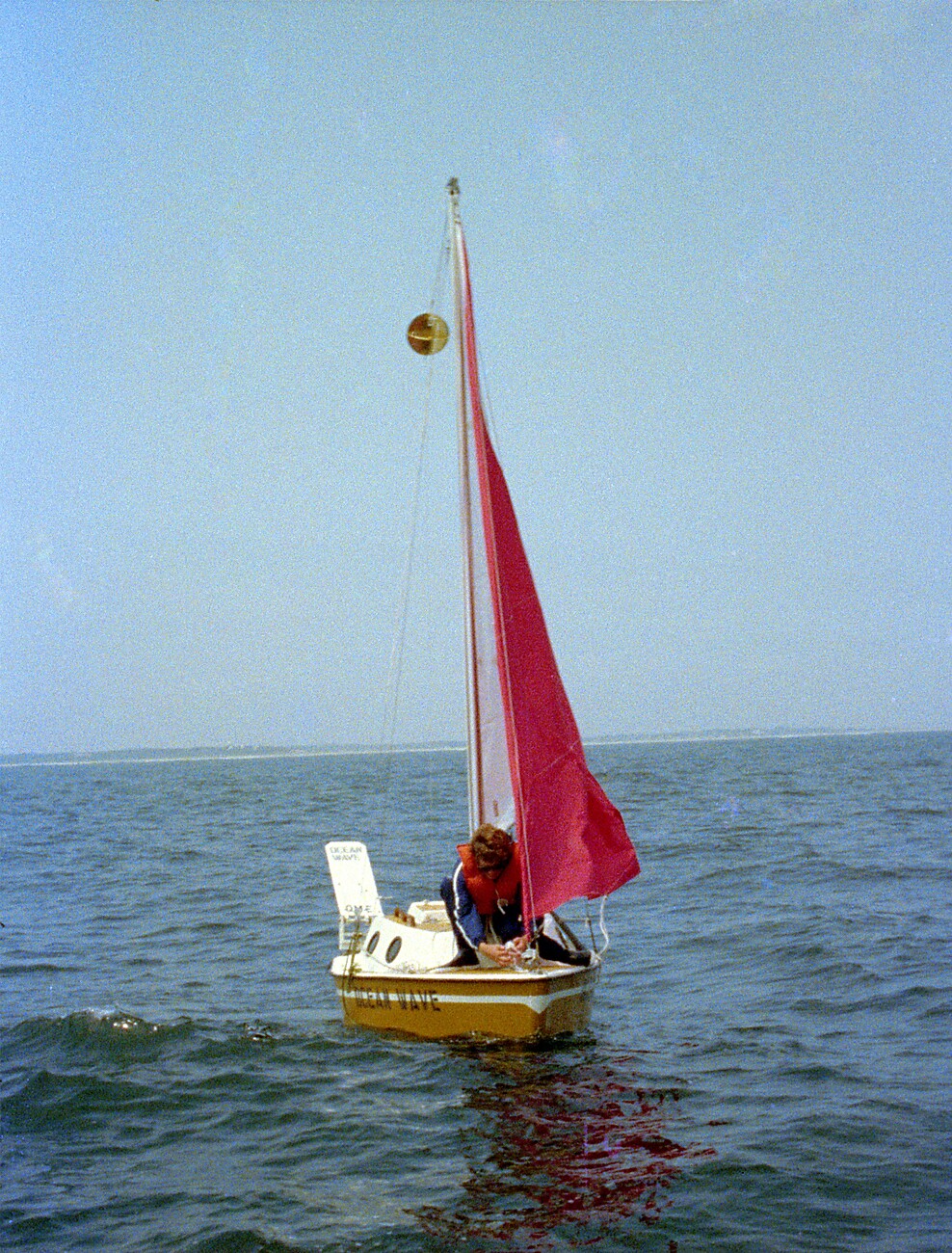
JS: I think about fabulation as a way of dealing with the present. In order to be comprehended, this present constantly negotiates history and our projection of the future. Much of what you saw are re-enactments or acknowledging earlier artists, and that is why during the searching scene where I am walking in The Hague—set to the Coasters’ 1957 song written by Leiber and Stoller—I tried to follow Green’s work Slow Walking in Lisbon (1995), where she can be seen walking in the streets and the shot lengths are determined by her walking into and out of the frame. It’s also a double homage to Bas Jan Ader, since this song appears in his final exhibition and work In Search of the Miraculous (1975), and in the promotional materials and photographs of Ader walking the streets at night in Los Angeles–– his boat The Ocean Wave launched from Wellfleet, Cape Cod, Massachusetts, where I was raised.
According to the French-born US artist, filmmaker and cinematographer Babette Mangolte, who worked with Yvonne Rainer, Chantal Akerman and others, films make their own temporalities—shooting time, real time, sense of time. The filmmaker thinks about all these temporalities, but Mangolte also mentions a collapsing of these senses, where distinctions are blurred. In the 1970s artists were looking for a new way to represent time, which attended to task time in the work of Judson Dance Theatre performers Rainer, Trisha Brown and Steve Paxton.[20] The way the archival shots from the Netherlands, whether fast or slow, intrude in my film introduces another kind of stoppage, which stretches our notion of the present. By creating an instability it revives the argument, and this is what I find interesting about re-performing a work––the body and the amount of time and energy it takes to make the piece gives you a new experience of the work and an appreciation of the labour involved. It can be re-enacted and delivered deadpan. This is where performance finds minimalism’s most extreme form of distillation––in indexes of the concept created over some duration.[21] The performer must hold their weight in the same way the audience must feel the metaphorical weight, while the tasks are re-performed from everyday life. If you take my previous point about tools and the distance, it would be that this type of performance is about giving a tangible weight to intangible heritage or artefacts.
NO: Speaking of weight, Hope, I was struck by the scenes with the entomologist, who is so insistent on disentangling—rather unsuccessfully—the legacy of his discipline from its colonial underpinnings. His claim that the officers who collected these specimens had “nothing to do with slavery or anything like that” reads as a kind of revisionist fabulation of its own. Could you speak about the different attitudes towards the past that you encountered in your interlocutors, and how you chose to engage, represent or even sometimes counter those positions in your film? I’m thinking especially of the web-search shots, but feel free to bring in others as well.
HS: In researching and filming in archival spaces, I am often brought into direct contact with the ways in which my body is relationally overdetermined. My moving image work attempts to meaningfully reckon with these encounters, thus straining at the limits of where archival violence might be placed and with whom. The only prompt for the conversation that developed with the entomologist appeared to be the presence of my racialised body. Following his claim, the film cuts to a recording of my computer screen. It shows me undertaking a Google search, clicking on links at the top of the page and highlighting segments of text that completely contradict the archivist. The sharp break into a different format is intended to jolt the viewer into a consideration of the affective environments we live in—the myths we proliferate and allow, the ease with which fiction can become fact. It is not that I particularly trust the internet, but the shift is aimed at revealing the breadth, and danger, of our choices as well as introducing some humour to the violence of the scene.
NO: Speaking of the myths we proliferate, did you get the sense that this was one he believed himself? Or would you say it was more a justification for his discipline and its claims to scientific objectivity or neutrality?
HS: Yes, I’m wondering what the difference would mean here. The context of the conversation was a public newsletter he was working on, a politicised publication that seemed particularly intent on spreading the good gospel of museum practices. It felt as if the decolonial scrutiny museums and archives have faced in recent years had only propelled an impulse to defend himself. Whether it was something he truly believed in or felt he needed to justify, it revealed an insecurity and threat to his being in the world. I think at the root of myth making we find the affective, relational construction of the world, forcing us to reckon with what it means to be in the world and what it means to be human. When being in the world is articulated along the lines of race—with Blackness as antithetical and at the limits, or even outside of the world—then these types of myth seek to solidify the status quo and maintain structural racism. The issue is that as these myths are destabilised and revealed as myths rather than fact—through internet searches, competing narratives, patient refusal—what was once the master narrative begins to unravel.
NO: Turning to Joe, the cut you shared with us online feels quite different from the version we saw months ago at the workshop. For instance, the comedic narrator persona has been pared down considerably, and in its place we see much more Dutch archival footage. The effect is that it makes the Netherlands and its history come across as a kind of character, rather than the earlier emphasis on the narrator retracing Renée Green’s steps. Could you talk about how Green‘s practice informs your work? My sense is that this new approach is still following her in some way, and I’m curious to hear from you exactly how. What aspects of her methodology are you drawing on here, and how do you see them shaping this version of your film?
JS: Dear Nnenna, I am not entirely sure, but I think I screened the same cut, though I changed the audio mix. I believe the narrator character comes across more pronounced because of my introduction. I would like for this to be the case, so that there is a wink indicating the sense of humour and the distance between the narrator-enunciator and my voice as the author. However, I enjoyed hearing what you say about place being foregrounded in this cut, since I always thought of the Netherlands as a character in the film–– there is a competition for the viewer’s attention between Green, my narrator character and the Netherlands. I always like seeing a film with the filmmaker presenting and imparting a commentary, or highlighting a kind of tension, even if they are satisfied with the film.
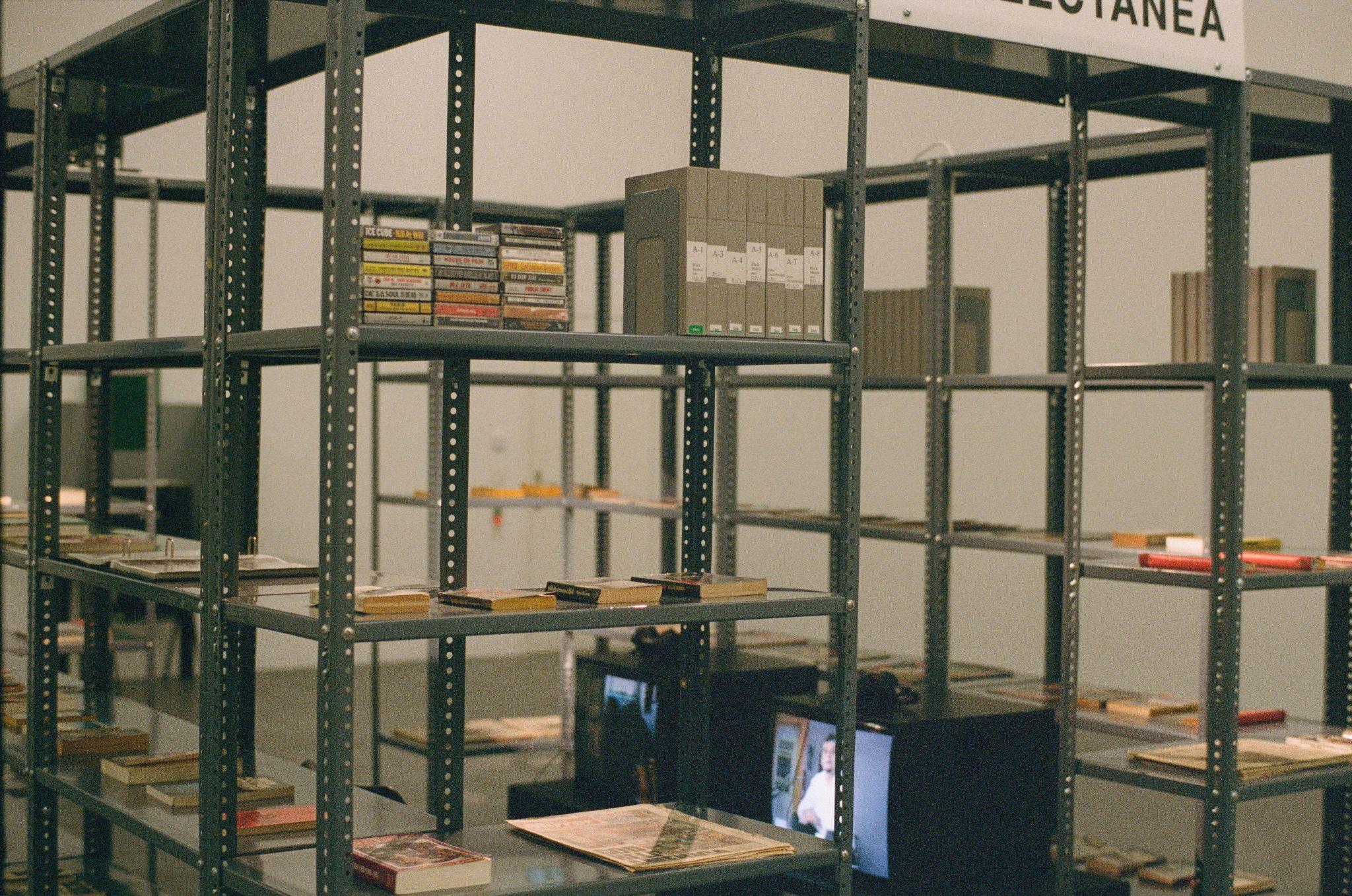
This reminds me of the connection between place and history, and then the texts I’m reading––which are the documentary elements––along with a felt sense and something ineffable, maybe spiritual. I’m also reading fiction alongside that and keeping a journal with reflexive writing not related to the project. Since it’s not possible for me to visit Robert Smithson’s Partially Buried Woodshed (1970) in Kent Ohio, neither could Green in 1996,[22] I wanted to make a work that reflects on that and visit the earthwork in Emmen, in the province of Drenthe, titled Broken Circle/Spiral Hill (1971) and made for the Sonsbeek Festival. I was curious to see something with this much investment and anticipation. I also searched for traces of The Hague from the time of Green’s project around 1993–94. Finally, seeing Import/Export Funk Office (1992) in person at KW in Berlin in 2021 also held this sense of anticipation and there was something almost surreal about seeing it decades after first encountering it in books.
I think about fabulation as a way of dealing with the present. This present, as it is comprehended, constantly negotiates history and our projection of the future. Much of what you see in the film are reenactments or pay respect to earlier artists. The photographs are a reference to Green’s project After the Ten Thousand Things (1994) at Stroom center for modern art in Den Haag and her photographs from Certain Miscellanies (1995–96) at De Appel in Amsterdam. Perhaps site-specificity comes in–– being related to particularities of place. It is also something worth questioning, in essay films or in my works, whether the performer is the same as the author, and to consider the distance between narrator and author.
I want to pose a question to both of you, Hope and Nnenna. Who are your interlocutors? With whom do you imagine yourself in contact, or are you in contact with? I am just now noticing that there are anachronic or transhistorical dialogues in all the works.
Secondly, I also have a question about process. Is there a kind of shape to or way in which you imagine your process––in editing, for example? I’m curious about daily sketching, notes and then editing. It is interesting to me because I consider the relationship between writing and poiēsis. Or perhaps it’s a question about syuzhet (narration) and fabula (events) in narratology, that is, the way the story is revealed. While making a film, my keeping track of this is an iterative process, so the timeline can be reconstructed later.
NO: With her notion of “critical fabulation”, Hartman is always a key interlocutor of mine, as is Michel-Rolph Trouillot’s concept of “historical silences”.[23] In each project, I turn to their work to understand which perspectives have been excluded from the narrative and how—which in turn informs my decisions about what I want to try to articulate in my work. For The Memory Guardians, I was also in dialogue with Kiluanji Kia Henda whose Havemos de Voltar (We Shall Return, 2017) imagines a taxidermied antelope regaining consciousness and plotting her escape from the museum. More broadly, my interlocutors also include the figures I study, the spirits I conjure, the communities whose histories are inscribed in the archive, etc.
Concerning my process, each film I make has its own language, so my process is never fixed. Some projects reveal themselves in editing, others crystallise long before the camera rolls. I always begin the process of conceptualising each film with a very thoroughly written production file—a practice drummed into me by an old film professor. This document, usually for my eyes only, sets out the story, its wider context, my visual and sonic treatment, as well as my own motivations for making the film. Sometimes the final film diverges completely from the file, at other times it aligns almost exactly. Either way, the practice of writing a file helps structure my thinking, articulate my intentions and lets me approach the entire process and any subsequent changes as iterative and dialogical.
HS: My process, too, shifts depending on the demands of the specific film. However, a film always begins with a period of research through which I define the main concerns and parameters in play. In this way, although both the interlocutors and the disciplinary focus of the film may shift quite dramatically, the initial research anchors what I’m doing and stabilises my practice towards an iterative, recognisable working methodology. The more I make, the more it is revealed to me that across my films I am concerned with violence and its redress, with affect on screen and its refusal. This is less generative than it is persistent, obstinate even. I seem to spin and chew at the difficulty of exposing the complications of violence and emotional intimacy on screen, while becoming ever more in search of an agency in relation to this. A persistent tension that is incongruous—or wedded to—working with visual media. In keeping track of these things, am I indulging them? Is fabulation a dangerous snare?
JS: Hope, to what extent is working in a collection like when something is “just a map” …? Or maybe the question has to do with the category of natural history, sharing linkages with our projects. I liked the way the process of making the sample is described in I’ll Be Back! Once we hear the end of the legend, when Mackandal transforms into a fly, the importance of pinning the sample together with information about where and when it was found is understood. In addition, I appreciated the restraint of not adding foley sounds, keeping the soundtrack to music and other tracks. I have noticed a trend in some essay films to include foley sound, and I’m not sure about it. How did you decide to mix the sound? And the choices about colour, which is beautiful, as was your way of handling the different formats, grains, aspect ratios? This is something I think about––how to juggle these things? Did you use any archival sound recording sources?
HS: I guess in trying to respond to the two questions you pose, I am brought back to thinking about the distances between myth, truth and systems of power and control. An order of things, or a method of cataloguing is introduced with the entomologist’s description of preserving the flies. During this audio he is affirmative about both the sequencing and the precision of the labels attached to each specimen. I hope that in following this up with his comments on the origins of the collection as being “nothing to do with violence”, I tentatively poke at the assuredness with which he speaks, the rules and the performance of authority invested in his tone. What is missing from the labels themselves? What is missing from our conversation?
Film formats shift between digital, archival and 16mm footage as well as the screen recording of the web browser. This points to a refusal of rigidity or any hierarchy of filmic medium. It is also an attempt at sustaining a vexed temporality across the contemporary filming in archives, archival footage from 1926 and the event of Mackandal’s execution on 20 January 1578.
The sound, similarly, is as much a musical score as it is ambient and interview recordings. I am attempting here to intervene in these archival spaces with the presence of something openly imaginative. The score holds a multiplicity of musical references: classical Western instruments—a bowed guitar— alongside traditional African percussion such as the handpan and the kalimba.
JS: I enjoyed this so much, mixing the screen recording of the web search with the other kinds of footage. I liked how the search becomes enunciative of the author’s doubt, without saying it through voiceover or intertext. All these elements really come together for me in the piece: the exterior scenes of the mountain, the attention to hands and the sound saturating the place.
Then to Nnenna: moving statue, kneeling woman… how did you come up with this name for the sculpture? I really love how it brings the statue to life in a joyful way. When I think of it moving, there is a chance for the unheimlich, something uncanny. I also like the details of paint and the mirror to show how it lost its head. Even the kneeling posture seems to be reclaimed and re-invented. For me, this is where the omission of the image of the image (Bild/icon) does not repeat the violence. You used a very subtle touch in letting us know the exposition, framing through the tribunal with the curator-judge. The statue is described in the work, even given voice, though I do appreciate the refusal to describe the statue verbally or visually. Did you think about the statue as a kind of ekphrasis?
NO: Renaming it was imperative for me. Originally unnamed, the statue was subjected to an additional layer of violence when the southern Berlin district of Steglitz-Zehlendorf, where she originally stood, commissioned a pedestal that had a racial slur inscribed on it. I absolutely refused to reproduce that, and so Kneeling Woman became my alternative—as a way to describe her without perpetuating the harm. Equally important was my decision not to show the decapitated statue in the film, or even fully in the exhibition. Adrian Blount, who plays the statue, also did the make-up and costume brilliantly: matching details from the stone texture of the statue’s body to bits of moss from years spent outdoors, as well as the blue paint and broken face following the attack. They also masterfully translated the transformation from a broken figure in the trial to this reborn presence in the dreamscape: shifting their movements over the course of the film: initially stone stiff, then gradually fluid, to mirror the reclamation of agency. Lastly, to mirror the reality of her being headless and others speaking for/over her I chose not to give the statue any dialogue, but also because I am wary of “giving voice” to others, especially in the context of historical violence. Instead, I depict her through movement, inviting viewers to listen and imagine her presence in ways that are more embodied than verbal.
JS: The way you state this is interesting, and it brings together many trajectories of fabulation I was thinking about in responding to the editors of this special issue’s call. It’s a balance––considering what to show and how to tell that which could not be told. The tension navigated and the questions opened up, and I feel as the viewer of the film you have given me a lot of credit, while acknowledging how things hang in balance. I am reminded of two terms I encountered in Philip’s “Notanda” at the end of Zong!, and it might apply to both of your works. Philips speaks about the matrix, the text of the case as a “mother document”, which she thought a lot about before deciding to break it open, and the fugal—from fugue, the polyphonic, musical form —turned into an anti-narrative or palimpsest in the text. It is through repetition and filiation that meaning emerges, which is constructed and layered.
As a way to conclude, the filmmakers will respond to a question that arose during the screening, in which the ‘stakes’ or audience’s investment in the respective narratives are considered.
NO: For me, the stakes began well before The Memory Guardians itself. In Berlin, across Germany, and even globally, we have been grappling in recent years with how to confront the colonial past: toppling statues, repatriating remains, restituting cultural objects, negotiating reparations, etc. Within Black communities, this reckoning is complex: we are balancing the work of acknowledging such painful histories, with the need to imagine more livable and uplifting futures for ourselves. For me, the Kneeling Woman—the statue at the centre of the film—encapsulates many of these tensions, particularly in the debates that arose after she was vandalised. Almost immediately, right-wing politicians blamed the attack on Black Lives Matter protestors and sought to instrumentalize the incident for their own agendas. The museum wanted to put her on display, given the scarcity of representations of women and Black people in its collection, while Black community elders they spoke with agreed to her being on limited public view, as long as there was adequate contextualisation. Some younger people of colour I spoke to found the story altogether too triggering and were adamant that the statue be destroyed. The film and resultant exhibition became a space for these debates to unfold, offering visitors an introduction to the larger questions at stake, and giving them the opportunity to share what they thought should be done with the statue via a guest book. Given the nature of the Schaudepot in which the exhibition took place, it was also an opportunity to play around with the curatorial form. By removing the statue for a few weeks, we could ask whether we can =tell difficult histories without relying on violent objects as illustration. One year on, the stakes continue to extend far beyond the film. The Citadel Spandau is a municipal institution, and with shifting political climates—especially the rise of the AfD—its leadership, and thus the fate of the statue, could soon change.
HS: To be honest, I am cautious of the current furore around fabulation; of applying fabulation to practices of refusal that existed long before the evolution of the term in Western academia. There is a danger here of slipping away from real-world, political action into a conceptual turn. Are we unintentionally diluting the importance of lived events into something “otherwise”? It is difficult to hold this while also admitting to the conceptual position of working with film as artists.
The stakes, for me, are in maintaining an appropriate methodological praxis when dealing with fabulation as a tool or device. If Mackandal, through transformation, elides the tumults of the Black body, he could be said to sustain an ontological “line of flight”.[24] A line of flight, after Gilles Deleuze and Félix Guattari, is not the antithesis to power, but “that which is always in a process of leaking from within its matrices; that which, in the course of power’s paranoia, is produced as a surplus value or threshold of escape”.[25] It is from this position that I approach filmmaking: through an errant, antagonistic handling of a variety of filmic mediums, from a process of illegibility and suspense. Rather than present a foregone conclusion, I seek to expose some of the conflict between visuality and counter-visuality, fabulation and marronage.
JS: Something that comes up in the research of all three of our films is the way that spaces are pre-mediated, meaning that our “memory” of them precedes our encountering them for the first time.[26] This is part of what I’m thinking when I make a film; the urgency comes out of this uncertainty and how there is the story and other documentary artefacts, but then there is something else that cannot be accounted for. This has to do with two things: one is related to language and the other is about experience and the way artworks are enmeshed in a broader network of meanings and signs. These networks encompass a huge variety of elements. I must also mention here that, as an artist, one is engaged in real and imagined dialogues, that’s why I posed the question about interlocutors. I’m in imaginary dialogue with artistic forebears and different filmmakers, especially those who make autoethnographic work. It’s part of our learning, of becoming an artist. Re-performance is a way to have conversations, with our influences and teachers and the dead. Documentary poetry also engages in this.[27] As with history, we always enter in the middle of a conversation, which is ongoing. It is in this expanded field that there is a compounding of meaning-making and interpretation, which expands both the grammar of what we make and what is sayable.
There are different reasons why a reader/viewer may be invested in the work and want to watch the film, and I try to leave as much space as possible for that. I can say that there are three characters in my work––myself as author, as narrator and as performer. I think about poetry a lot and how to inhabit a place of tension between not-saying, not-showing and their opposites. I think about Gertrude Stein building layers of grammar in How to Write (1931).[28] Sedimentation is important. Lots of things are happening in all the films we showed and so much is there for a reader to discover, to interpret. This is while acknowledging that the spaces of the films constitute individual theres but they also form a collective here in the way we come together in this moment.
Footnotes
- Green’s essay appears in Alter, Nora M., and Timothy Corrigan, editors. Essays on the Essay Film. Columbia University Press, 2017. pp. 323-332. ↑
- Lévinas, Emmanuel, “La Trace,” in Humanisme de l’autre homme. Montpellier: Fata Morgana, 1972. pp. 57–63. ↑
- Ricœur, Paul. Chapter 4 “Between Lived Time and Universal Time: Historical Time” in Time and Narrative. Volume 3. , Translated by Kathleen Blamey and David Pellauer, Paperback edition, The University of Chicago Press, 1990. pp. 104-126. ↑
- Marboeuf, Oivier. “Towards a de-speaking cinema [1] (A Caribbean hypothesis”. Non Fiction. “The Living Journal”. 2021. Available at https://opencitylondon.com/non-fiction/issue-3-space/towards-a-de-speaking-cinema1-a-caribbean-hypothesis/ (accessed 2026-05-25). ↑
- This version of the tale is taken from Marboeuf’s essay. The legend of Mackandal is also found in Weaver, Karol. Medical Revolutionaries: The Enslaved Healers of Eighteenth-Century Saint Domingue. Champaign, Ill: University of Illinois Press. 2006. ↑
- Hartman, Saidiya. “Venus in Two Acts”. Small Axe. Vol. 12. No. 2. 2008. pp. 1–14. ↑
- Known variously as palenques, quilombos, mocambos, cumbes and ladeiras across the Americas, maroons are commonly described as enslaved peoples who escaped from capture and managed to sustain themselves in remote communities. These communities range from small, informal and short-lived bands to powerful collectives that survive for generations and secure treaties with local colonial governments to ensure their safety. Campbell, M. C. (1988) The Maroons of Jamaica, 1655-1796: A History of Resistance, Collaboration & Betrayal. Granby, Massachusetts: Bergin & Garvey. ↑
- Marboeuf, “Towards a de-speaking cinema”. ↑
- Ibid. ↑
- Rukeyser, Muriel. The Collected Poems of Muriel Rukeyser. Edited by Janet E. Kaufman et al., University of Pittsburgh Press, 2005. ↑
- Carson, Anne. Decreation : Poetry, Essays, Opera. First edition, Knopf, 2005. pp. d45-48. ↑
- Philip, M. NourbeSe. Zong! As Told to the Author by Setaey Adamu Boateng. Middletown, CT: Wesleyan University Press. 2008. ↑
- The case she refers to is “Gregson v. Gilbert” (1783). 3 Doug 232, 99 E.R. 629. ↑
- Philip, Zong! ↑
- Baucom, Ian. Specters of the Atlantic : Finance Capital, Slavery, and the Philosophy of History. Durham: Duke University Press. 2005. ↑
- Jenkins, Bruce and Susan Krane. Hollis Frampton: Recollections and Recreations. Cambridge: MIT Press, 1984. ↑
- The canonical example of this would be From the Pole to the Equator (1986), 96 min, toned B/W film. The effect is achieved through a custom-made analytic camera, a specially fashioned optical printer using two cameras. It is described in e-flux notes (25/11/2024), an abridged version of a text first published in Found Footage Magazine #3 (2017), the year they were in documenta 14. See further this 2020 article by Miriam de Rosa https://encyclo-technes.org/en/base/89263d/2286 — slightly more technical though there is no documentation of the device. ↑
- Bradley, Rizvana. “The Vicissitudes of Touch: Annotations on the Haptic”. Boundary 2. 2020. Available at https://www.boundary2.org/2020/11/rizvana-bradley-the-vicissitudes-of-touch-annotations-on-the-haptic/ (accessed 2026-05-25). ↑
- Spillers, Hortense. “Mama’s Baby, Papa’s Maybe: An American Grammar Book”. Diacritics. Vol. 17. No. 2. 1987. https://www.jstor.org/stable/464747. ↑
- See Lambert-Beatty, Carrie. Being Watched: Yvone Rainer and the 1960s. Cambridge, MA: MIT Press. 2011. ↑
- See, for example, the work of Robert Barry, Douglas Huebler, Lawrence Weiner, On Kawara, Adrian Piper, stanley brouwn, Hanne Darboven and Sol LeWit. ↑
- The remaining structure following the 1975 fire was cleared away in 1984. When Green visits in 1996 the foundation is still there, though today it is heavily overgrown by vegetation. ↑
- Trouillot, Michel-Rolph. Silencing the Past: Power and the Production of History. Boston: Beacon Press. 1995. ↑
- Deleuze, Giles and Guattari, Felix. A Thousand Plateaus: Capitalism and Schizophrenia. City: Continuum Publishing Group. 2004 [1980]. ↑
- Stones, Andrew. “Lines of Flight: Gilles Deleuze and the Becoming of World Literature”. PhD Thesis submitted at The University of Warwick. 2018. http://webcat.warwick.ac.uk/record=b3361942~S1. ↑
- See Green, Renée. “Inventory of Clues” (1993). In Other Planes of Three. Durham, NC: Duke University Press. 2014. https://doi.org/10.1215/9780822376484-035. In the essay, she says this in relation to places and how “beginnings are overdetermined”. It’s interesting to consider how it predicts Richard Grusin’s “premediation”, in relation to imagining future technologies as remediations of current technologies. Grusin, Richard. “Premediation”. Criticism. Vol. 46. No. 1. pp. 17–39. DOI:10.1353/crt.2004.0030. ↑
- Garza, Cristina Rivera, and Robin Myers. The Restless Dead: Necrowriting and Disappropriation. Vanderbilt University Press, 2020. ↑
- Stein, Gertrude. How to Write Paris: Plain editions. 1931. ↑